The project for the urban beach and floating pool at the Dun Laoghaire harbour is a collaborationbetween Arup, FKP, and Wilk Salinas Architekten for the Dun Laoghaire Harbour Company whichis to be located west of Berth 1 on the East Pier. With Arup as project managers, FKP with theirextensive experience in the sports and leisure sector as well as Grade 1 conservation practice, andWilk Salinas Architekten of Berlin as world leaders in floating pool design. The project will be aflagship „Green Energy“ Development in the heart of Dun Laoghaire Harbour, creating a highquality, sustainable public space.
[ PROJECT ]
Dun Laoghaire
CLIENT
Dun Laoghaire Harbour Company
CATEGORY
LOCATION
Dun Laoghaire, Ireland
YEAR
2013
[ OVERVIEW ]
Description
DUN LAOGHAIRE
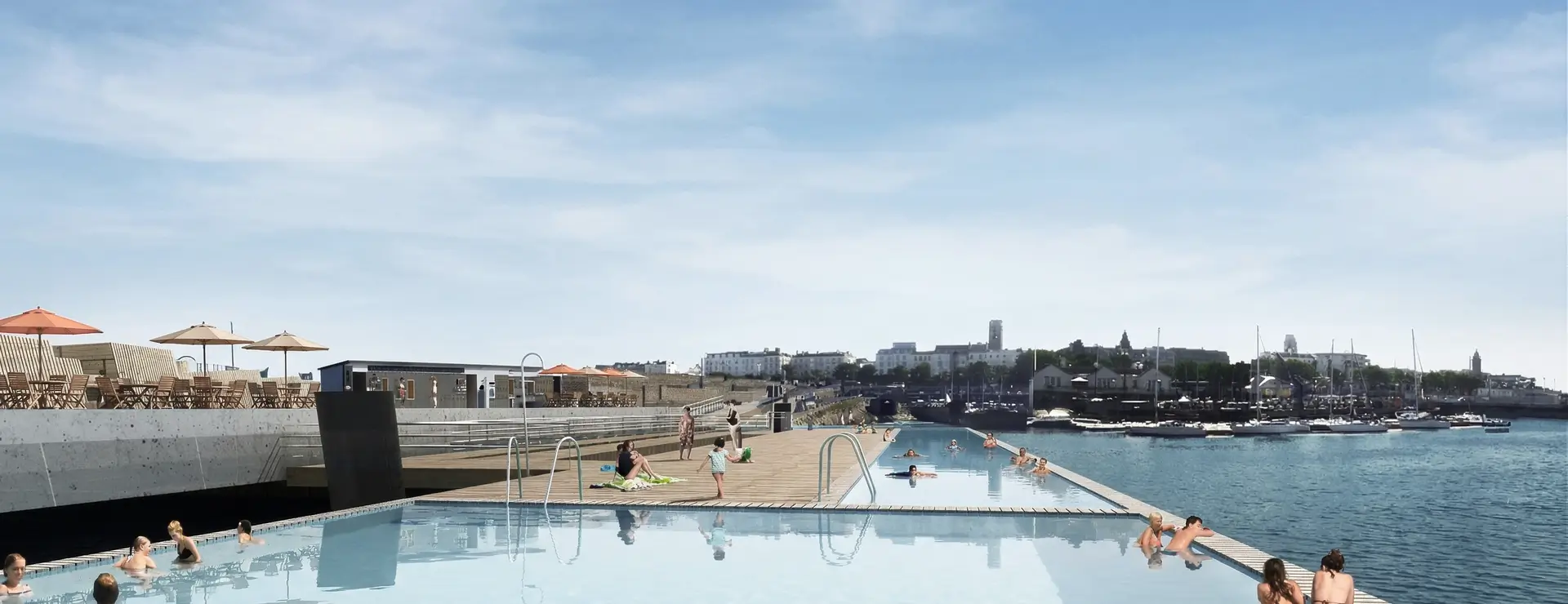
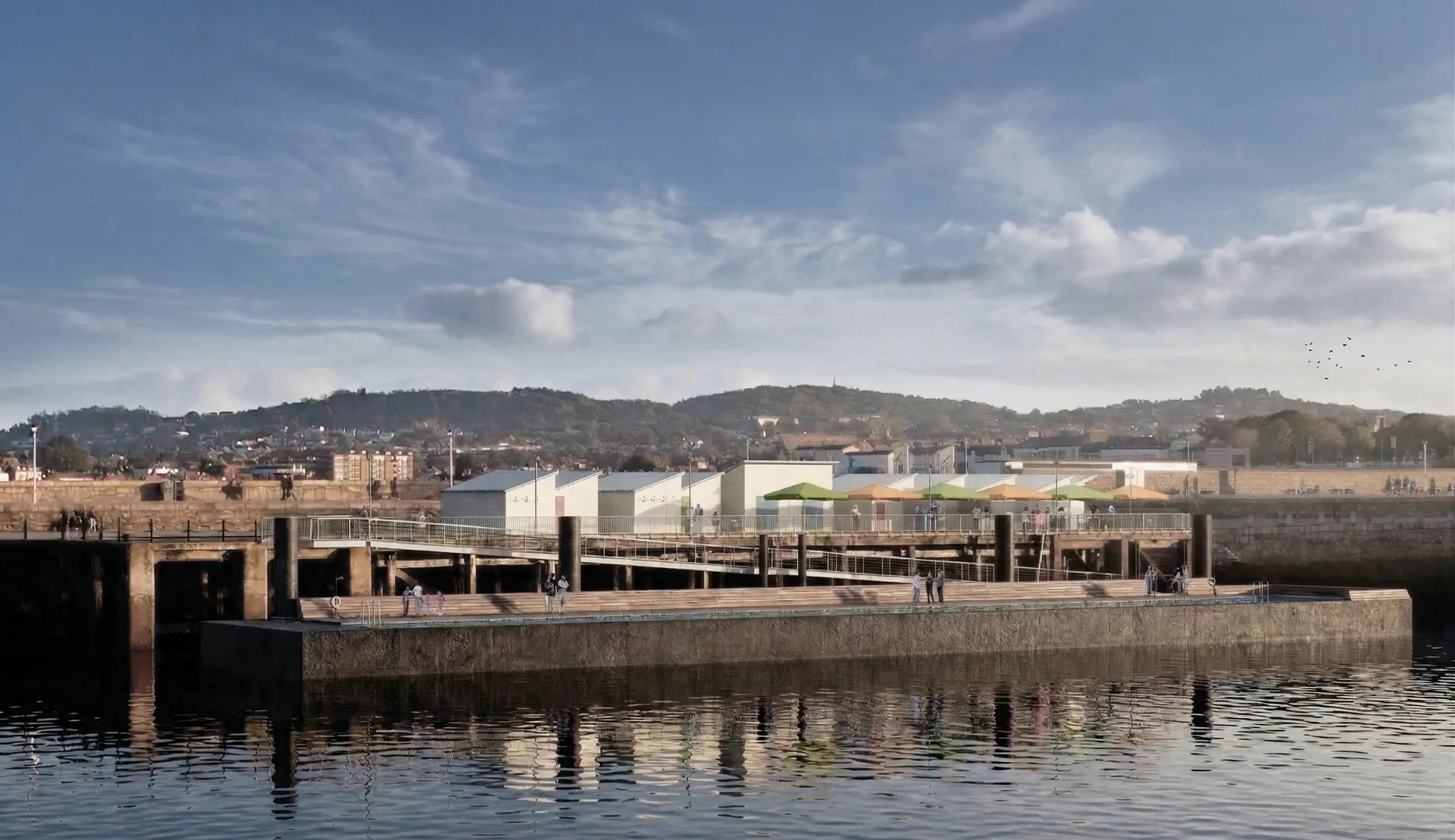
In this project Wilk-Salinas Architekten had the opportunity to rethink the boundary between architecture and the sea. At the East Pier of Dun Laoghaire, where harbour and open ocean meet directly, the idea emerged of a bath that does not assert itself against its maritime setting but merges with it.
The Urban Beach project in the harbour of Dun Laoghaire, Dublin, is a joint undertaking of the offices Arup, Fitzgerald Kavanagh and Partners and Wilk-Salinas Architekten for the Dun Laoghaire Harbour Company. As a local Dublin practice, FKP contributed its experience in sports facilities, Wilk-Salinas Architekten brought in their expertise in swimming pool design, and Arup complemented the project with its engineering experience in project management.
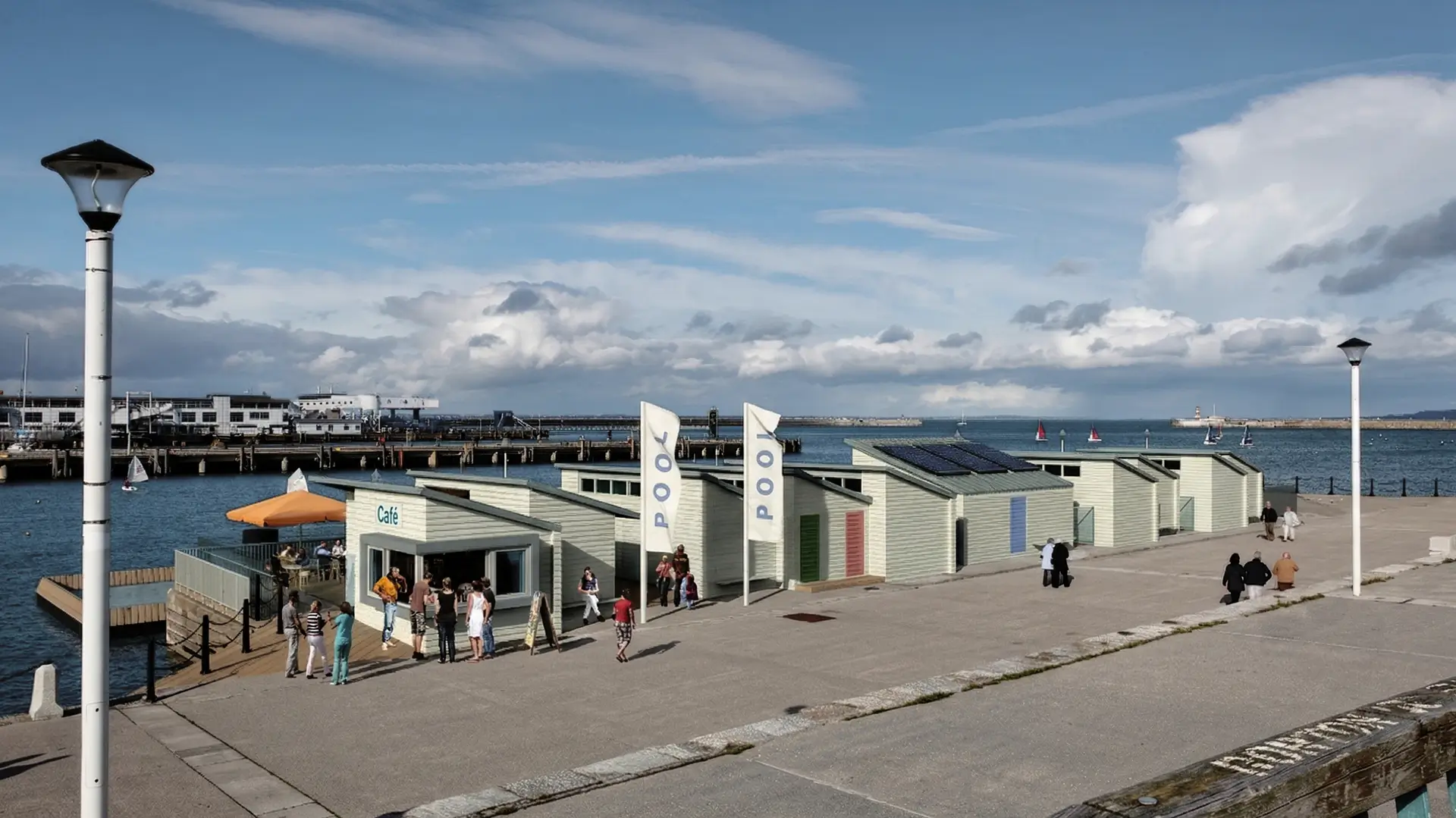
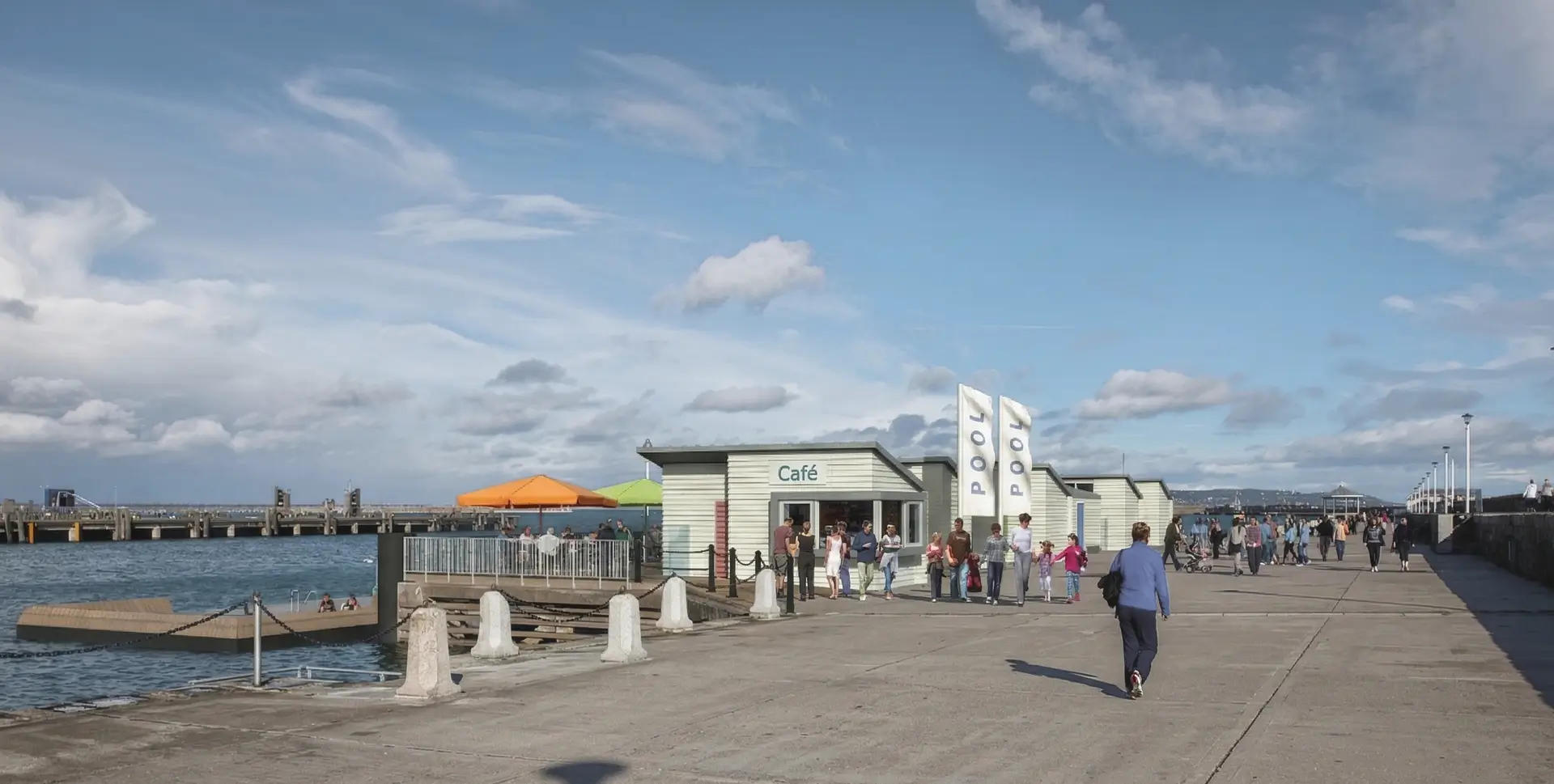
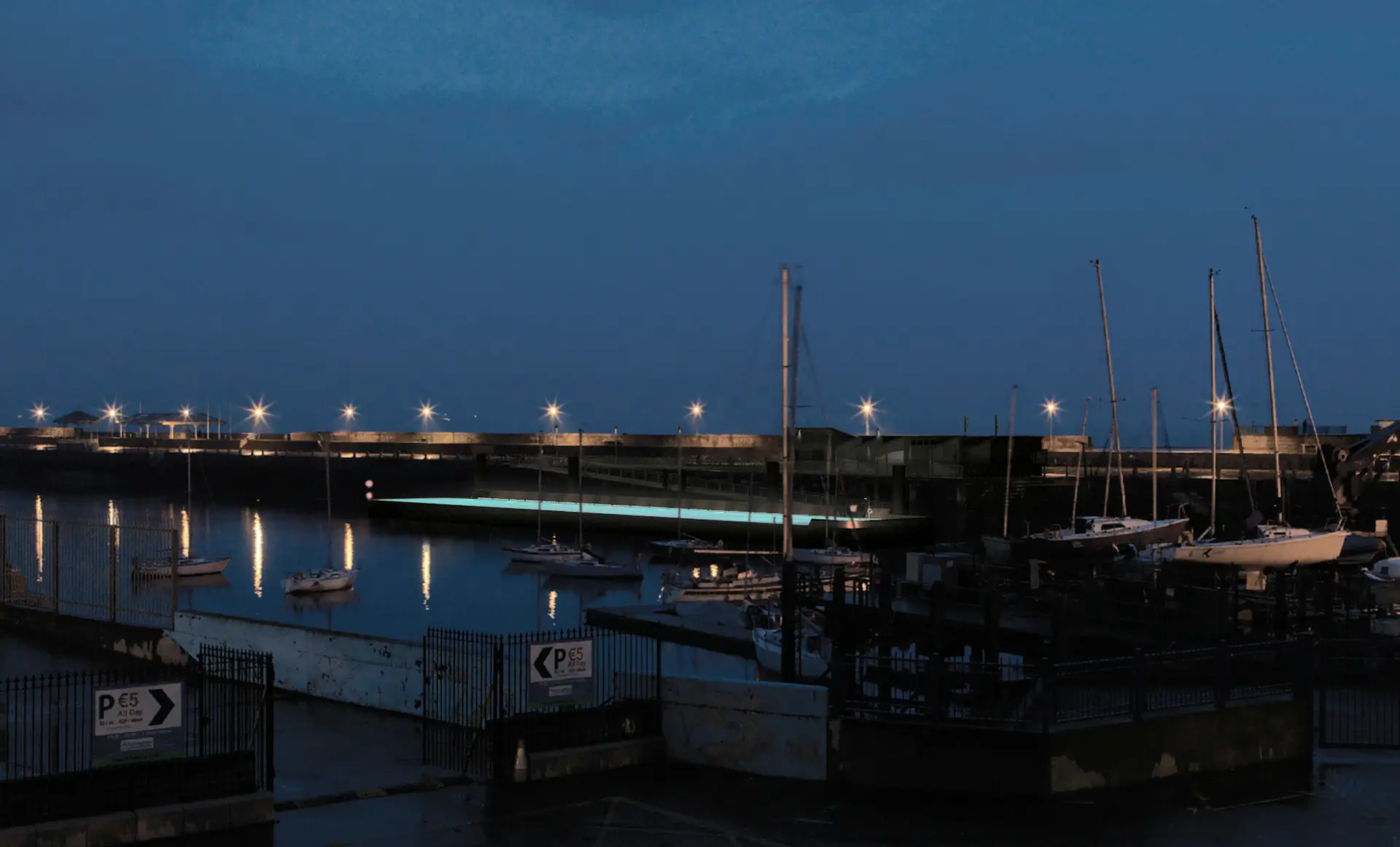
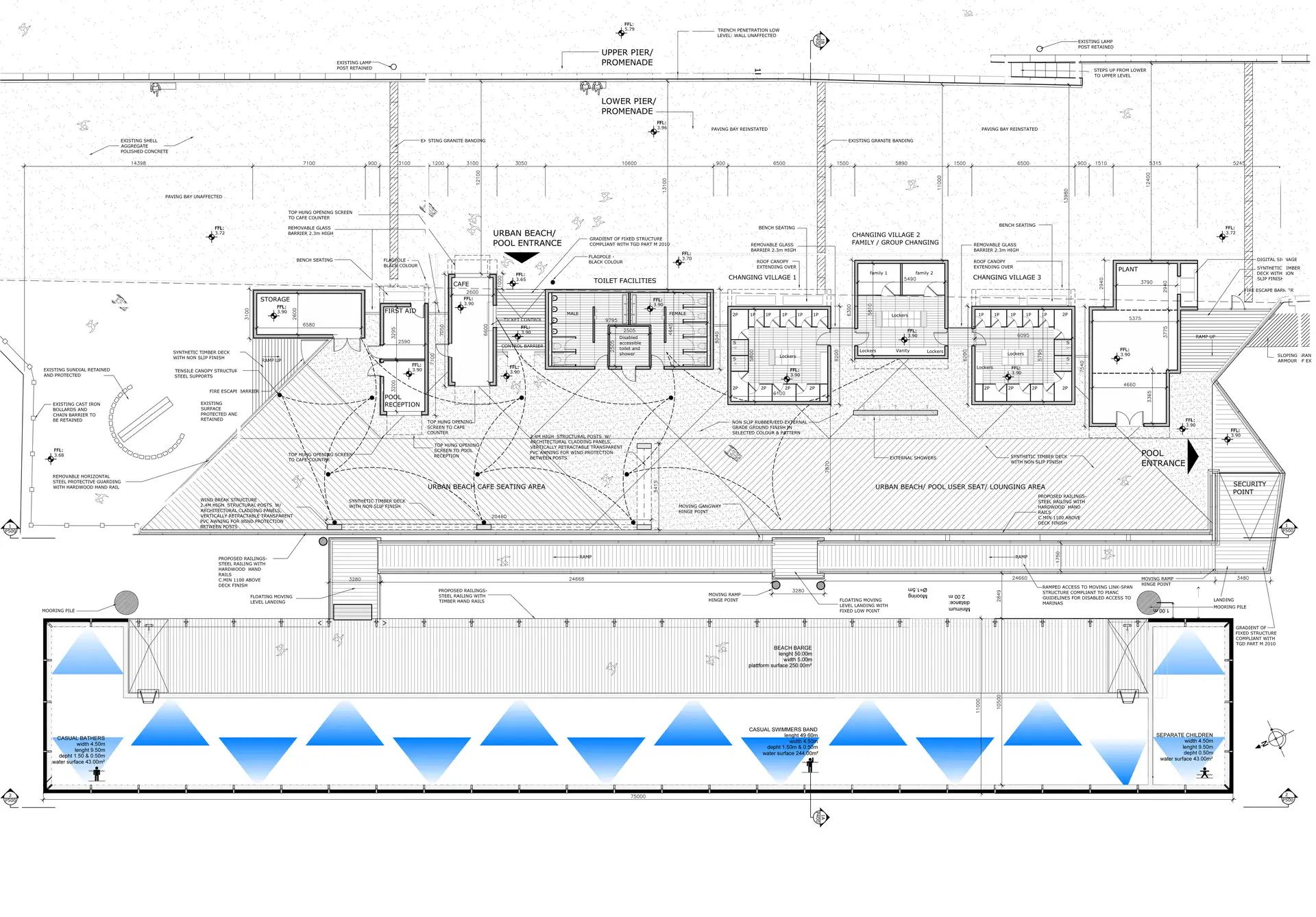
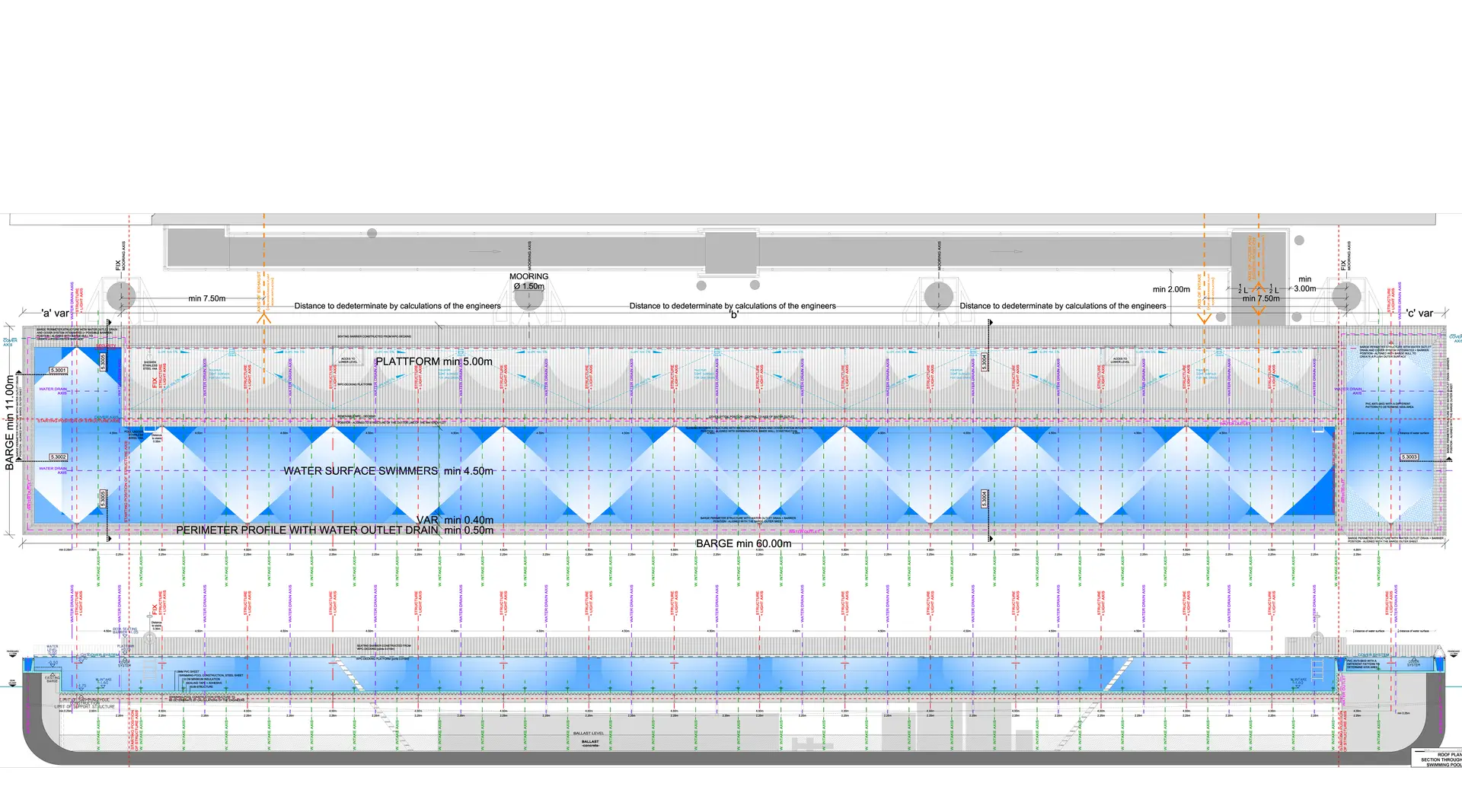
The plan is a swimming pool project located on the attractive East Pier of the harbour. At its core is a floating structure of around 60 × 10.5 metres combining several basins of different depths: children’s bathing areas, a continuous swimming lane and an Urban Beach conceived as a social meeting point, in a compact arrangement that allows a variety of uses within a flexible spatial framework.
An important aspect of this project is that, despite the sheltered position within the harbour, the proximity to the open ocean brings variations in water level and wave action. This calls for solutions that can withstand these high loads.
Services, operational rooms and plant are integrated beneath the deck, which maximises efficiency and frees the upper level entirely for public use. Lightweight pavilion elements support passive design strategies such as solar orientation and natural ventilation. The project works as water within water in an infinity pool system: the boundary between basin and harbour is deliberately blurred, creating a visual and sensory continuity with the maritime surroundings.
Thanks to its ingenious construction with integrated energy generation, the Dun Laoghaire Pool has also become an ecologically oriented project. The technical concept is based on wave modelling, stability analyses of the infinity pool and mooring systems that ensure safe operation all year round. The direct use of seawater, which can be used after passing through a filtration system, considerably reduces resource consumption, while the energy concept incorporates heat pump systems on the seabed, solar technology and passive environmental measures.
The architectural language is characterised by robustness, modularity and adaptability, with maritime materials and efficient construction methods. Movable, simple and quickly operated wind and weather protection elements allow the facility to respond to changing climatic conditions. This extends its seasonal usability and underlines its role as a flexible public infrastructure, as it can adapt rapidly to the constantly changing weather conditions of the site.
Architectural plans
CREDITS
Architects: Wilk-Salinas Architekten and Fitzgelard Kavanagh and Partners
Team Leader-Engineering: Arup
Project Team: Luis Salinas and Maria Ganter
Image Credits
Visuals 01-05: Wilk-Salinas + Wil Brady Shipman Martin
CONTACT
CONTACT
CONTACT
CONTACT
CONTACT
CONTACT
CONTACT
CONTACT
CONTACT
CONTACT
CONTACT
CONTACT
CONTACT
CONTACT
CONTACT
CONTACT
CONTACT
CONTACT
CONTACT
CONTACT
CONTACT
CONTACT
CONTACT
CONTACT
CONTACT
CONTACT
CONTACT
CONTACT
CONTACT
CONTACT
CONTACT
CONTACT
Bring magic into being.
Built in Berlin. Designed for the world. Architecture with clarity and purpose.