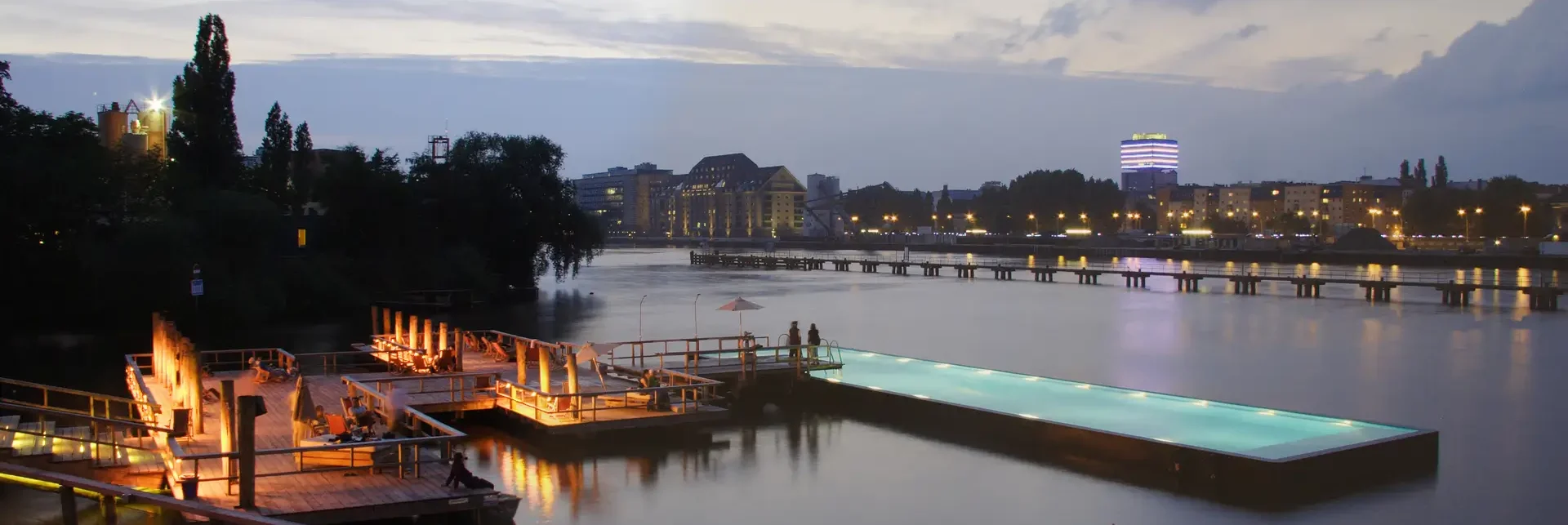
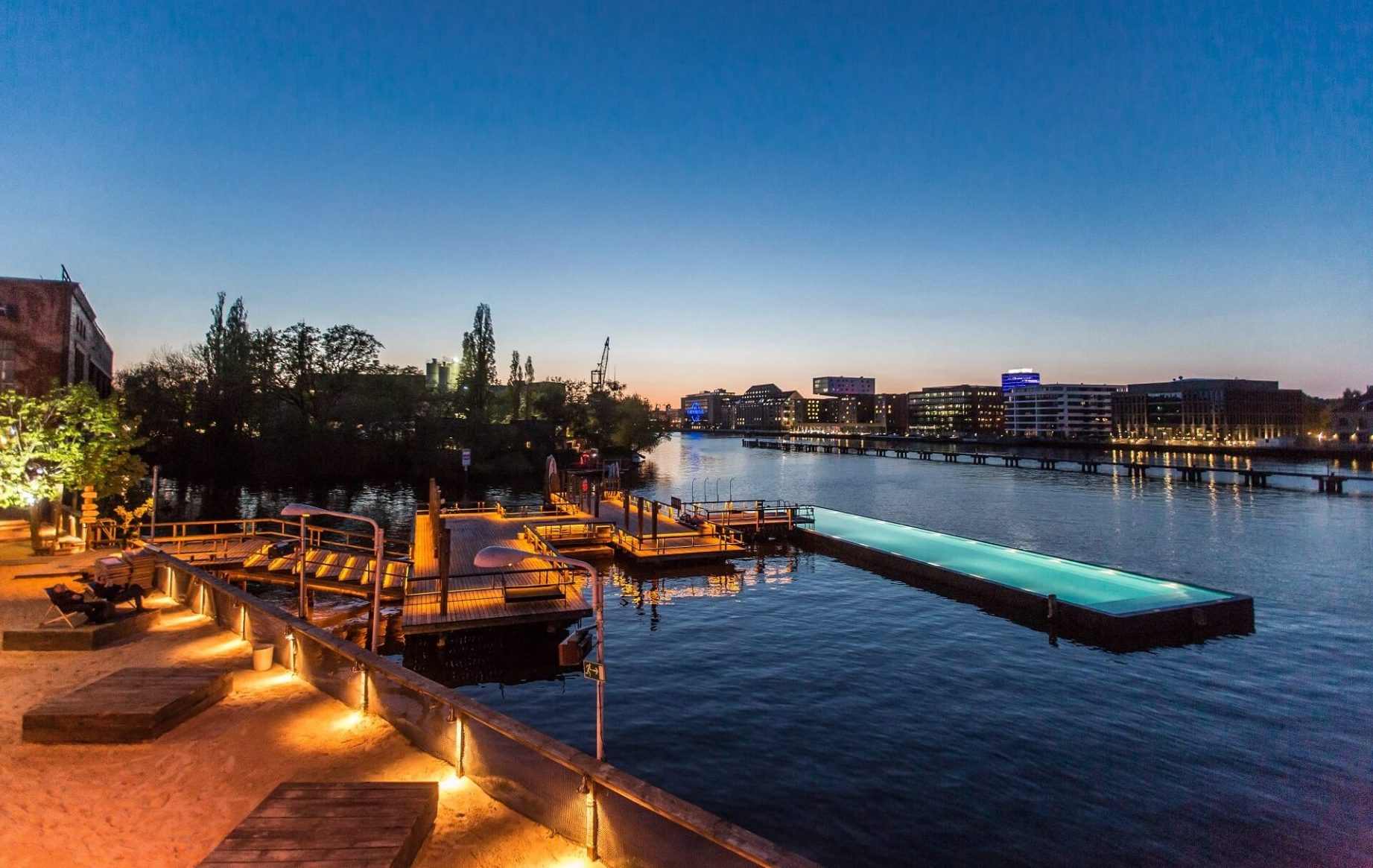
The first drop of crystalline water in the river Spree in Berlin. In line with the tradition of the 19thcentury river pools, the idea was born: to create the first, floating swimming pool on the riverSpree. An old cargo ship was refurbished and the original form underlined by the two sundecks atthe rear ends of the pool. On the riverbank, a sand beach with a bar area was installed.
[ PROJECT ]
Badeschiff
The project transforms a former industrial barge into a floating public swimming pool on Berlin’s River Spree. Reinterpreting the city’s historic river baths, the project reconnects people with the water through a simple yet powerful intervention that combines adaptive reuse, public space, and urban regeneration.
CLIENT
Kulturarena Veranstaltungs GmbH
CATEGORY
LOCATION
Berlin, Germany
YEAR
2004
[ OVERVIEW ]
Description
BADESCHIFF
The first drop of clean water in the Spree.
In the tradition of the river baths of the 19th century, arose the idea of a pool floating in the Spree. To this end a former cargo vessel was transformed into a swimming pool and extended with two sun decks. On the bank there is now also a sandy beach with an accompanying bar.
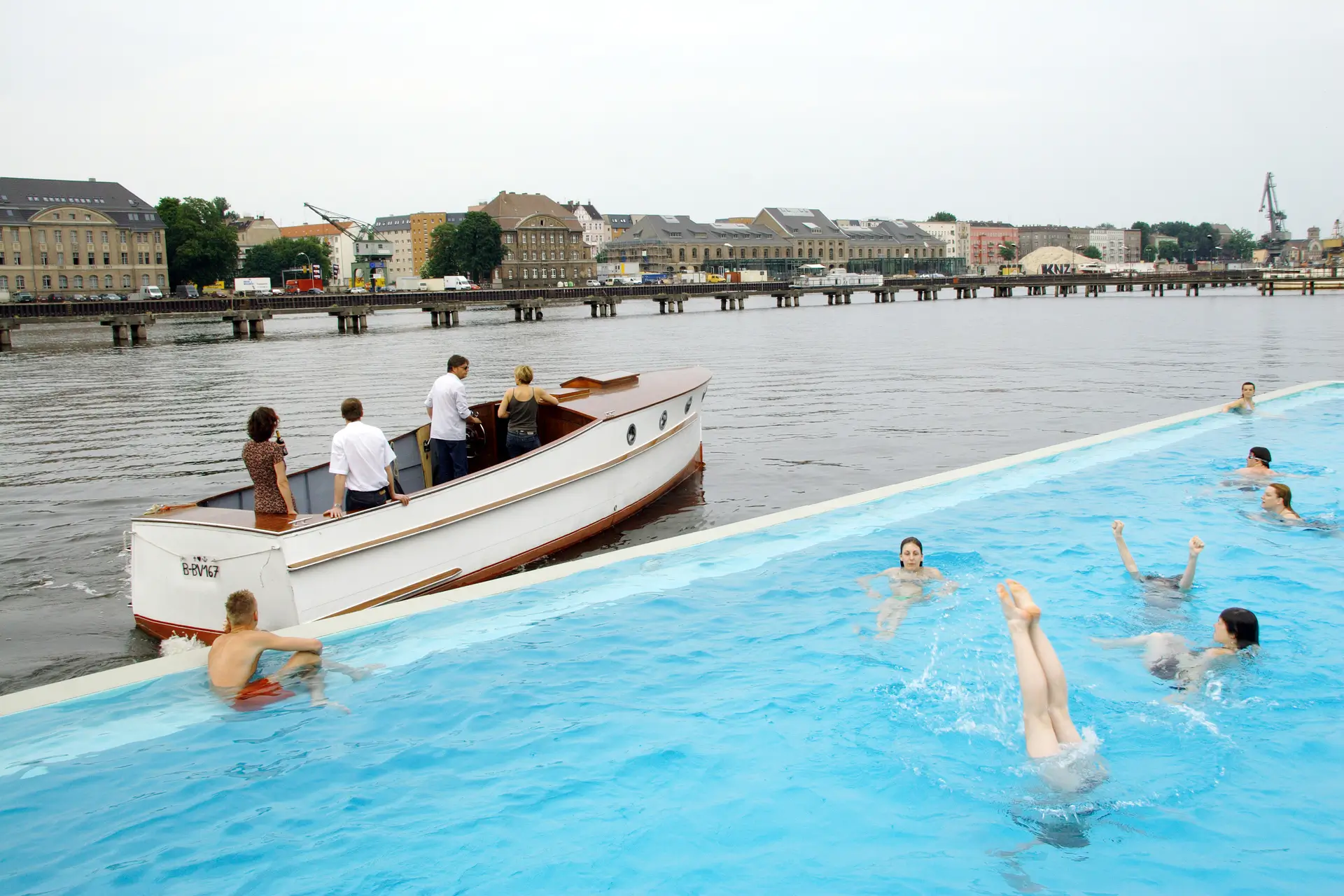
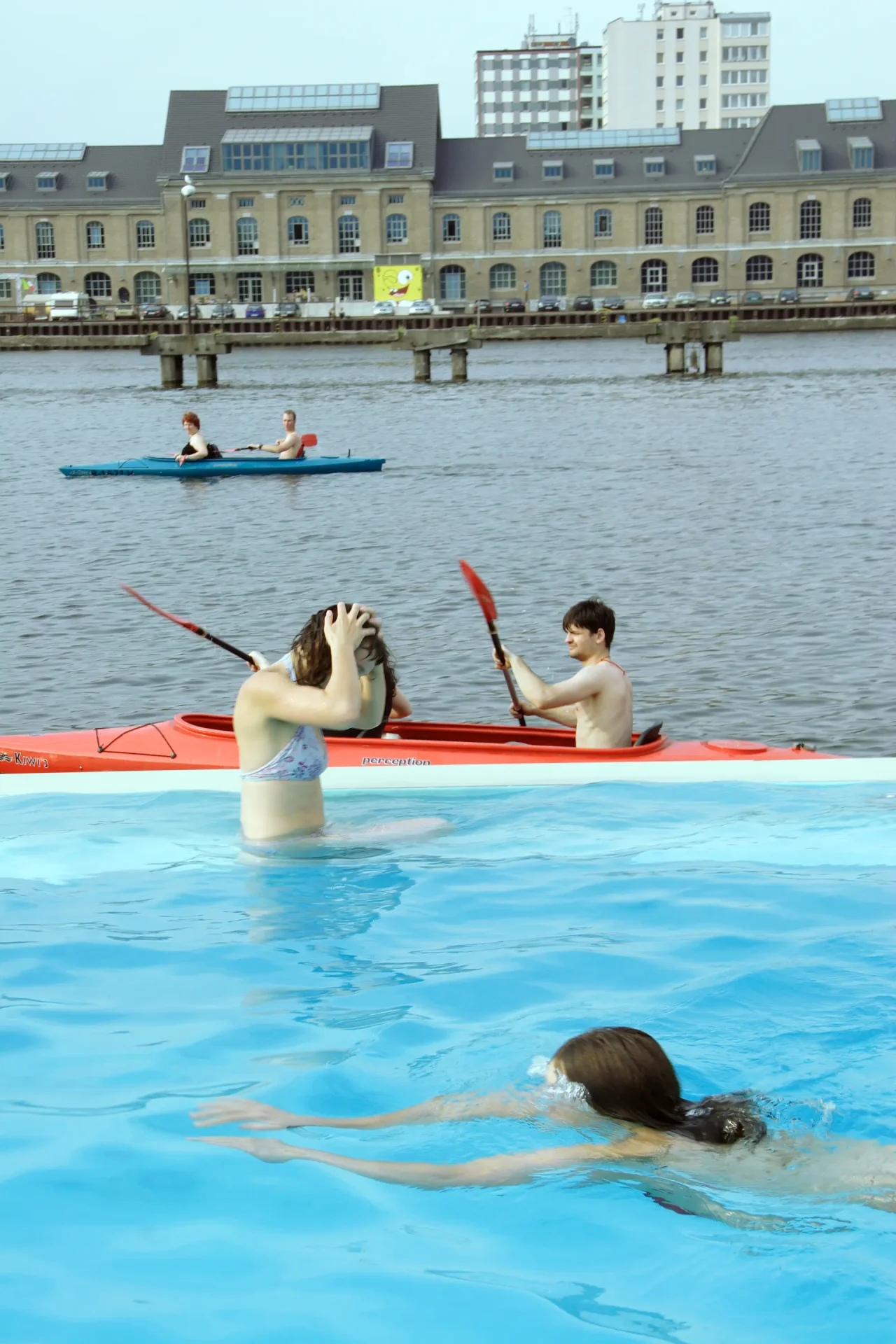
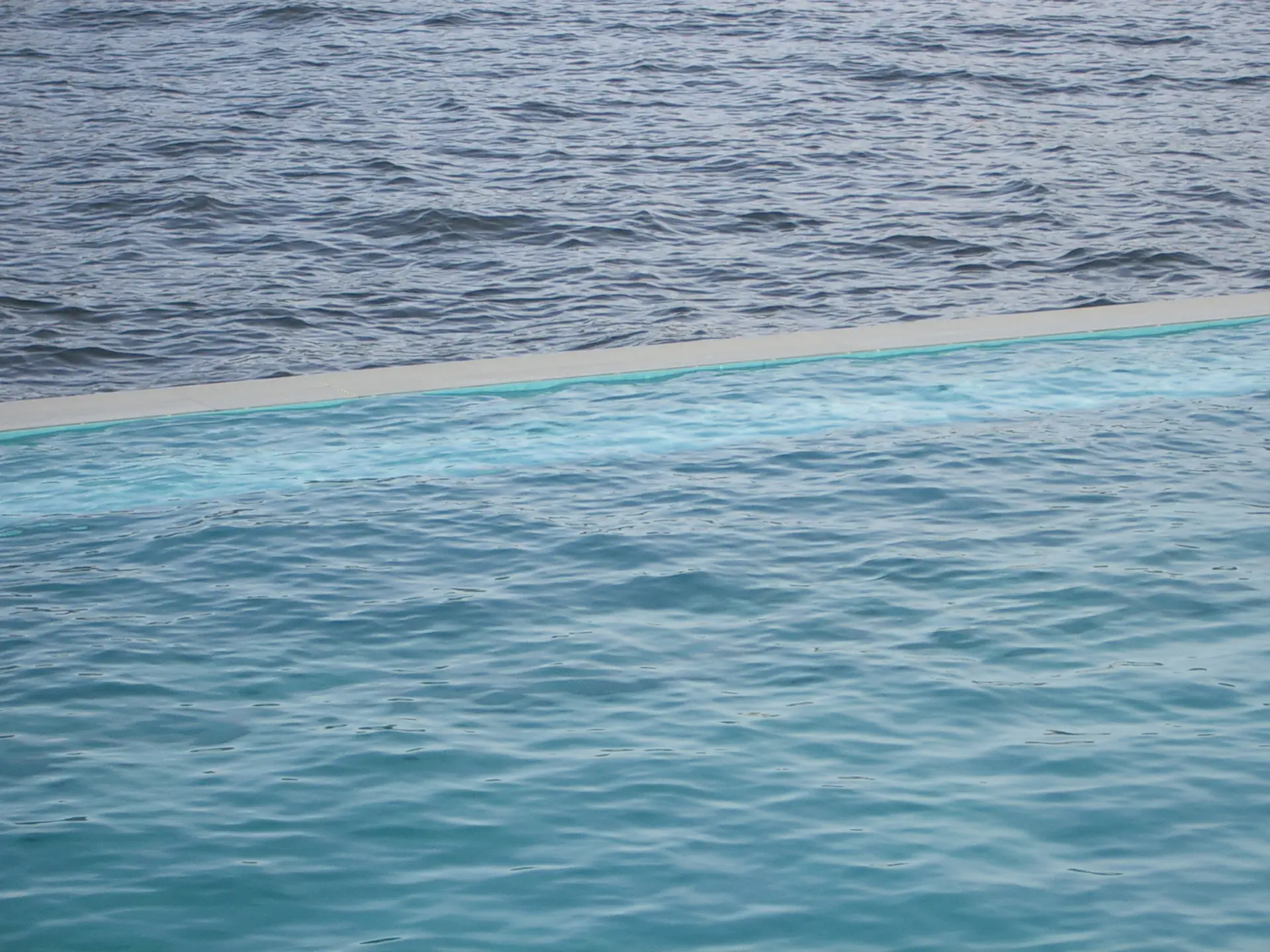
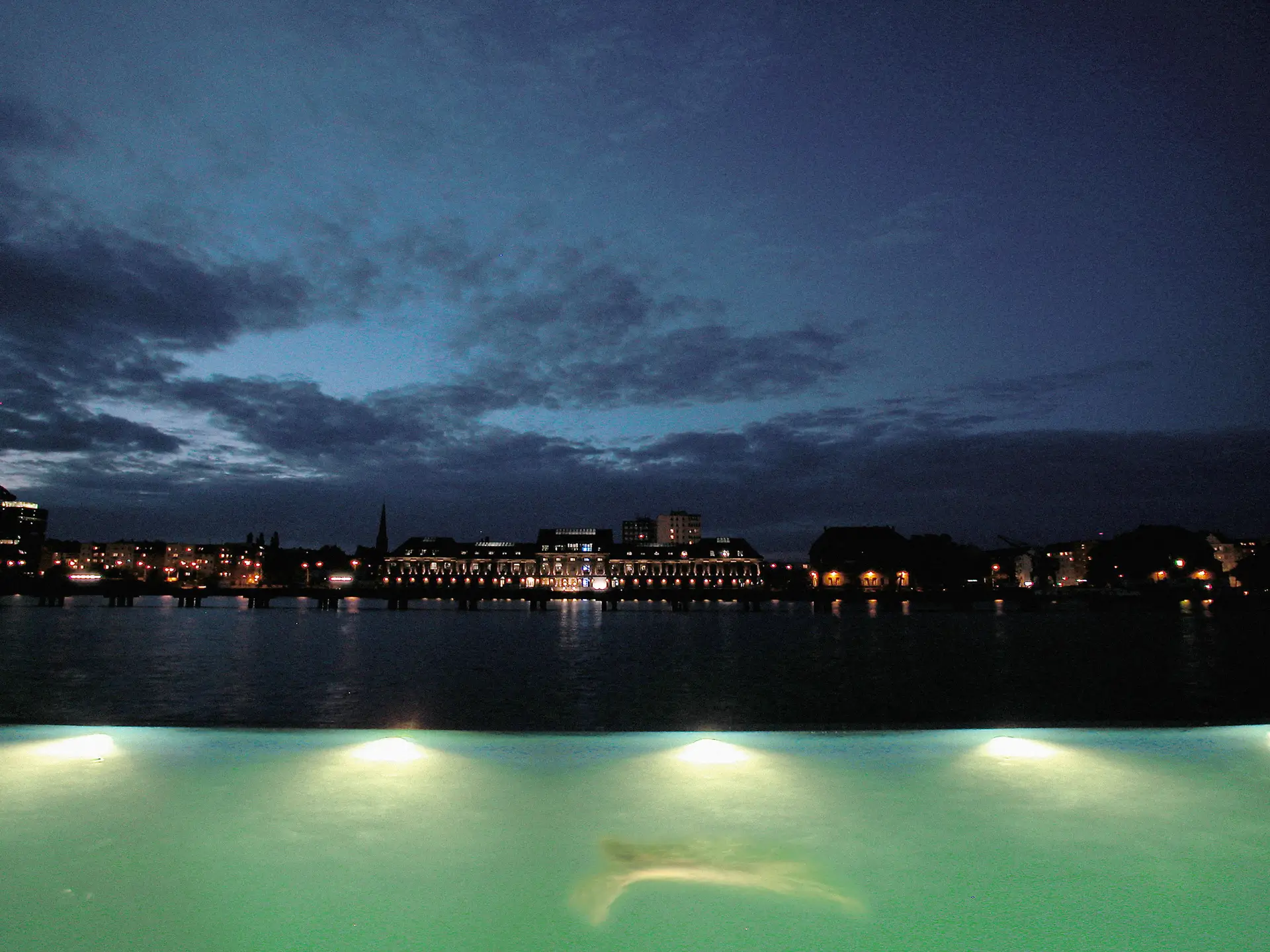
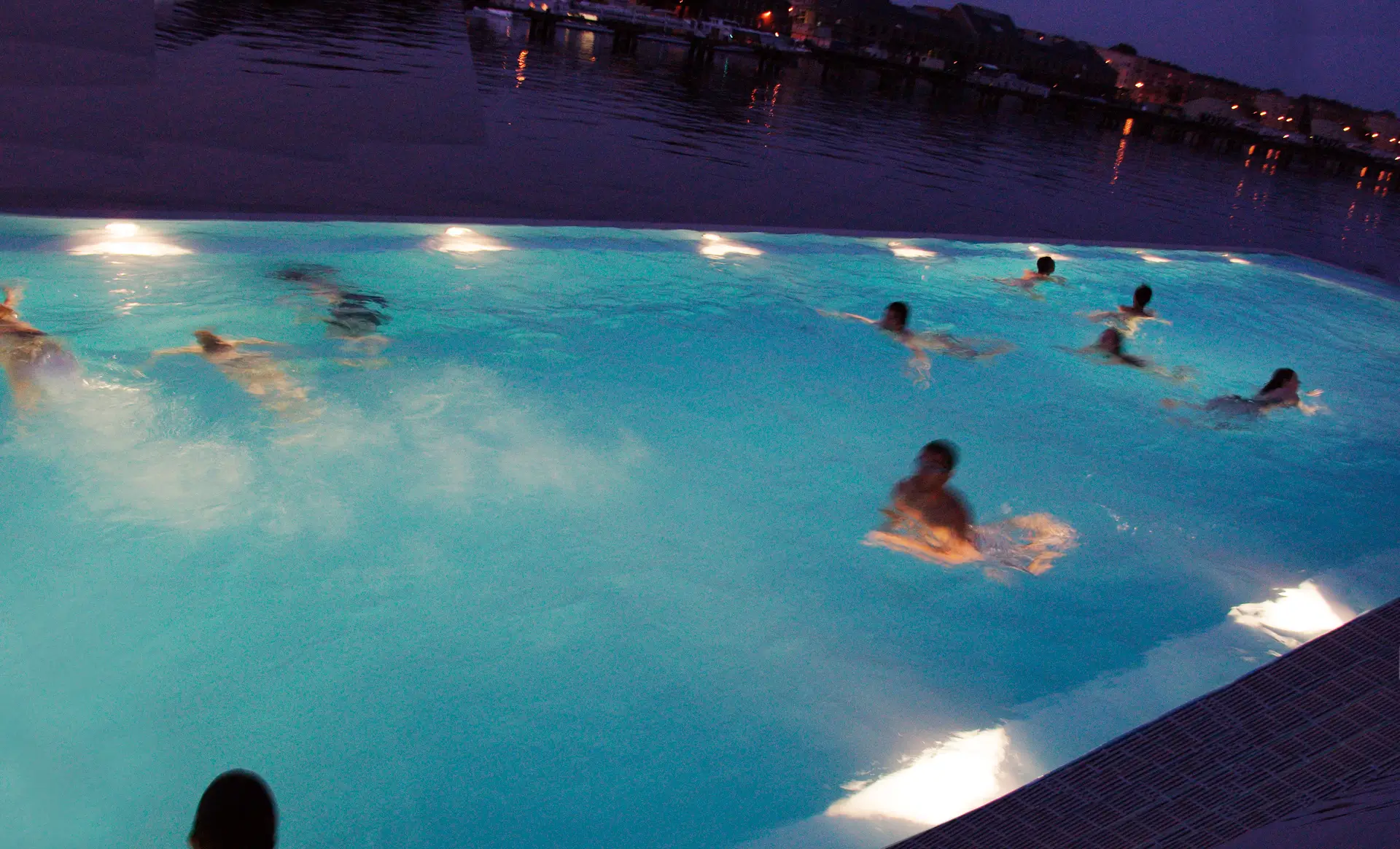
Visually it appears as if one were bathing directly in the river. In fact it is a former industrial barge once used to transport coal, now lying in the waters of the river as a symbol of its transformation into a lively, iconic part of the city.
The project emerged from a competition with the aim of reconnecting Berliners with the river that had long been inaccessible to them, among other things through artistic interventions on the bridges. The idea from which the Badeschiff later emerged was the attempt to bring clean water into the river and thus to make bathing in it possible again.
The competition was organised and realised by stadtkunstprojekte e.V. Berlin under the curator Heike C. Mertens. The client was Kulturarena Veranstaltungs GmbH. Those involved in the project were the architects Felipe Artengo, José Pastrana, Fernando Menis and Gilbert Wilk, together with the artist Susanne Lorenz.
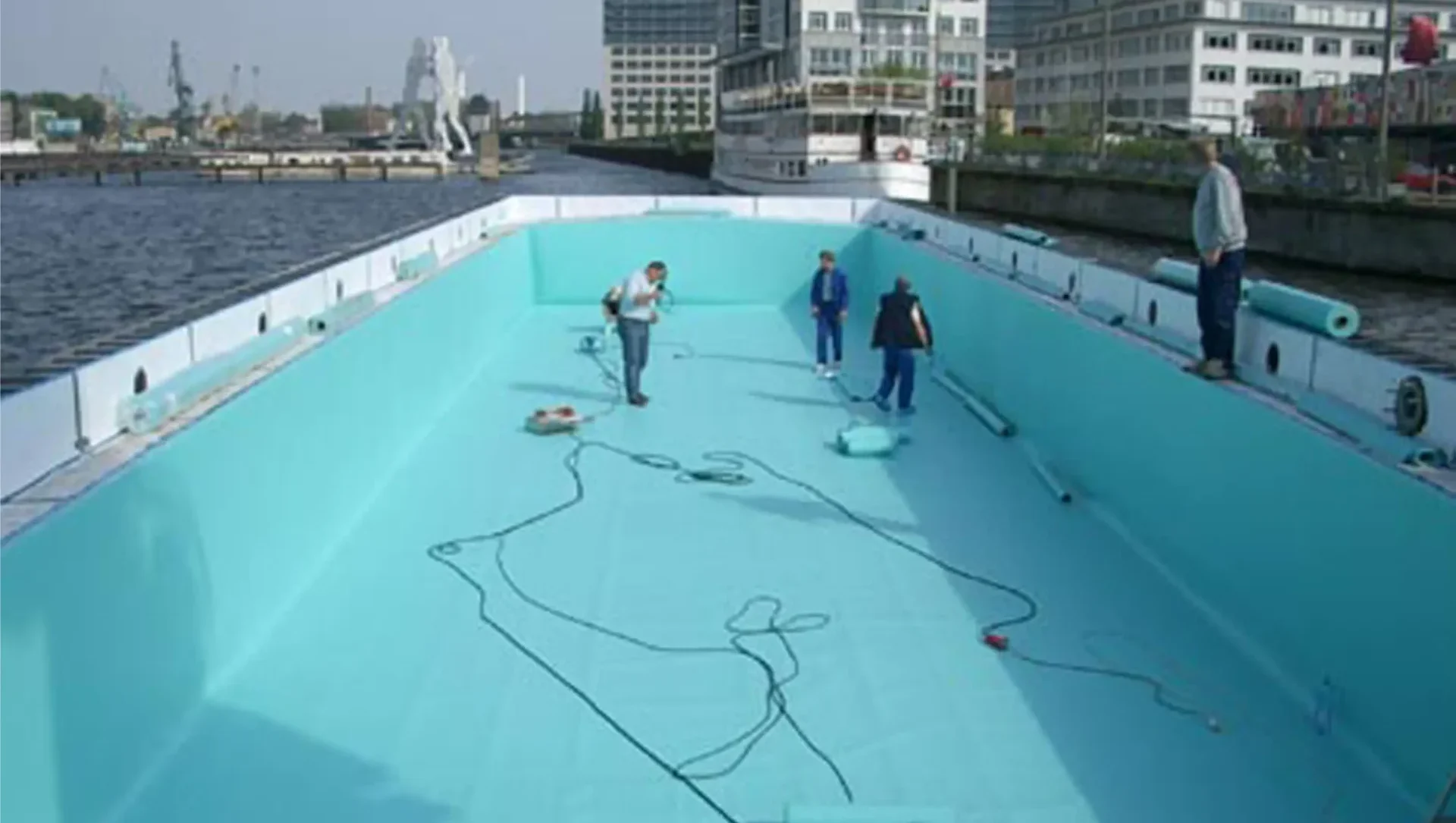
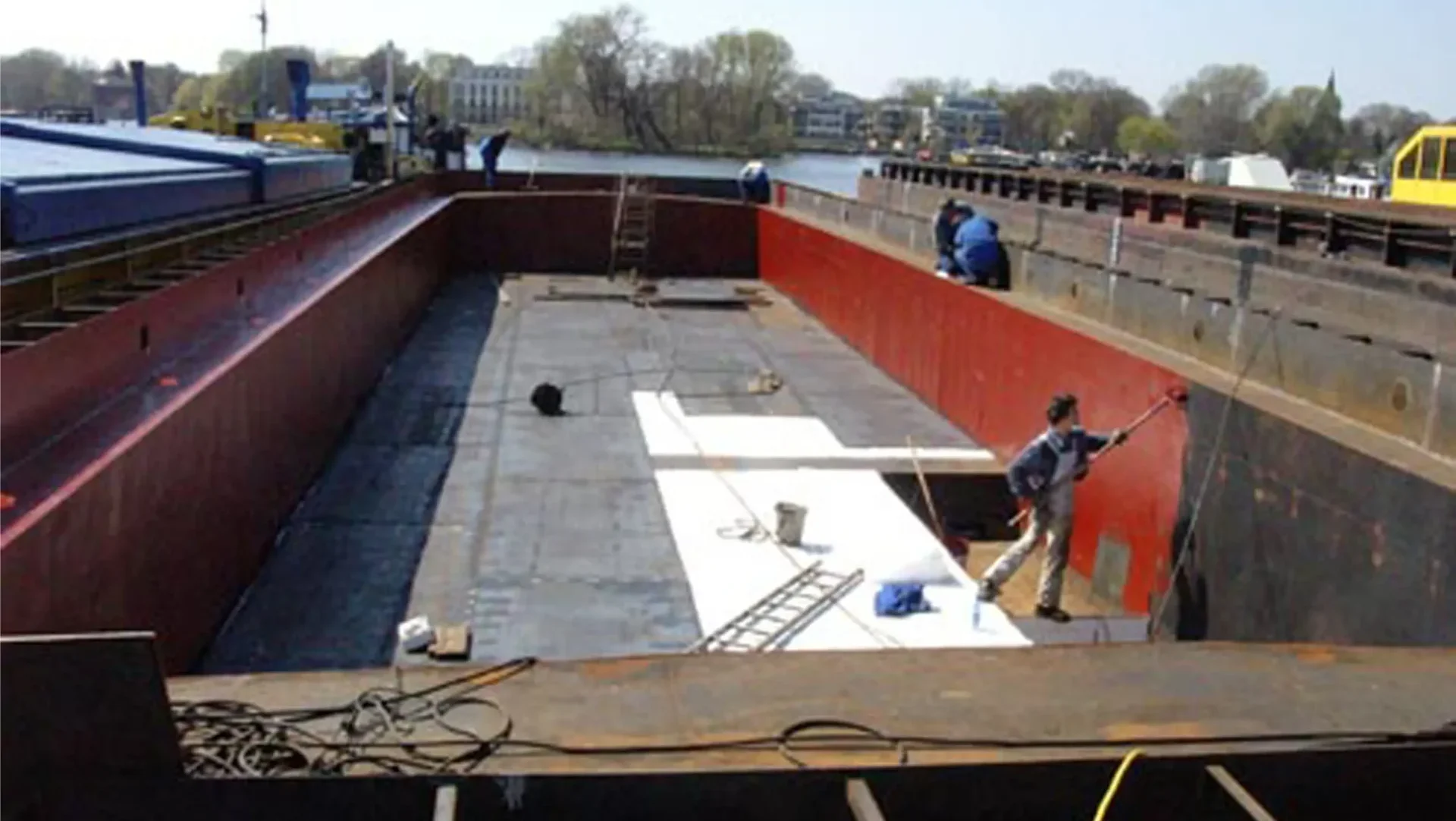
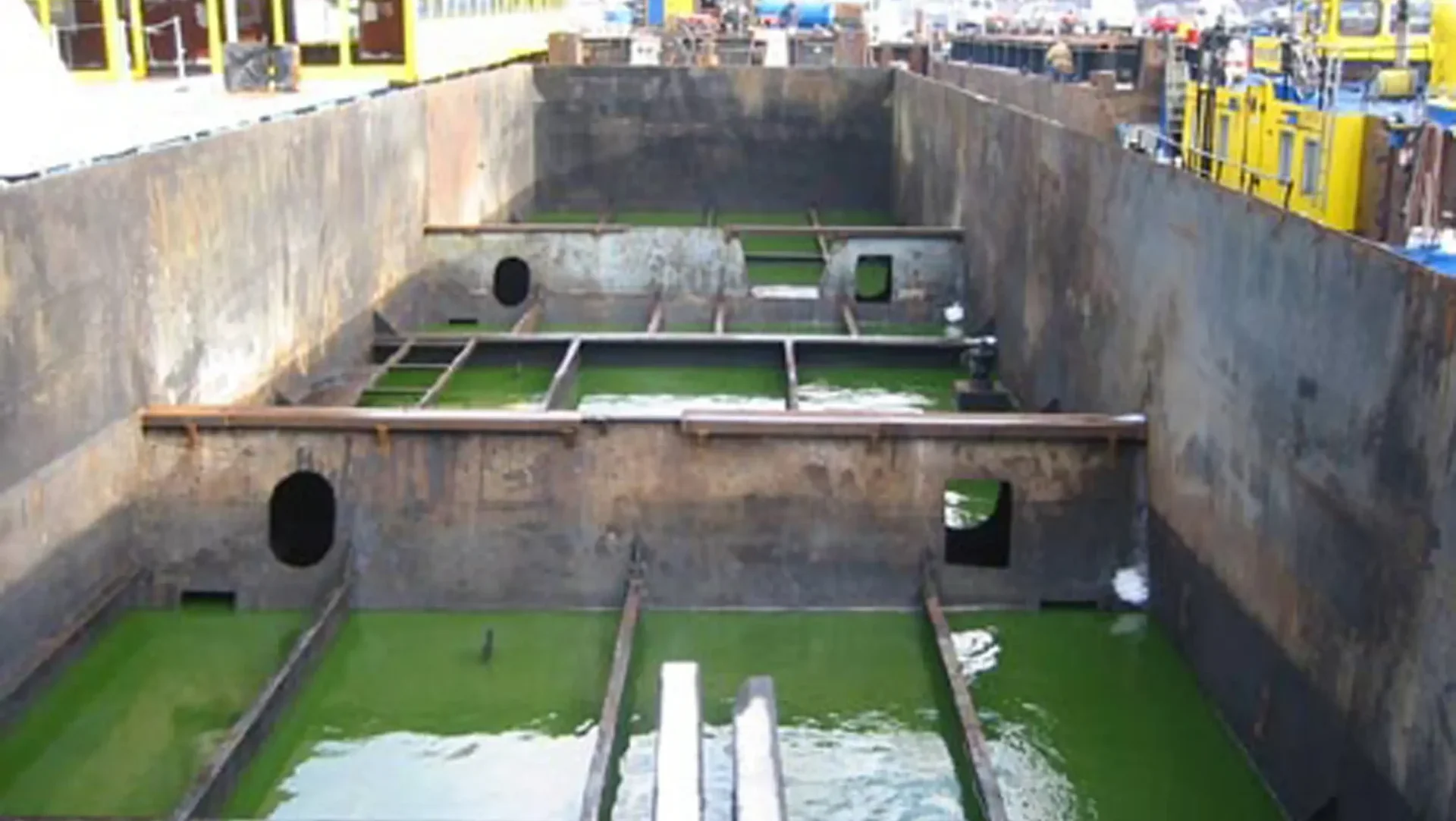
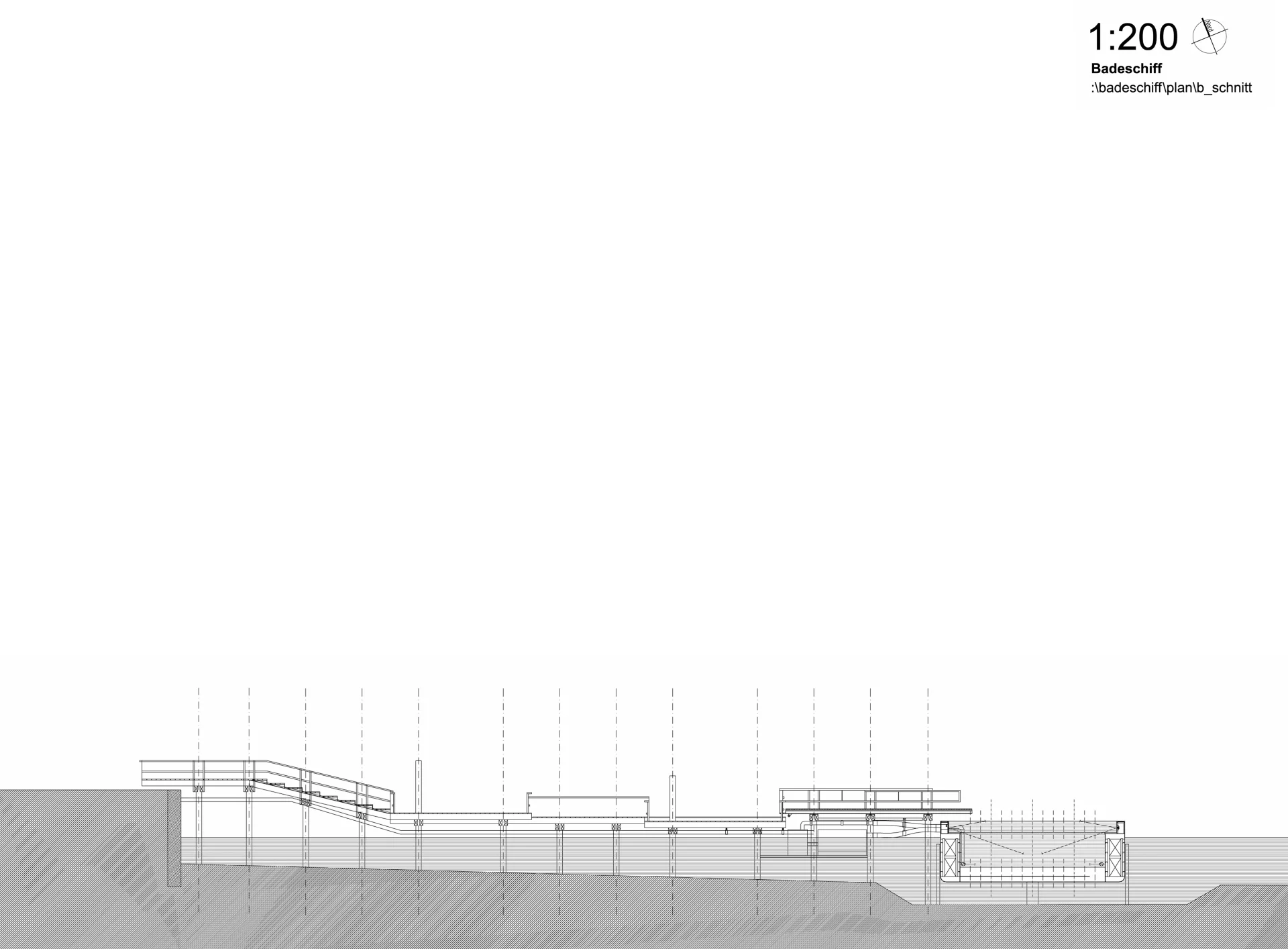
In the search for an economically viable option, the decision was taken to convert and recycle a cargo vessel. After removing the deck, the hull forms a rectangular floating basin. A length of 32.5 metres, a width of 8.2 metres and a depth of just over two metres provide the ideal dimensions for swimming. It holds 400,000 litres of water.
The group’s engineer, Juan José Gallardo, calculated the volume of liquid and the dead weight of the barge so that, when full, it projected 70 centimetres above the surface of the water. The idea was to align the water level with the edge of the pool so that bathers have the feeling of being completely in the river. To achieve this, a base slab of expanded polystyrene was inserted into the air chamber of the barge’s double hull using draught curves. This reduced the weight of the load and achieved the desired displacement. Two different water depths were used, offering both space for swimming and space for simply lingering and looking.
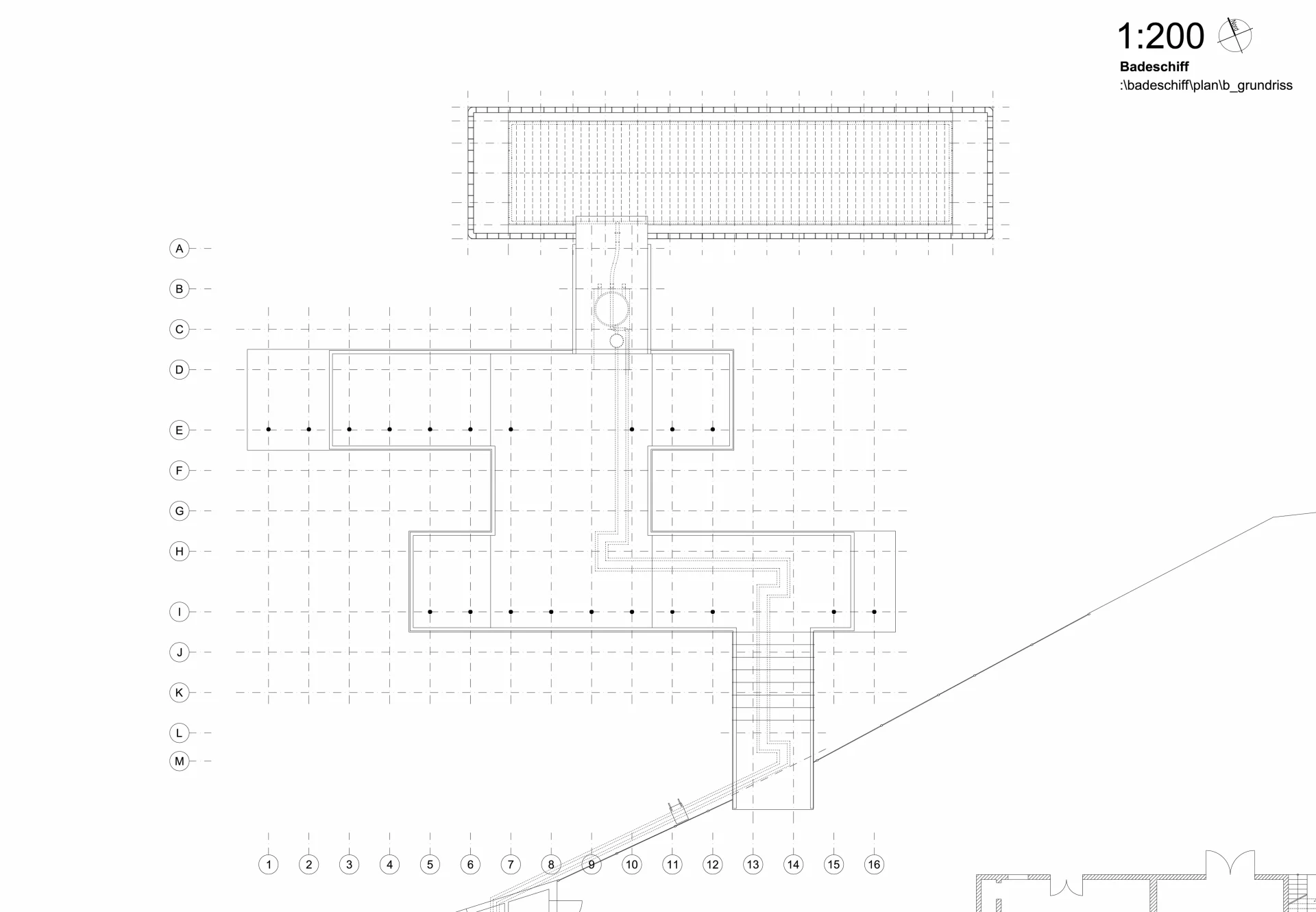
The Badeschiff lies in the south-east of the city, just before the Oberbaumbrücke. Approaching the river, a path opens through the sand leading to two large timber platforms. These serve as artificial beaches for sunbathing next to the pool.
It embodies the universal archetype of the ideal public space, since it connects architecture and city seamlessly, without drawing boundaries between them.
At the beginning of the 20th century there were fifteen popular public baths along the Spree. Some were located directly in the river, others nearby and fed by Spree water. However, the increasing pollution of the waters had already led to the closure of all public baths before the First World War. With this design the team wanted to revive bathing and thus connected a tradition of the past with the present. The idea inspired the private company ARENA, which built the Badeschiff and moored it as an attractive feature in front of its leisure facilities.
The collaboration of various specialists turned a forgotten tradition into a poetic experience, and Berlin gained a completely new perspective on its city.
Since its construction, the Badeschiff has continuously received visitors and recognition from the most varied perspectives, not only locally but also as a source of inspiration for later projects in cities around the world.
HISTORICAL
Architectural plans
VIDEO
CREDITS
Architects: Felipe Artengo, Jose Pastrana, Fernando Menis, Gilbert Wilk
Competition management: stadtkunstprojekte e.V. Berlin, Kuratorin Heike C. Mertens
Artist: Susanne Lorenz
Technical Management: Ute Schimmelpfennig
Structural Engineering (Platforms): IB Leipold
Structural Engineering (Ship): HHW+Partner
Ship Conversion: Märkische Bunker und Service GmbH
Swimming Pool Technology: Aquapart
Image Credits
Photographs 01-07: Wilk-Salinas Architekten
CONTACT
CONTACT
CONTACT
CONTACT
CONTACT
CONTACT
CONTACT
CONTACT
CONTACT
CONTACT
CONTACT
CONTACT
CONTACT
CONTACT
CONTACT
CONTACT
CONTACT
CONTACT
CONTACT
CONTACT
CONTACT
CONTACT
CONTACT
CONTACT
CONTACT
CONTACT
CONTACT
CONTACT
CONTACT
CONTACT
CONTACT
CONTACT
Bring magic into being.
Built in Berlin. Designed for the world. Architecture with clarity and purpose.