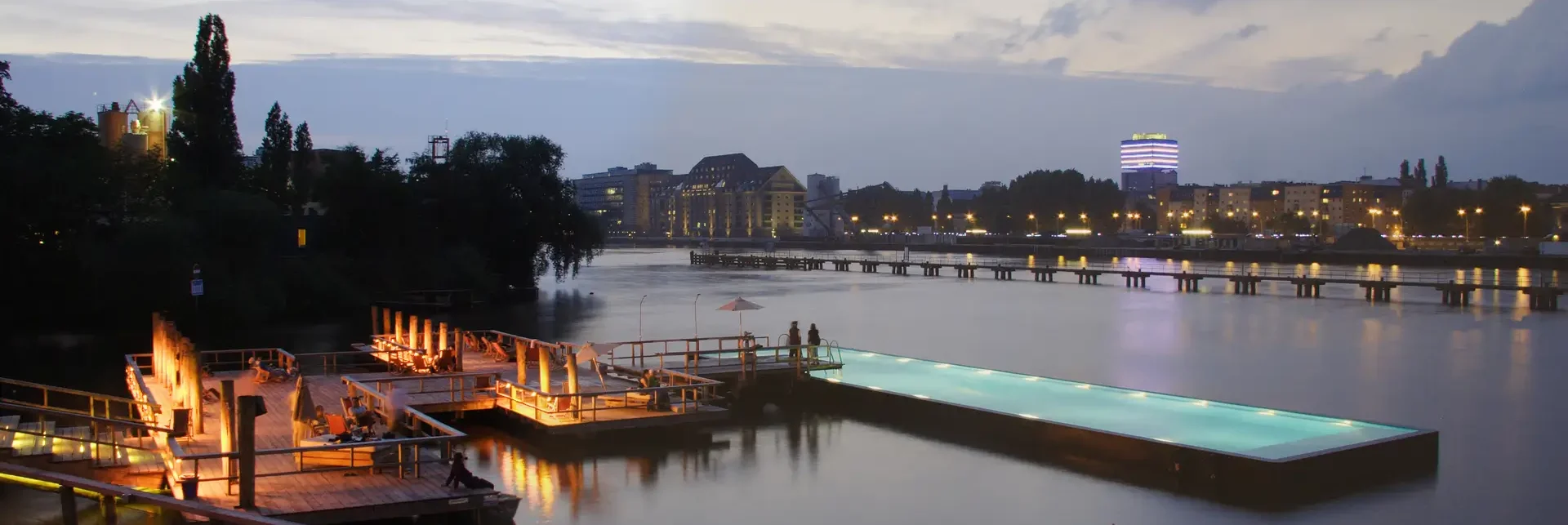
Der erste Tropfen sauberes Wasser in der Spree... In der Tradition der Flussschwimmbäder des 19. Jahrhunderts entstand die Idee eines in der Spree schwimmenden Pools. Dazu wurde ein ehemaliges Transportschiff in ein Schwimmbad verwandelt und dieses um zwei Sonnendecks erweitert. Am Ufer findet sich nun zudem ein aufgeschütteter Sandstrand mit dazugehöriger Bar.
[ PROJEKT ]
Badeschiff
The project transforms a former industrial barge into a floating public swimming pool on Berlin’s River Spree. Reinterpreting the city’s historic river baths, the project reconnects people with the water through a simple yet powerful intervention that combines adaptive reuse, public space, and urban regeneration.
BAUHERR
Kulturarena Veranstaltungs GmbH
KATEGORIE
STANDORT
Berlin, Deutschland
JAHR
2004
[ ÜBERBLICK ]
Beschreibung
BADESCHIFF
Der erste Tropfen sauberes Wasser in der Spree.
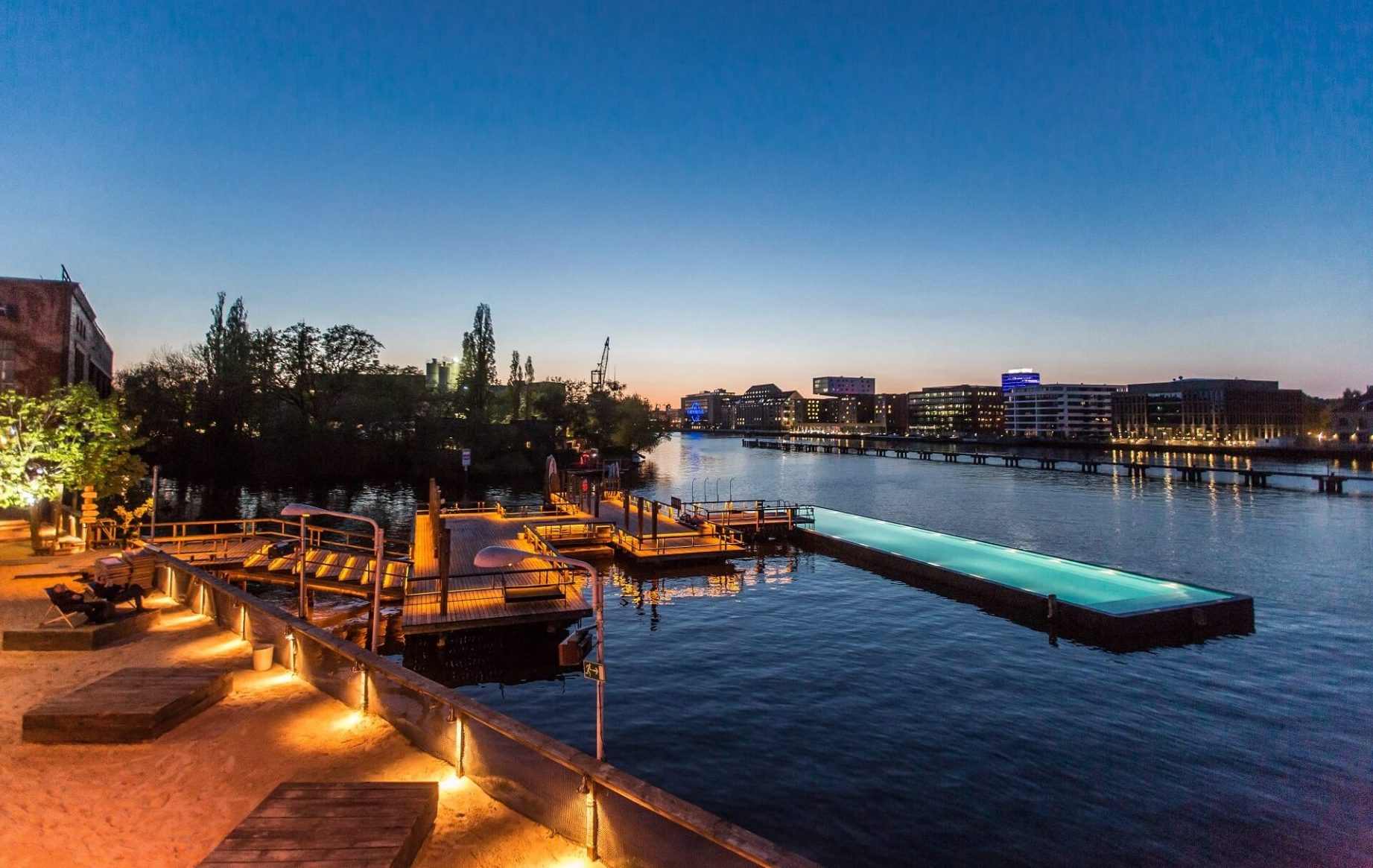
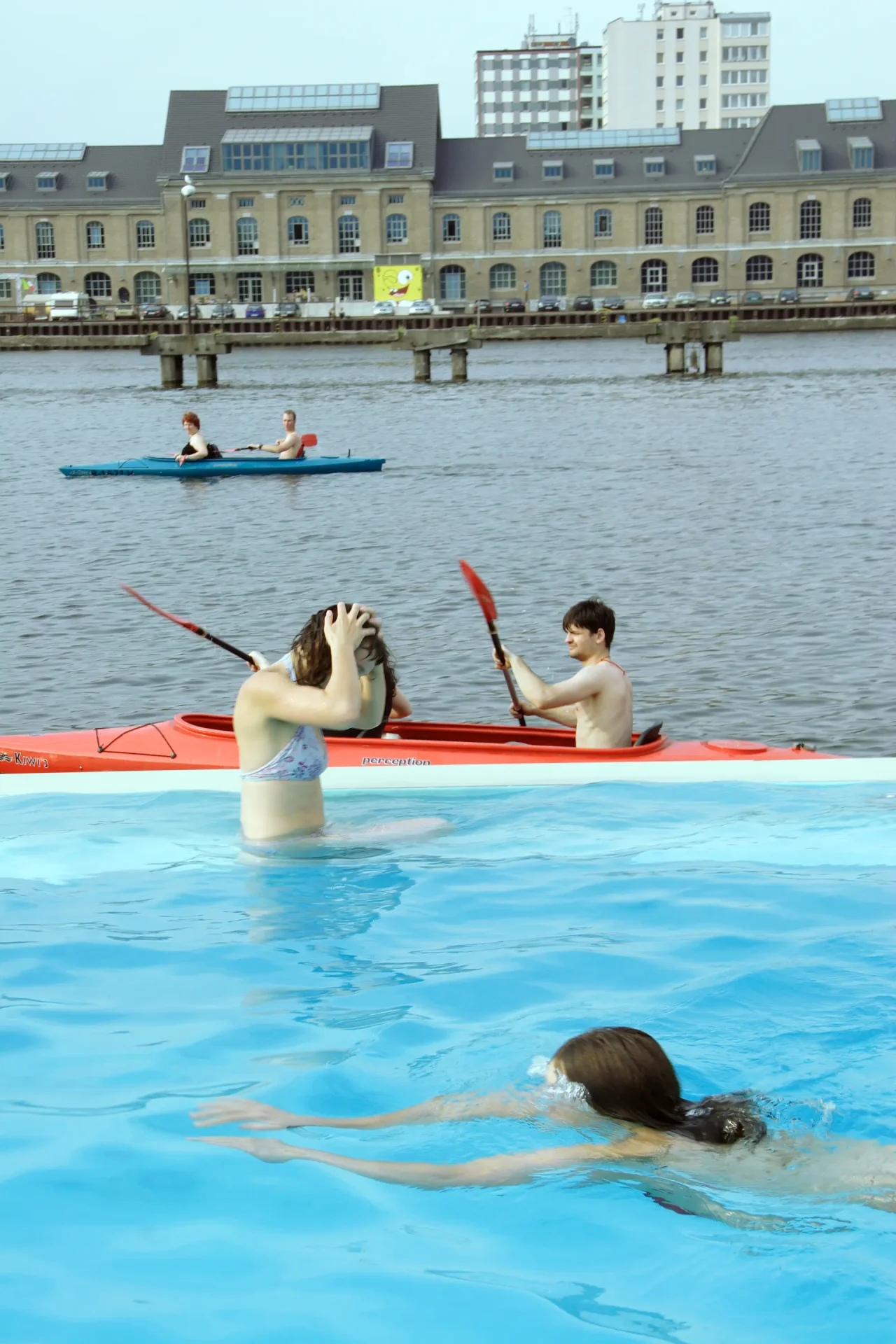
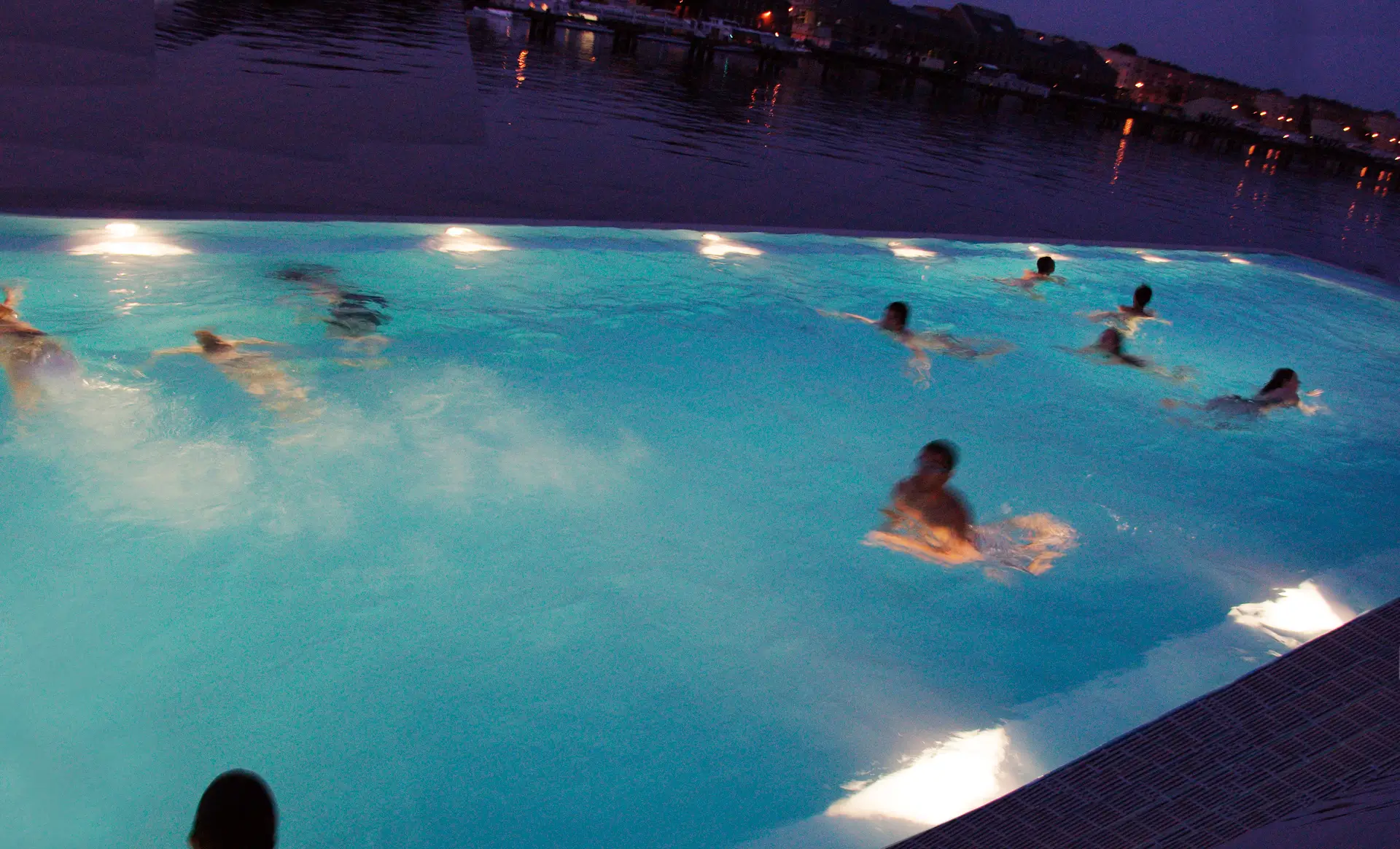
In der Tradition der Flussschwimmbäder des 19. Jahrhunderts entstand die Idee eines in der Spree schwimmenden Pools. Dazu wurde ein ehemaliges Transportschiff in ein Schwimmbad verwandelt und dieses um zwei Sonnendecks erweitert. Am Ufer findet sich nun zudem ein aufgeschütteter Sandstrand mit dazugehöriger Bar.
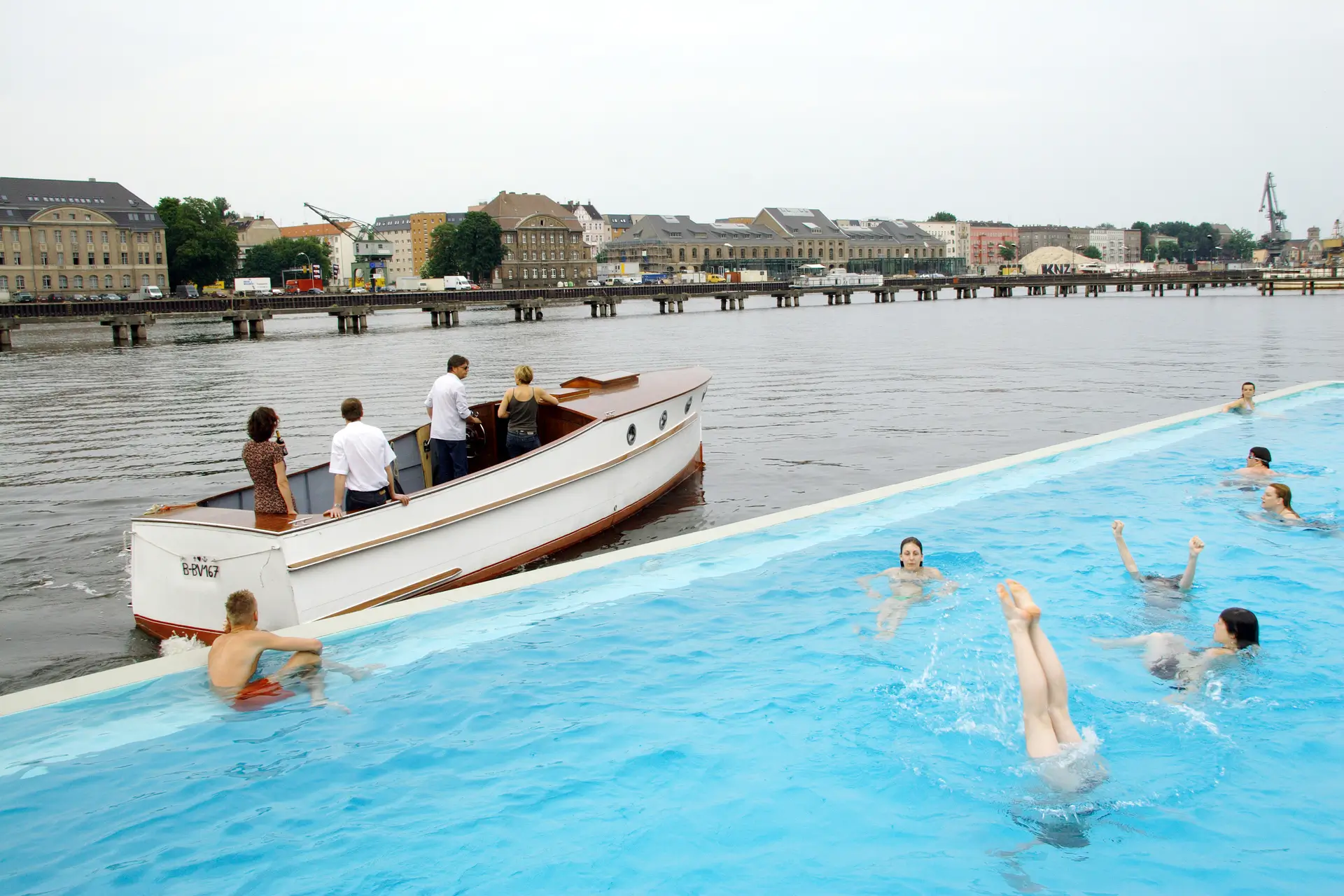
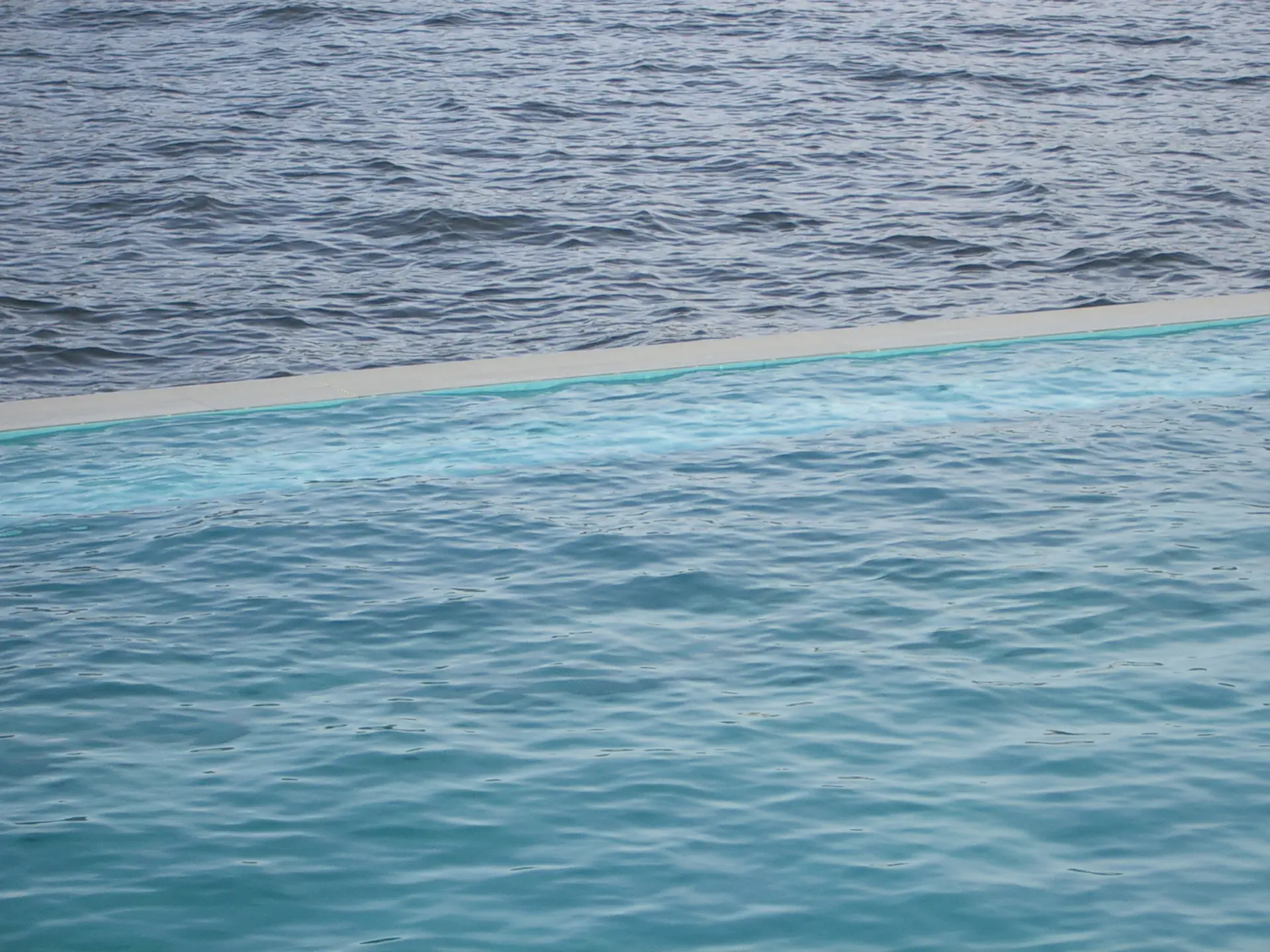
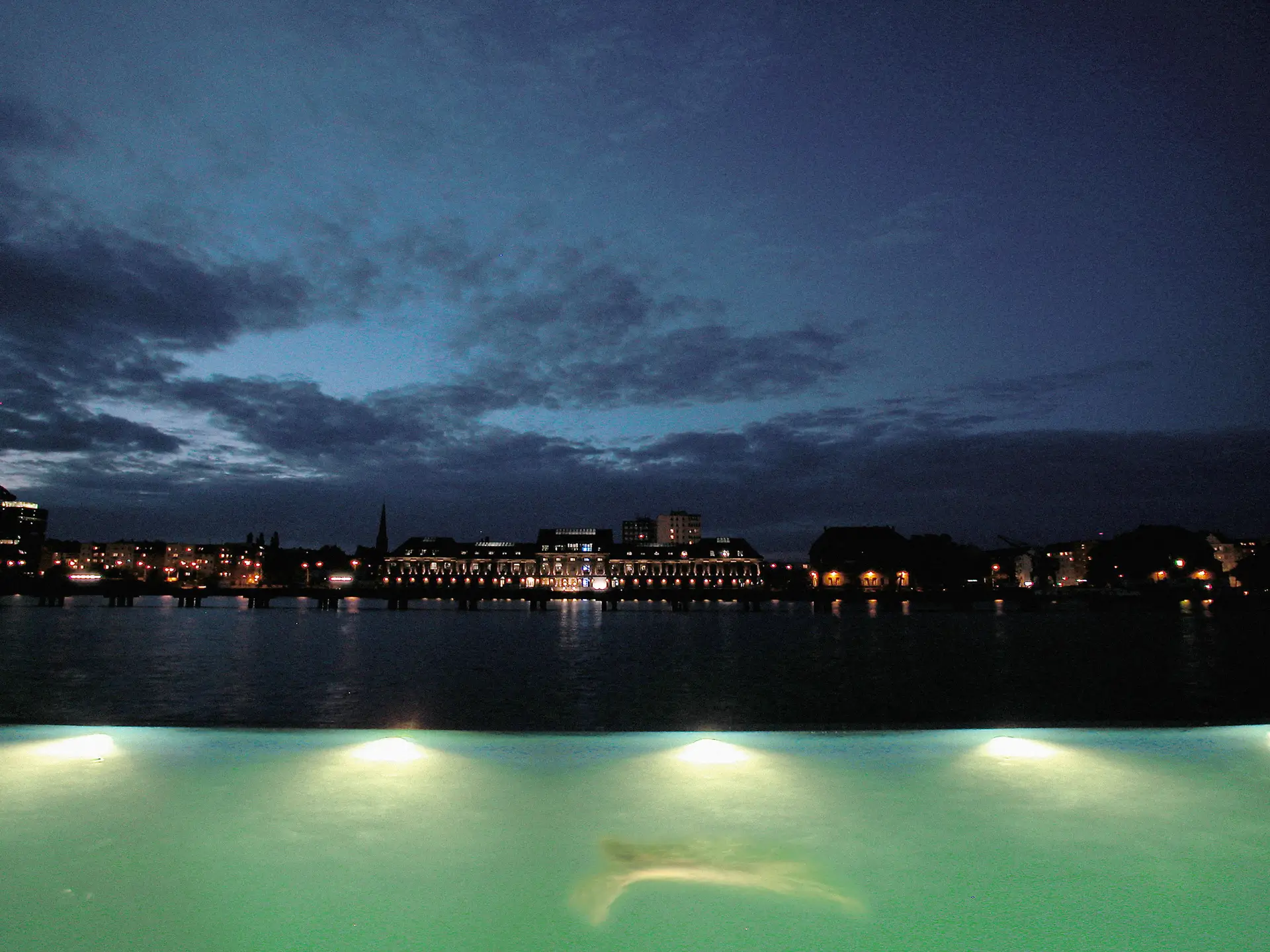
Optisch wirkt es, als würde man direkt im Fluss baden; tatsächlich handelt es sich jedoch um einen ehemaligen Industriekahn, der zum Kohletransport genutzt wurde und heute in den Fluten des Flusses liegt, als Symbol für dessen Wandel zu einem lebendigen, ikonischen Teil der Stadt.
Das Projekt entstand im Rahmen eines Wettbewerbs mit dem Ziel, die Berliner*innen wieder mit dem Fluss zu verbinden, der ihnen lange Zeit verschlossen geblieben war, unter anderem durch künstlerische Interventionen an den Brücken. Die Idee, aus der später das Badeschiff hervorging, war der Versuch, sauberes Wasser in den Fluss und so das Baden in diesem wieder möglich zu machen.
Die Auslobung des Wettbewerbs und die Realisierung erfolgten durch stadtkunstprojekte e.V. Berlin unter der Kuratorin Heike C. Mertens. Bauherr war die Kulturarena Veranstaltungs GmbH. Projektbeteiligte waren die Architekten Felipe Artengo, Jose Pastrana, Fernando Menis und Gilbert Wilk, sowie die Künstlerin Susanne Lorenz.
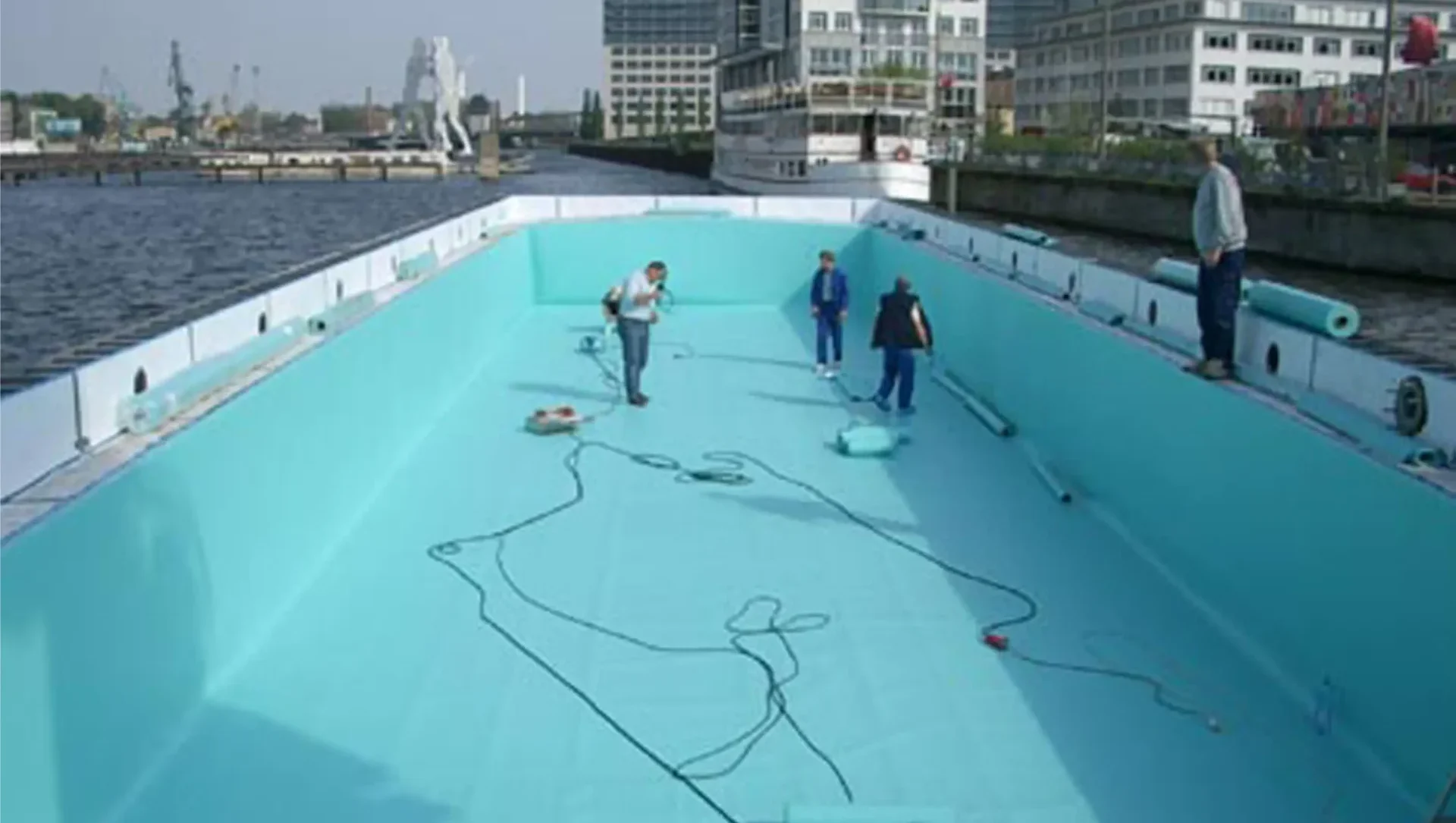
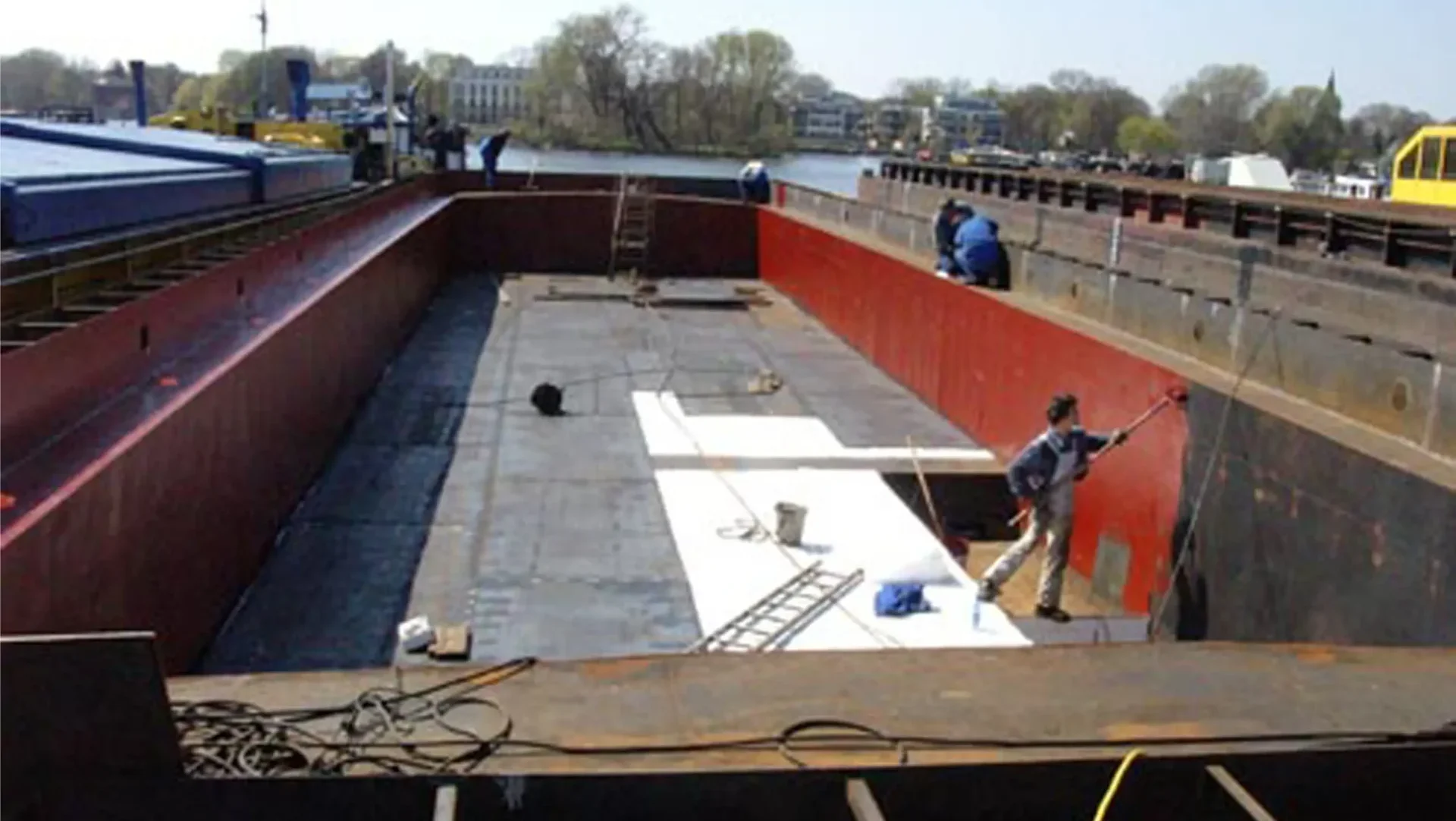
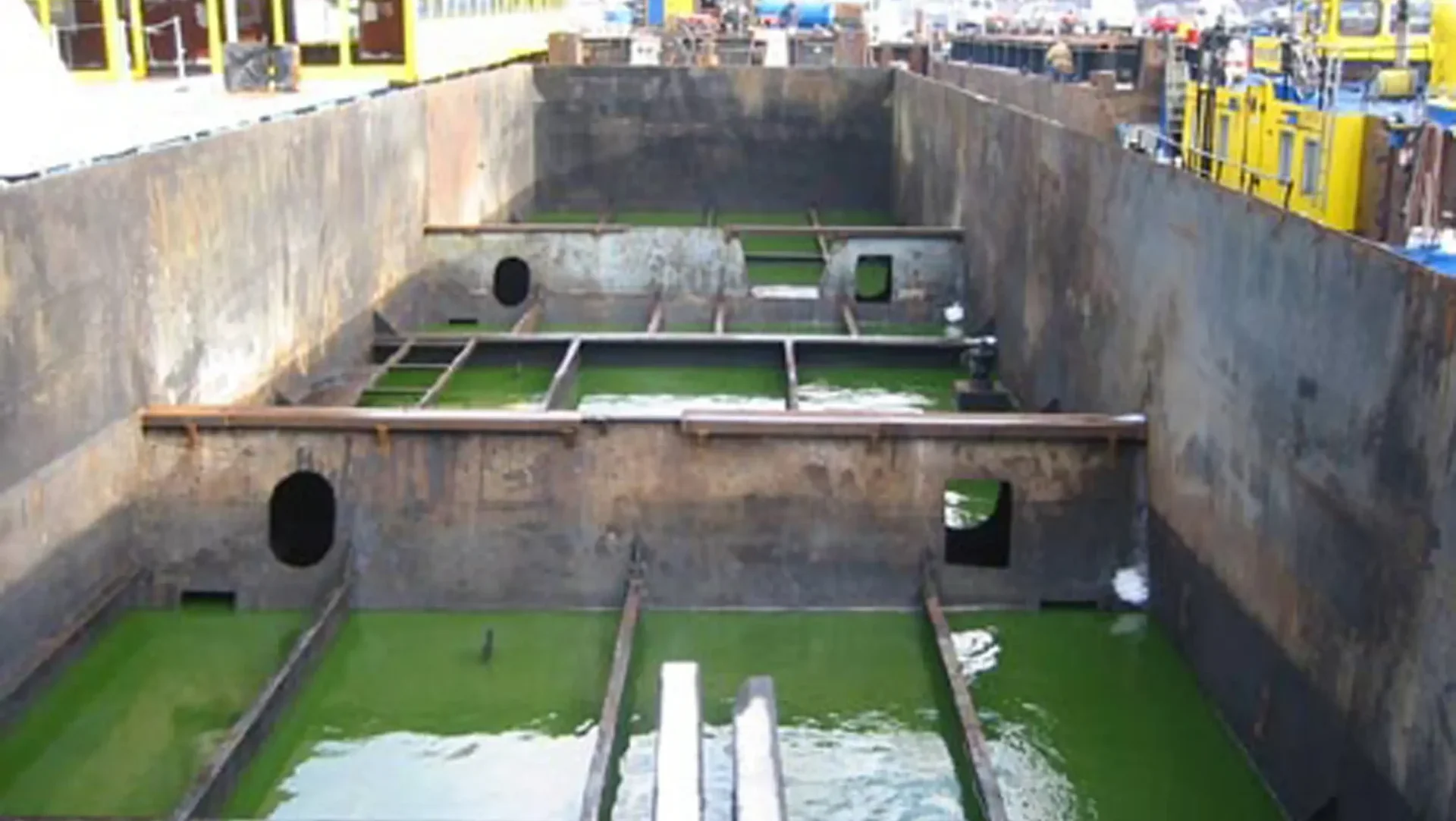
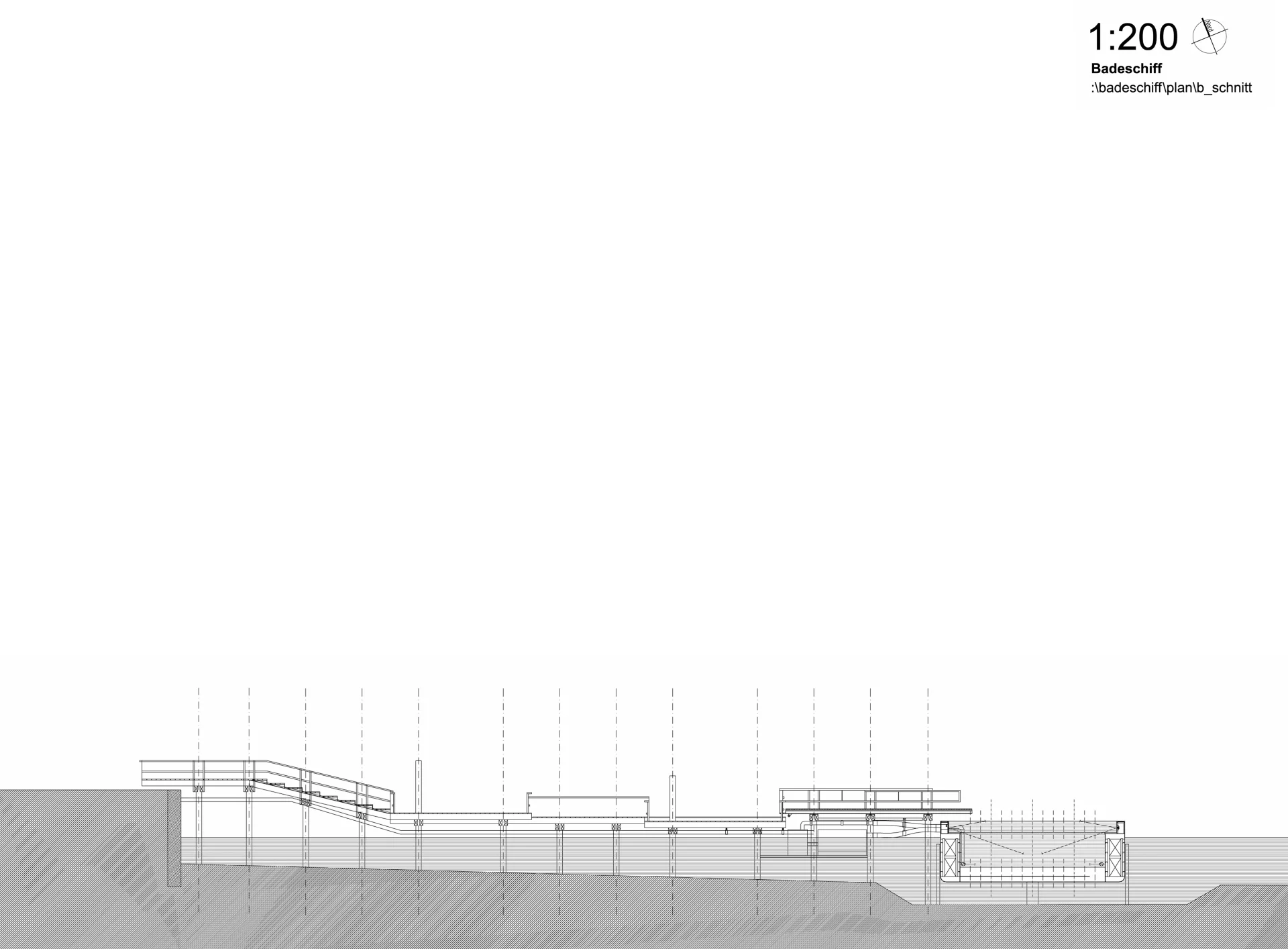
Auf der Suche nach einer wirtschaftlich tragfähigen Variante entschied man sich für die Umgestaltung und das Recycling eines Transportschiffs. Nach dem Entfernen des Decks bildet der Rumpf ein rechteckiges, schwimmendes Becken. 32,5 Meter Länge, 8,2 Meter Breite und etwas über zwei Meter Tiefe ergeben die idealen Maße zum Schwimmen. Er fasst 400.000 Liter Wasser.
Der Ingenieur der Gruppe, Juan José Gallardo, berechnete die Flüssigkeitsmenge und das Eigengewicht des Kahns so, dass er im vollen Zustand 70 Zentimeter über die Wasseroberfläche hinausragte. Die Idee war, den Wasserspiegel auf den Rand des Pools abzustimmen, damit die Badegäste das Gefühl haben vollständig im Fluss zu sein. Um dies zu erreichen, wurde mithilfe von Tiefgangkurven eine Bodenplatte aus expandiertem Polystyrol in die Luftkammer der Doppelhülle des Frachtkahns eingesetzt. Dadurch reduzierte sich das Gewicht der Ladung und die gewünschte Verdrängung wird erzielt. Dabei wurde mit zwei unterschiedlichen Wassertiefen gespielt, die sowohl Raum zum Schwimmen als auch Raum zum bloßen Verweilen, Betrachten bieten.
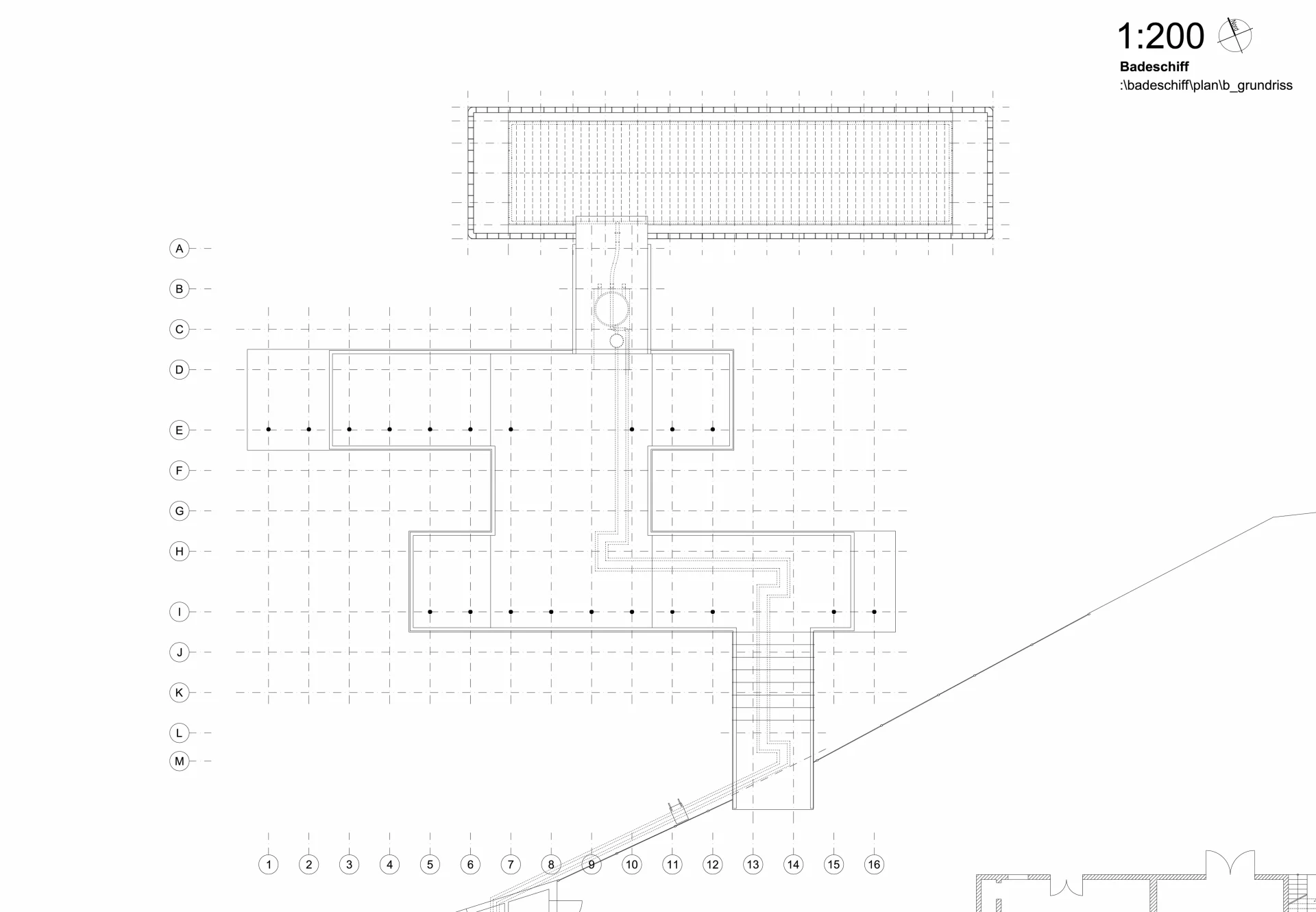
Das Badeschiff liegt im Südosten der Stadt, kurz vor der Oberbaumbrücke. Bei Annäherung an den Fluss öffnet sich ein Pfad durch den Sand, der zu zwei großen Holzplattformen führt. Diese dienen als künstliche Strände zum Sonnenbaden neben dem Pool.
Es verkörpert den universellen Archetyp des idealen öffentlichen Raums, da es Architektur und Stadt nahtlos miteinander verbindet, ohne Grenzen zwischen ihnen zu ziehen.
Anfang des 20. Jahrhunderts gab es fünfzehn beliebte öffentliche Bäder entlang der Spree. Einige befanden sich direkt im Fluss, andere lagen in der Nähe und wurden vom Spreewasser gespeist. Die zunehmende Verschmutzung der Gewässer hatte jedoch bereits vor dem Ersten Weltkrieg zur Schließung aller öffentlichen Bäder geführt. Mit dem Entwurf wollte das Designerteam das Baden wiederbeleben und verband so eine Tradition der Vergangenheit mit der Gegenwart. Die Idee begeisterte das Privatunternehmen ARENA, das das Badeschiff baute und es als attraktive Attraktion vor seinen Freizeiteinrichtungen verankerte.
Die Zusammenarbeit verschiedener Fachleute verwandelte eine in Vergessenheit geratene Tradition in ein poetisches Erlebnis, und Berlin gewann eine völlig neue Perspektive auf seine Stadt.
Seit seiner Errichtung erhält das Badeschiff ununterbrochen Besuche und Anerkennung aus den unterschiedlichsten Perspektiven – nicht nur auf lokaler Ebene, sondern auch als Inspirationsquelle für spätere Projekte in verschiedenen Städten der Welt.
HISTORISCHE AUFNAHMEN
Architekturpläne
VIDEO
PROJEKTBETEILIGTE
Architekten: Felipe Artengo, Jose Pastrana, Fernando Menis, Gilbert Wilk
Auslobung Wettbewerb und Realisierung: stadtkunstprojekte e.V. Berlin, Kuratorin Heike C. Mertens
Künstlerin: Susanne Lorenz
Technische Leitung: Ute Schimmelpfennig
tatik Steganalge: IB Leipold
Statik Schiffsaufhängung: HHW+Partner, Braunschweig
Schiffsumbau: Märkische Bunker und Service GmbH
Schwimmbadtechnik: Aquapart
Bildnachweis
Fotografien 01-07: Wilk-Salinas Architekten
KONTAKT
KONTAKT
KONTAKT
KONTAKT
KONTAKT
KONTAKT
KONTAKT
KONTAKT
KONTAKT
KONTAKT
KONTAKT
KONTAKT
KONTAKT
KONTAKT
KONTAKT
KONTAKT
KONTAKT
KONTAKT
KONTAKT
KONTAKT
KONTAKT
KONTAKT
KONTAKT
KONTAKT
KONTAKT
KONTAKT
KONTAKT
KONTAKT
KONTAKT
KONTAKT
KONTAKT
KONTAKT
Magie realisieren.
Gebaut in Berlin. Entworfen für die Welt. Architektur mit Klarheit und Zweck.