STADTBAD
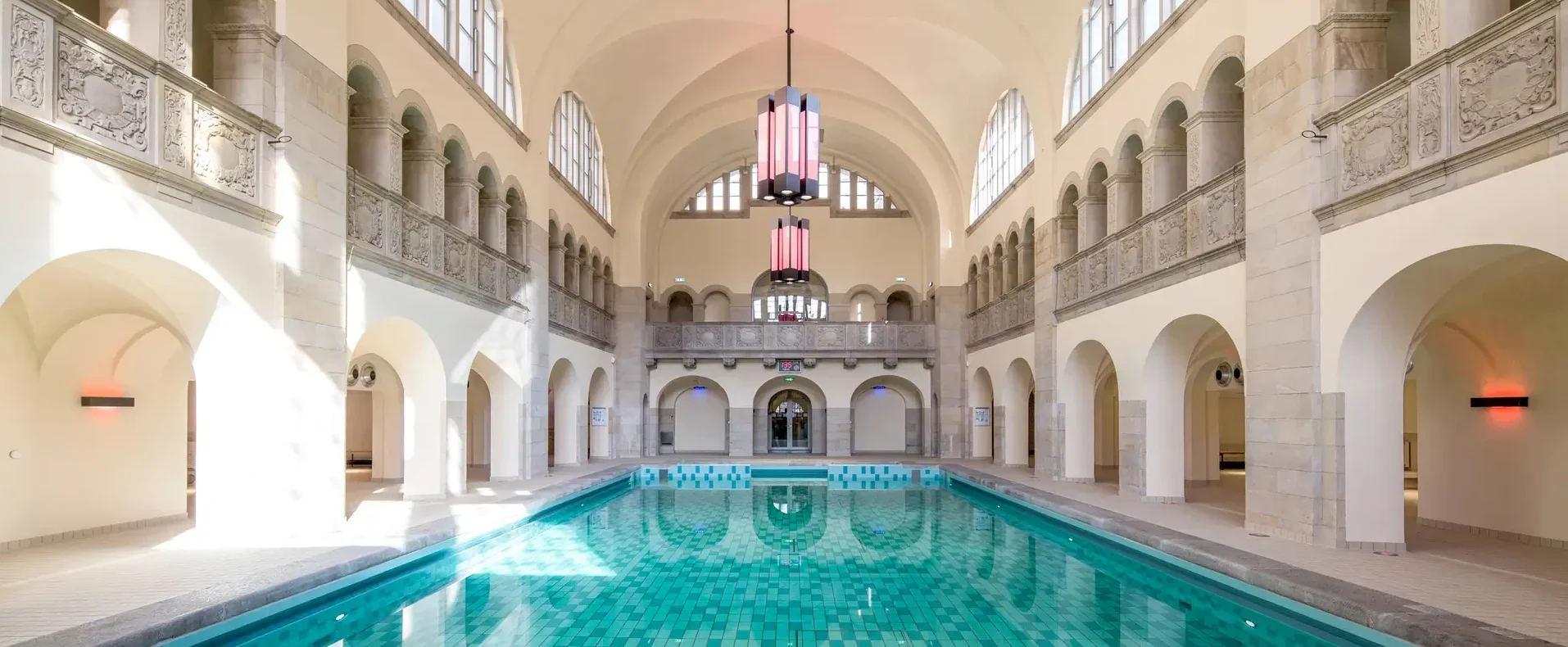
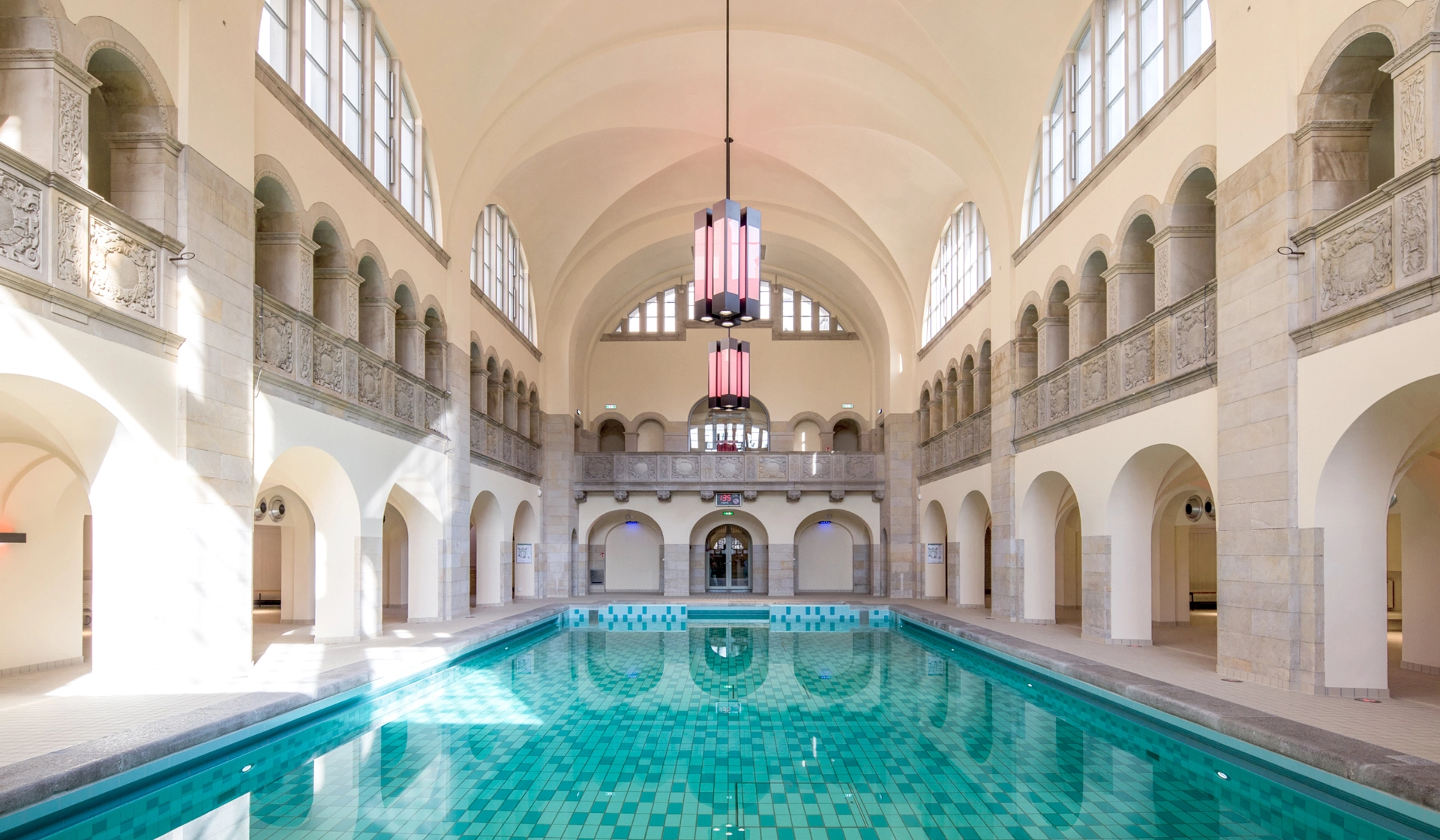
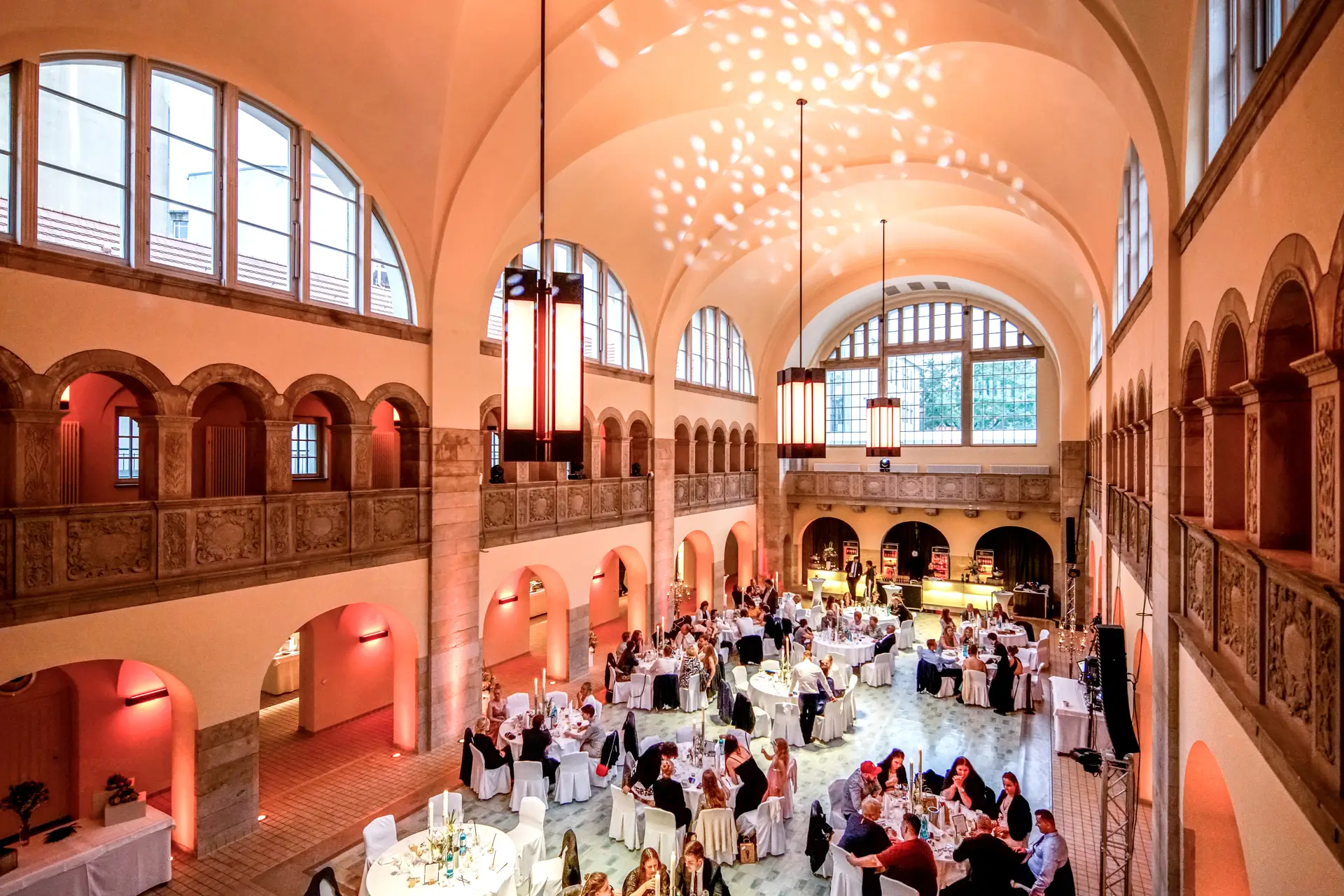
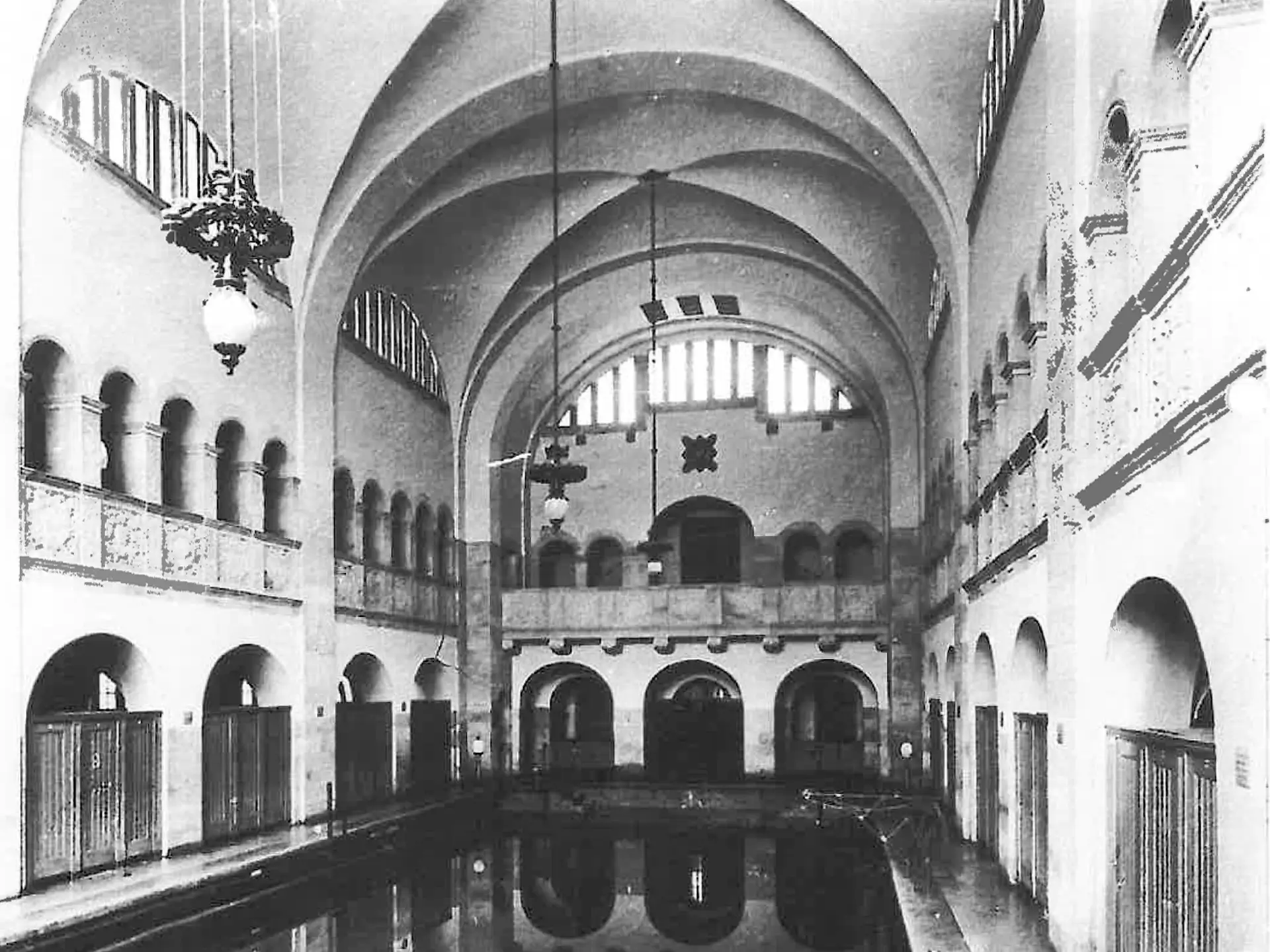
The project comprises the refurbishment and change of use of the listed municipal baths at Oderberger Straße 57–59 in Berlin-Prenzlauer Berg. The former public swimming pool, a characteristic example of Gründerzeit bathing architecture, is being converted into accommodation and will be used as a guest house of the GLS language school. At the same time the original use as a swimming pool is being resumed, so that the historic swimming hall will serve both, bathing and as an event venue.
The overall planning of the project is carried out by CPM Architekten. Wilk-Salinas Architekten are responsible for the refurbishment and redesign of the pool and the surrounding pool hall, including all existing deteriorated elements, such as the tiling surfaces and the hall windows.
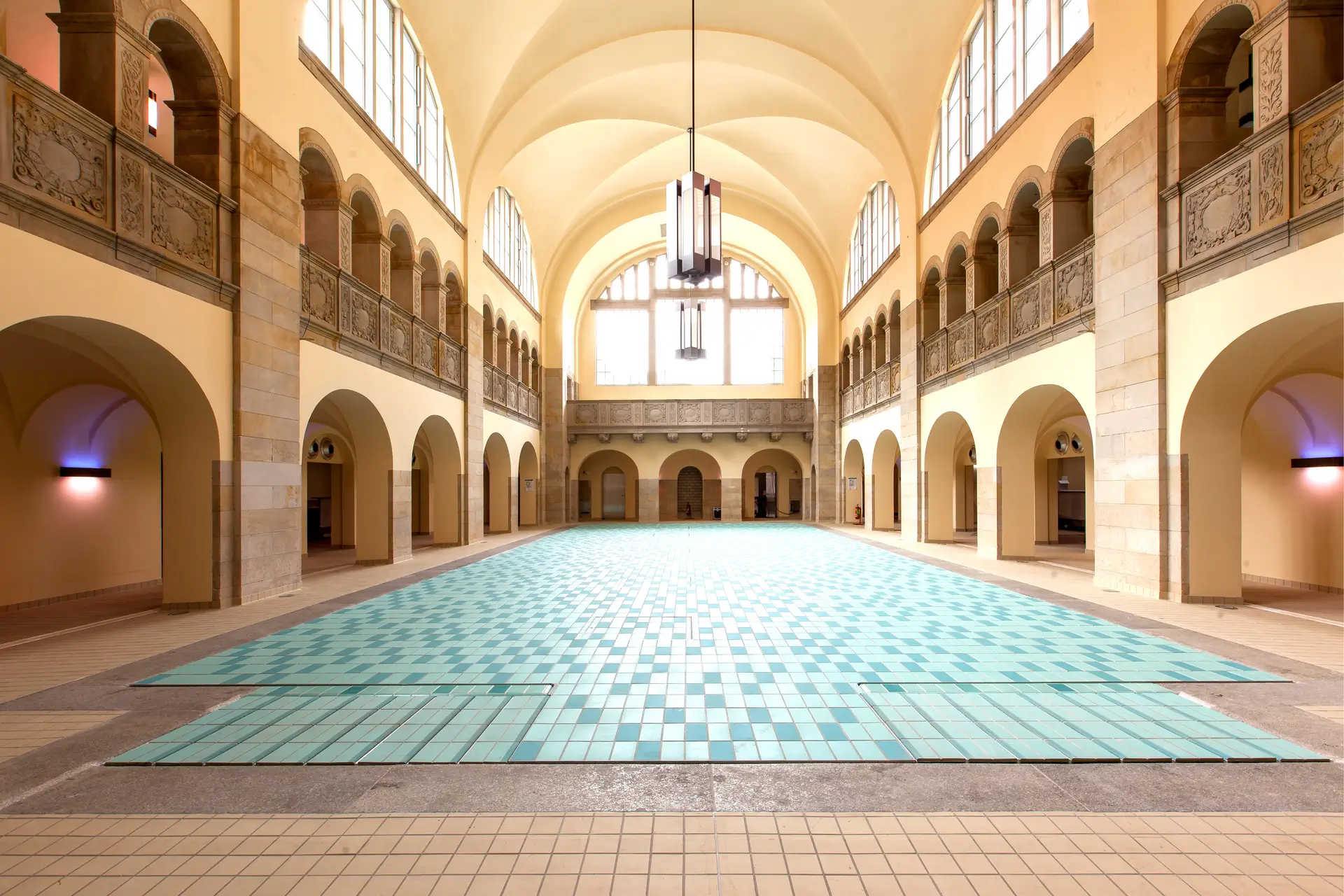
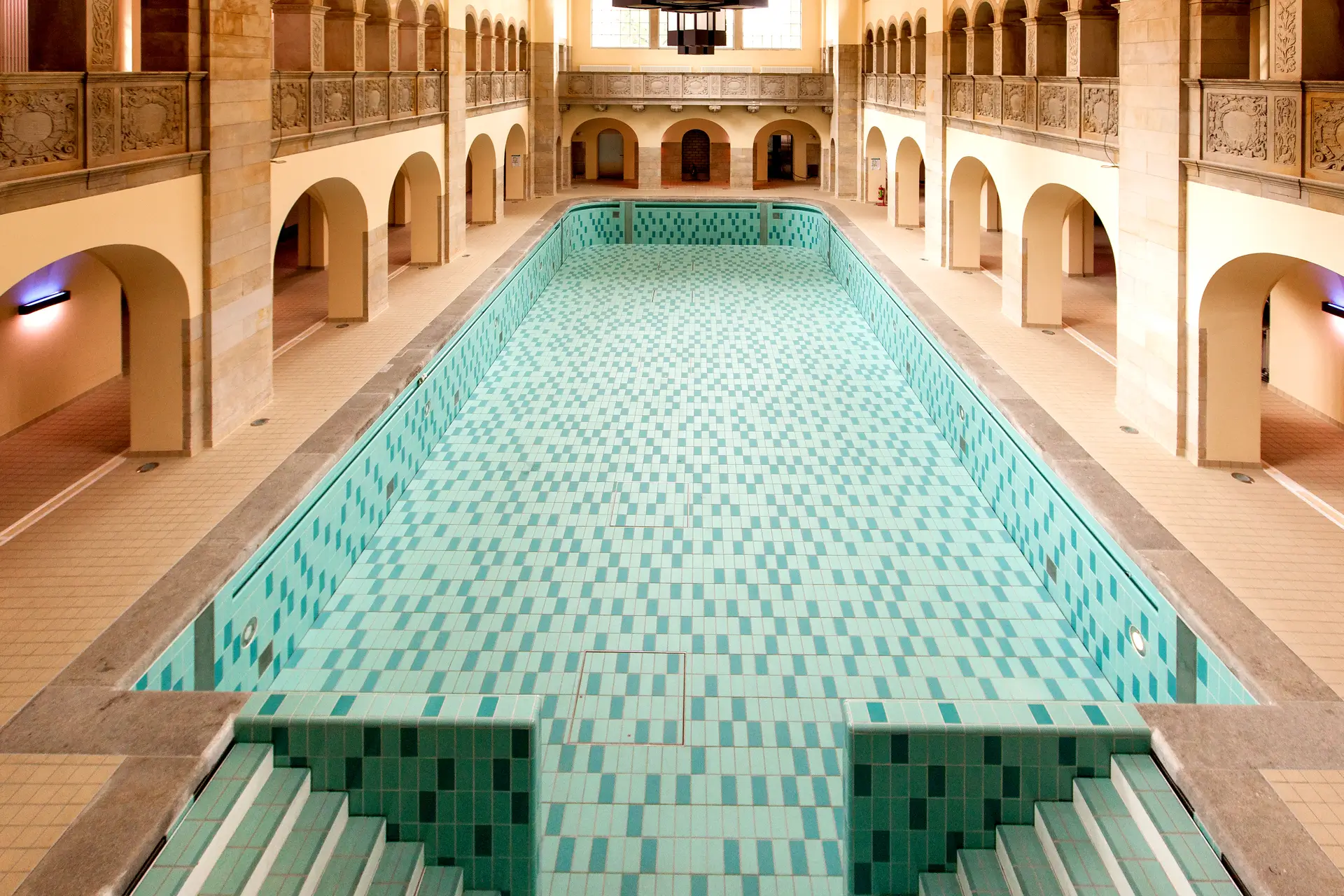
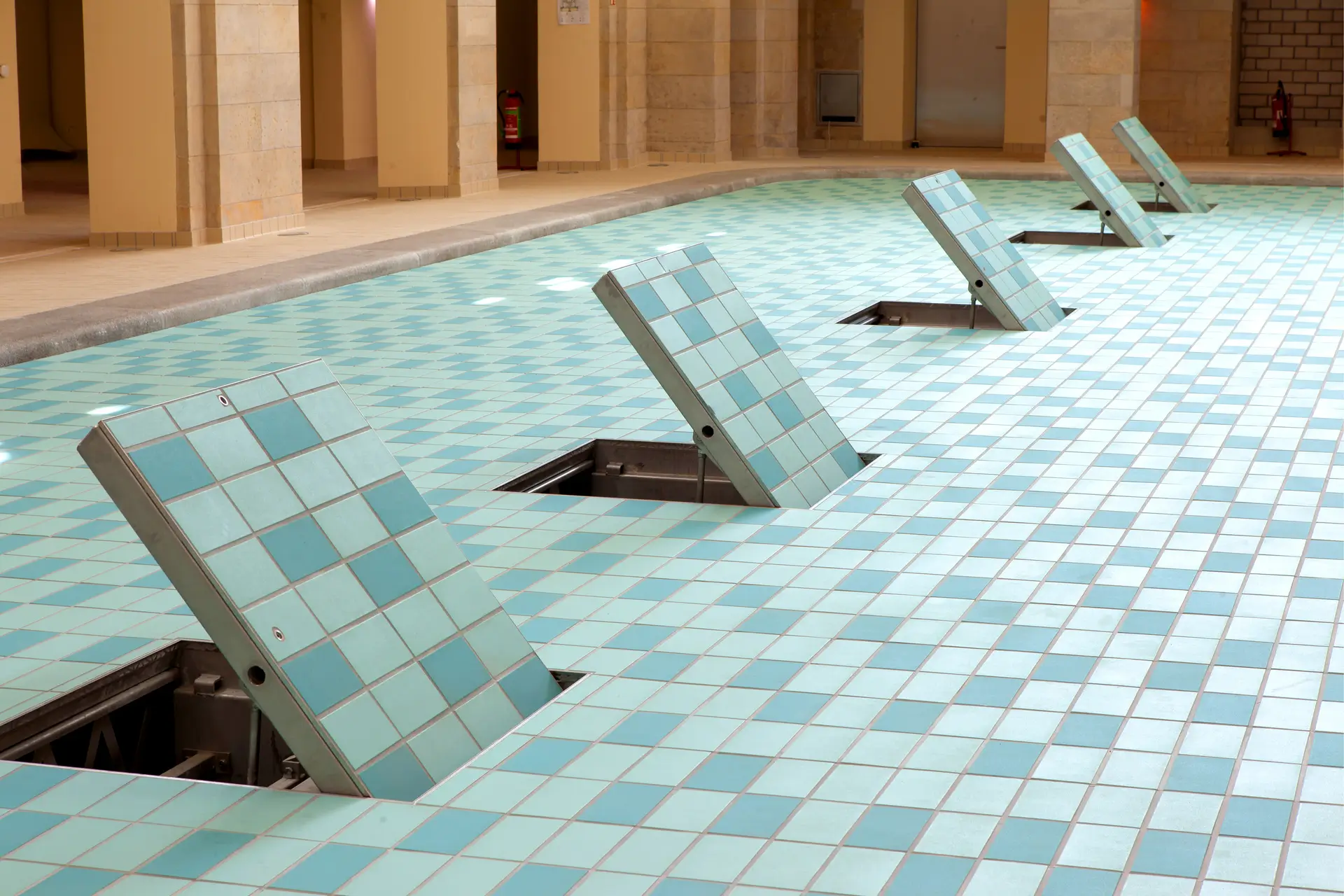
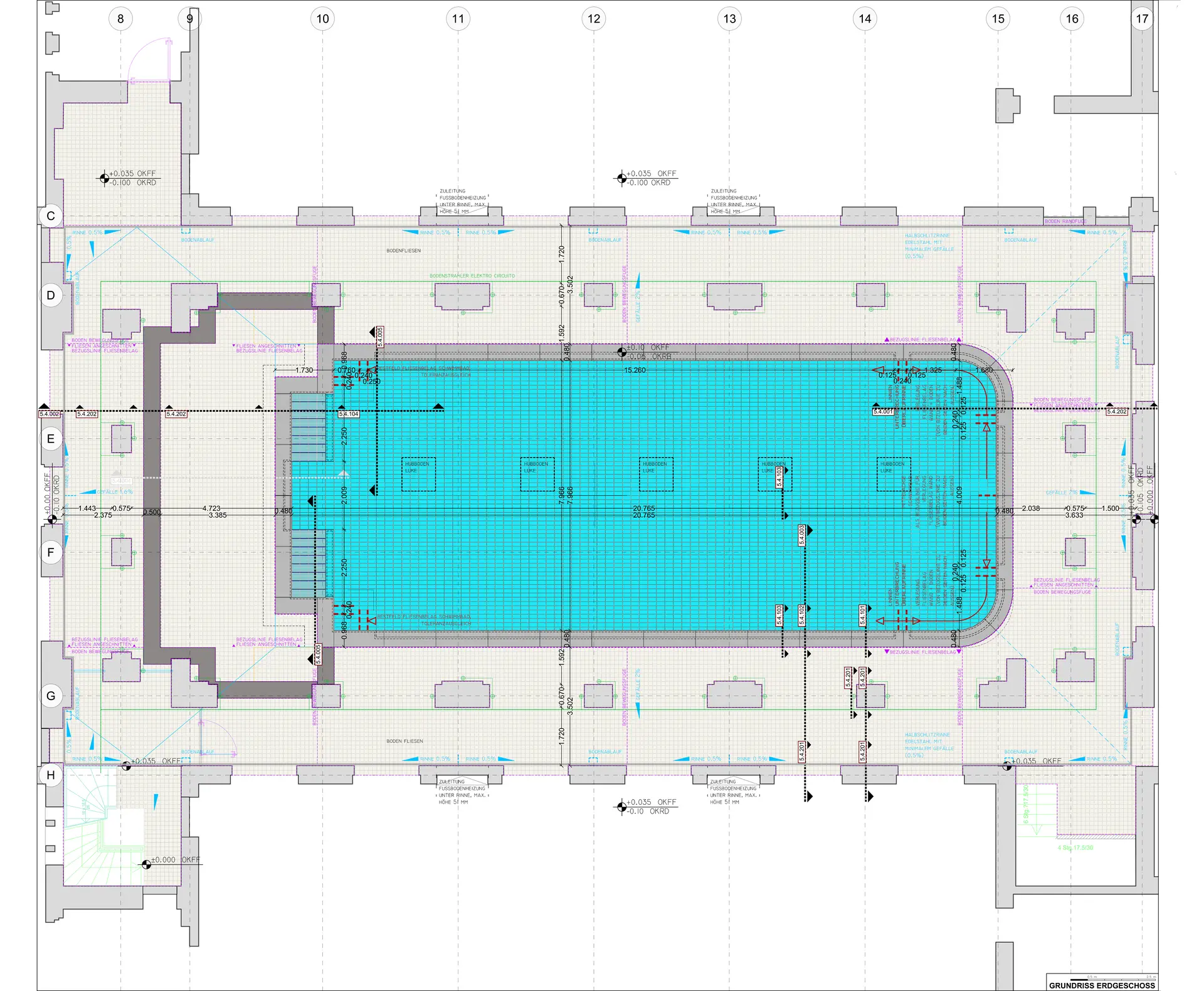
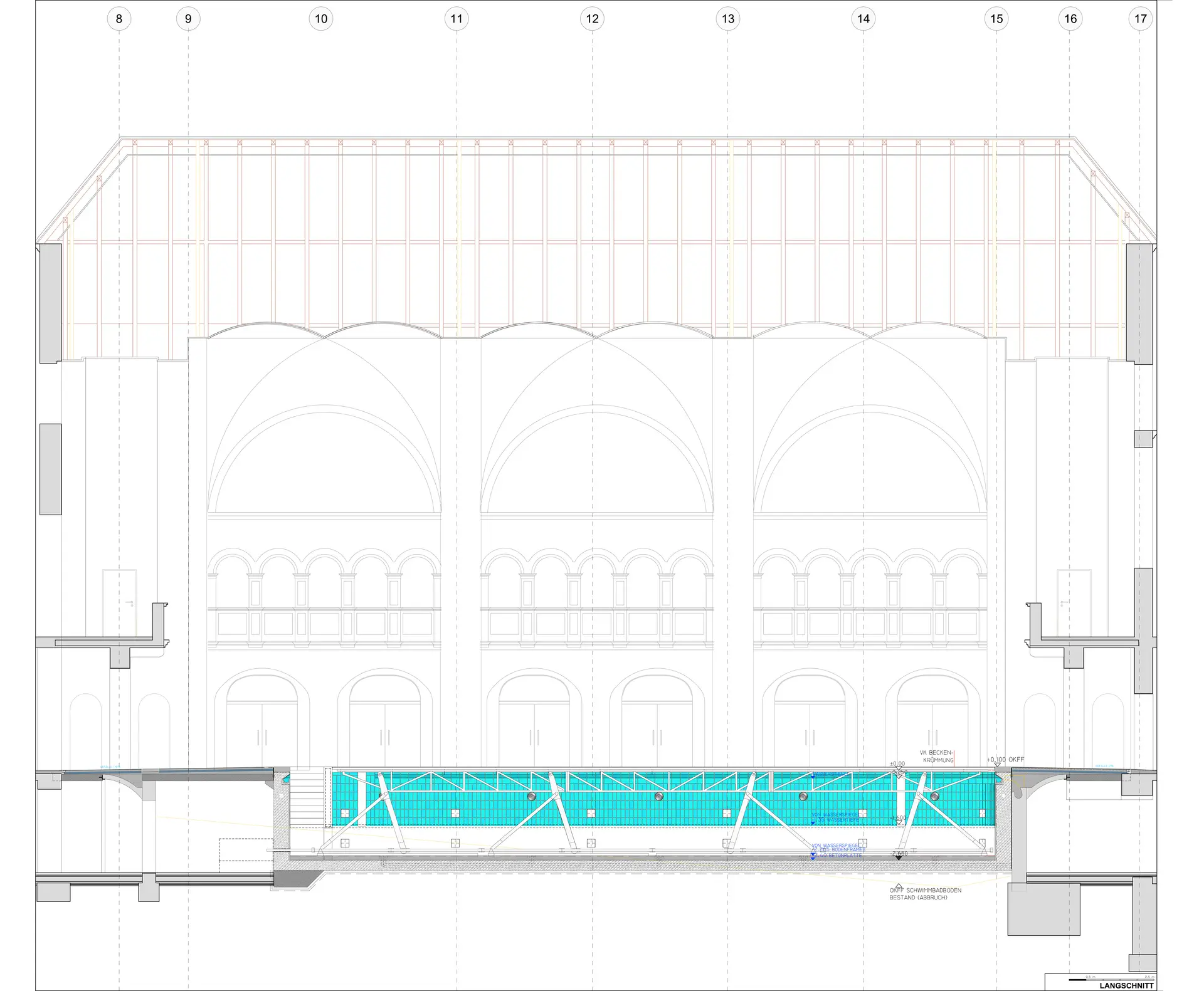
A new basin is built within the existing one, equipped with a movable floor. This makes it possible to transform the water surface into a level event area as required. To do so, the floor of the pool is raised to the level of the surrounding floor area, so that both levels are flush and a generous space for a wide variety of events is created. The water remains beneath the movable floor and is available at any time as soon as it is lowered and the basin is used as a swimming pool again.
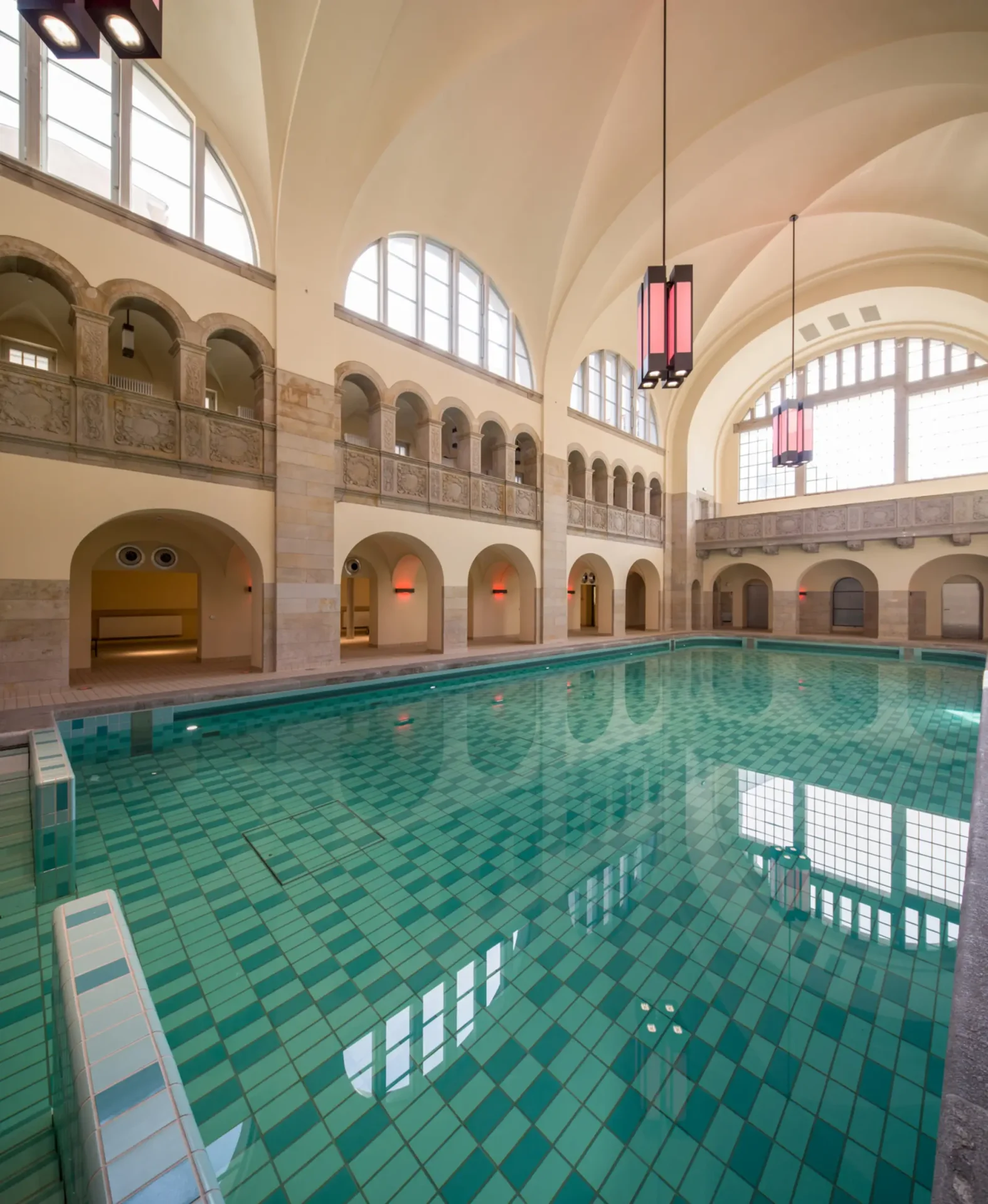
The listed character of the building is largely preserved. Historic elements such as the brick facades, the steel and brick ceilings and the striking groin vault of the swimming hall are carefully restored, integrated into the new use and deliberately staged. The aim of the planning is to preserve the historic expression of the building and at the same time to meet contemporary technical requirements. For this reason, materials and components were chosen that closely follow the historic fabric in their design.
The selection of the ceramic finishes was particularly demanding, both for the new pool and for the pool surrounds and floor areas. The aim of Wilk-Salinas Architekten was to create an intervention that fits into the existing building so naturally as if it had always been part of it. The new windows too were developed with great care and executed in close coordination with the heritage authorities. The chosen systems meet both the conservation and design requirements and today’s energy standards. Numerous technical details were likewise integrated into the historic architecture with the utmost restraint. Concealed drainage channels between the ceramic finishes and lighting elements recessed into the floor allow a contemporary technical fit-out of the pool without impairing its historic character and original spatial effect.
The change of use creates a versatile ensemble that combines accommodation, education, culture and leisure in a historic setting, while at the same time reviving public bathing in Prenzlauer Berg.