GRENZHAFEN
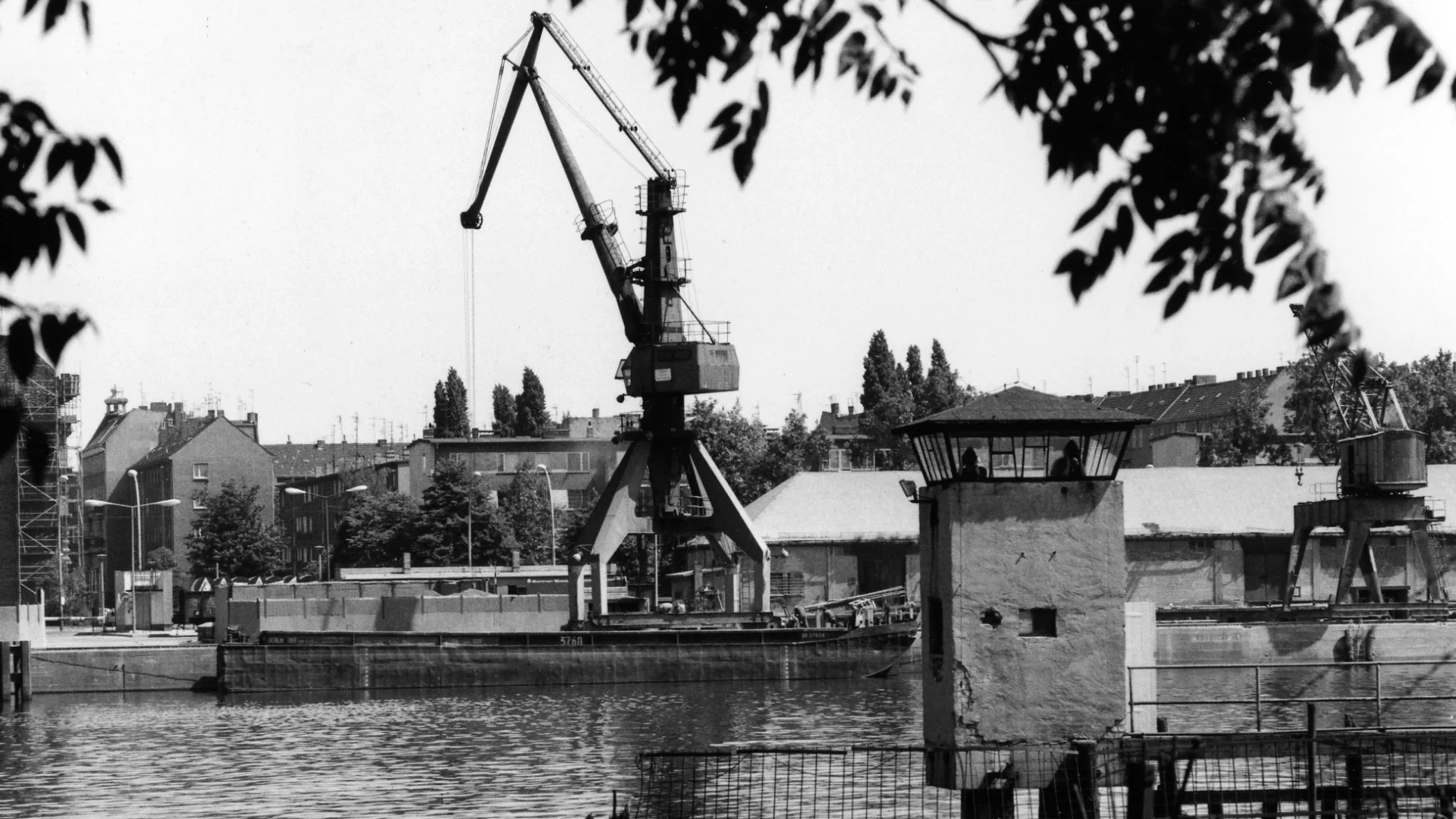
Das Projekt entstand aus einem von der Grundstückseigentümerin ausgelobten Wettbewerb, zu dem verschiedene Büros mit einem starken Bezug zur Geschichte Berlins eingeladen wurden. Nach mehreren Ausscheidungsrunden wurde das Büro mit dem ersten Platz im Wettbewerb ausgezeichnet. Grundlage des Entwurfs ist der Respekt vor der historischen Substanz des Grenzhafens und seinem Umfeld als geschütztes Denkmal.
Die gebauten Strukturen treten bewusst zurück, um den Ort museal zu kontextualisieren und sich landschaftlich und städtebaulich fließend in die Spree einzufügen.
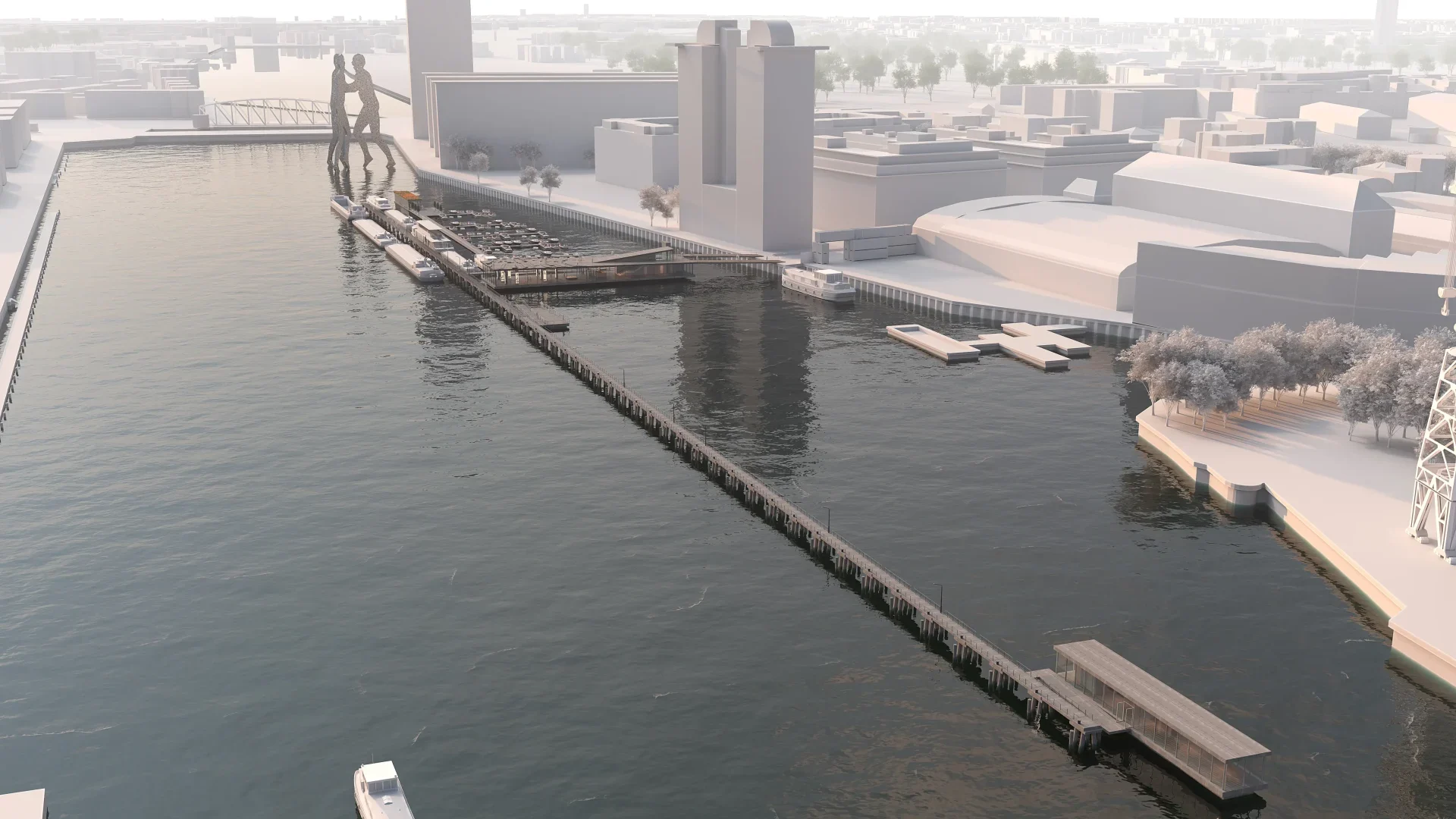
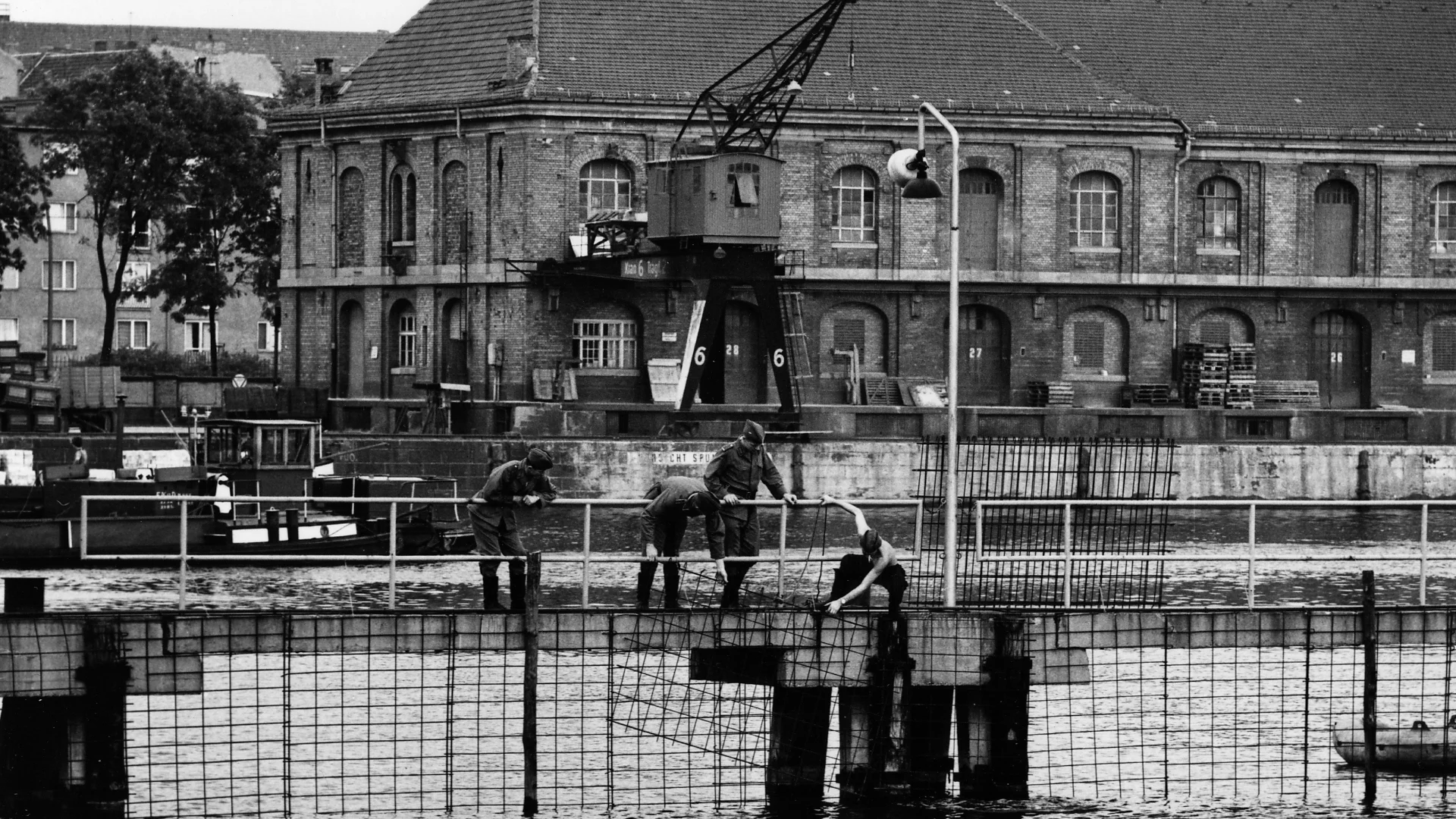
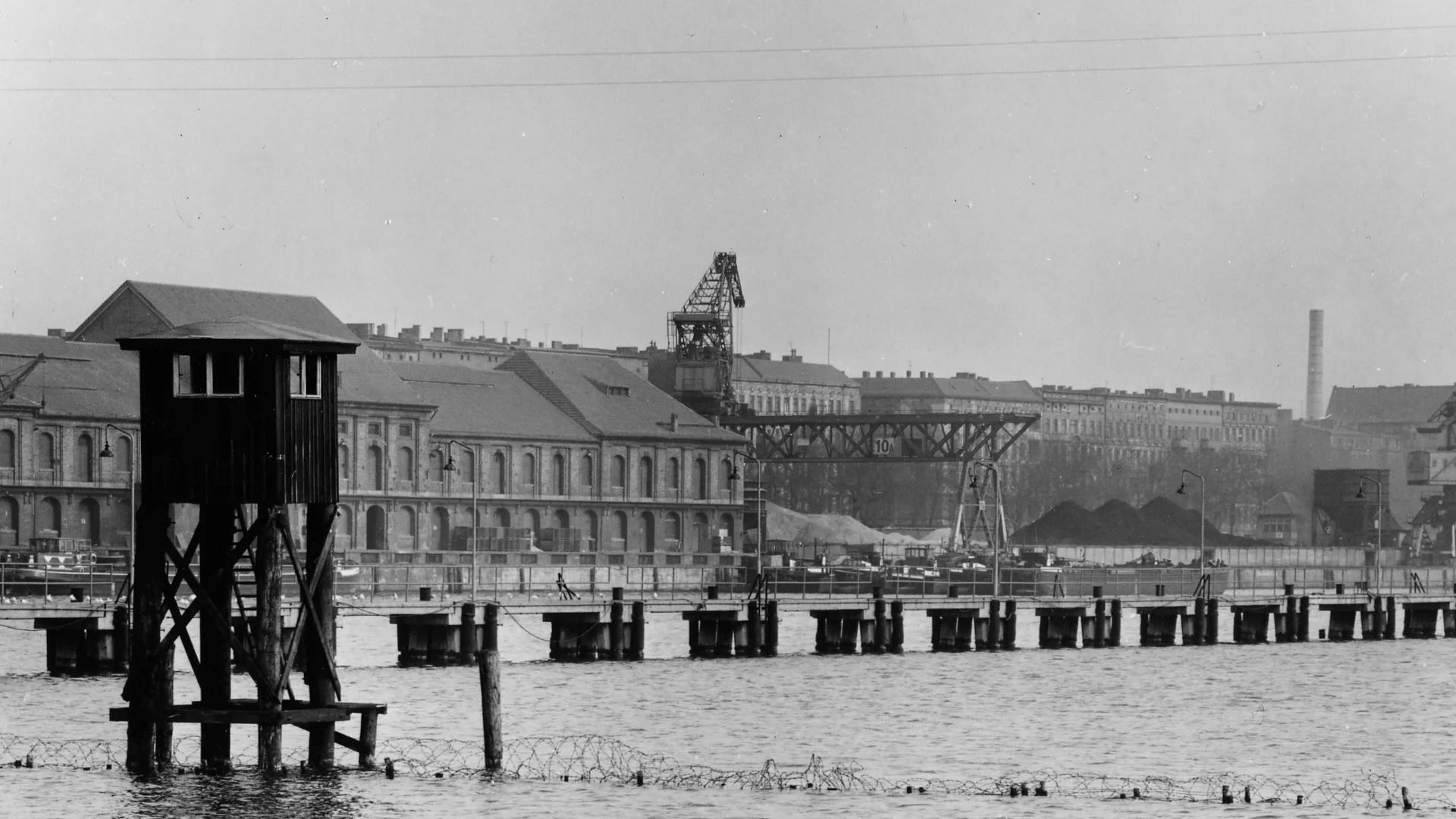
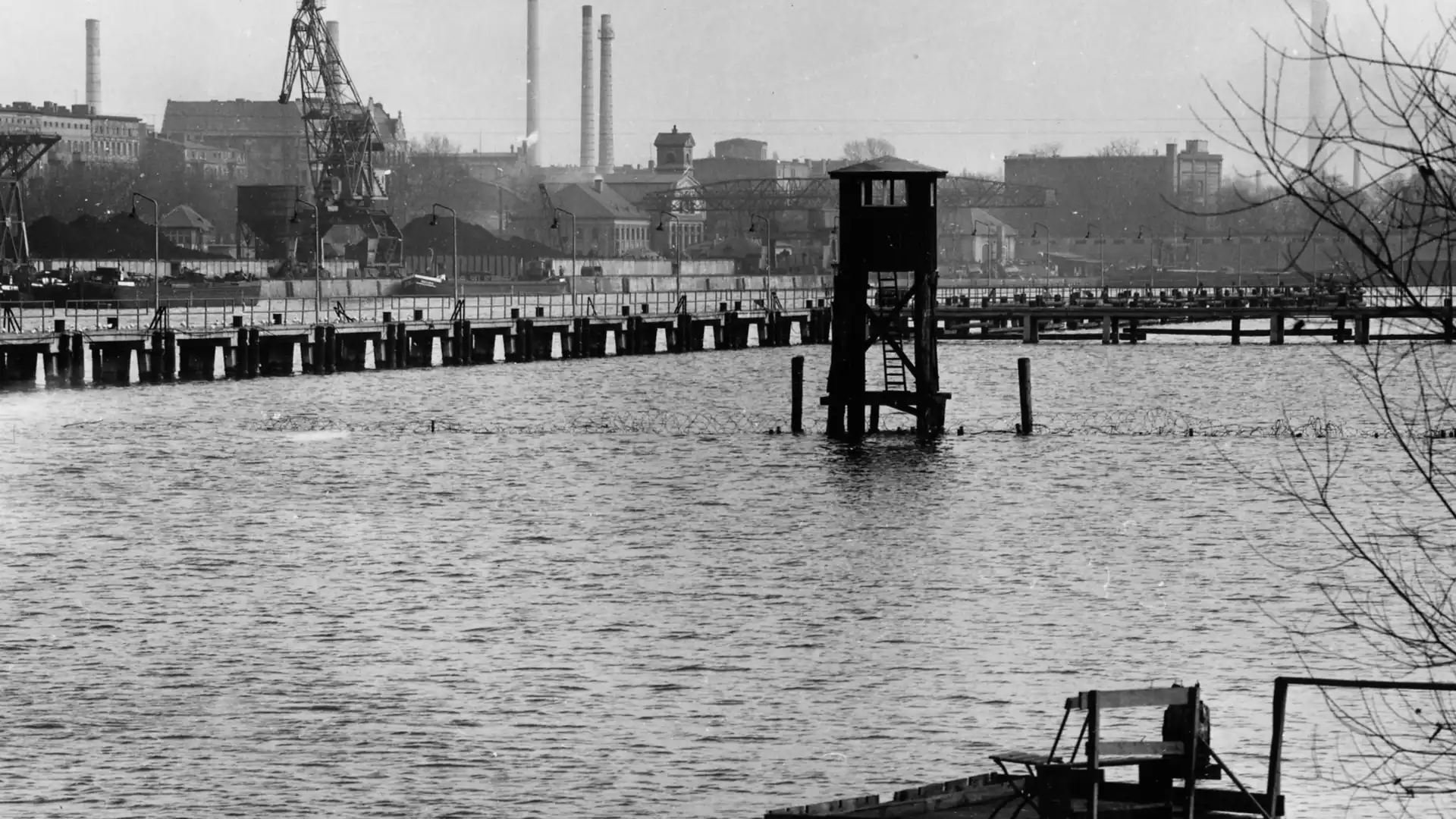
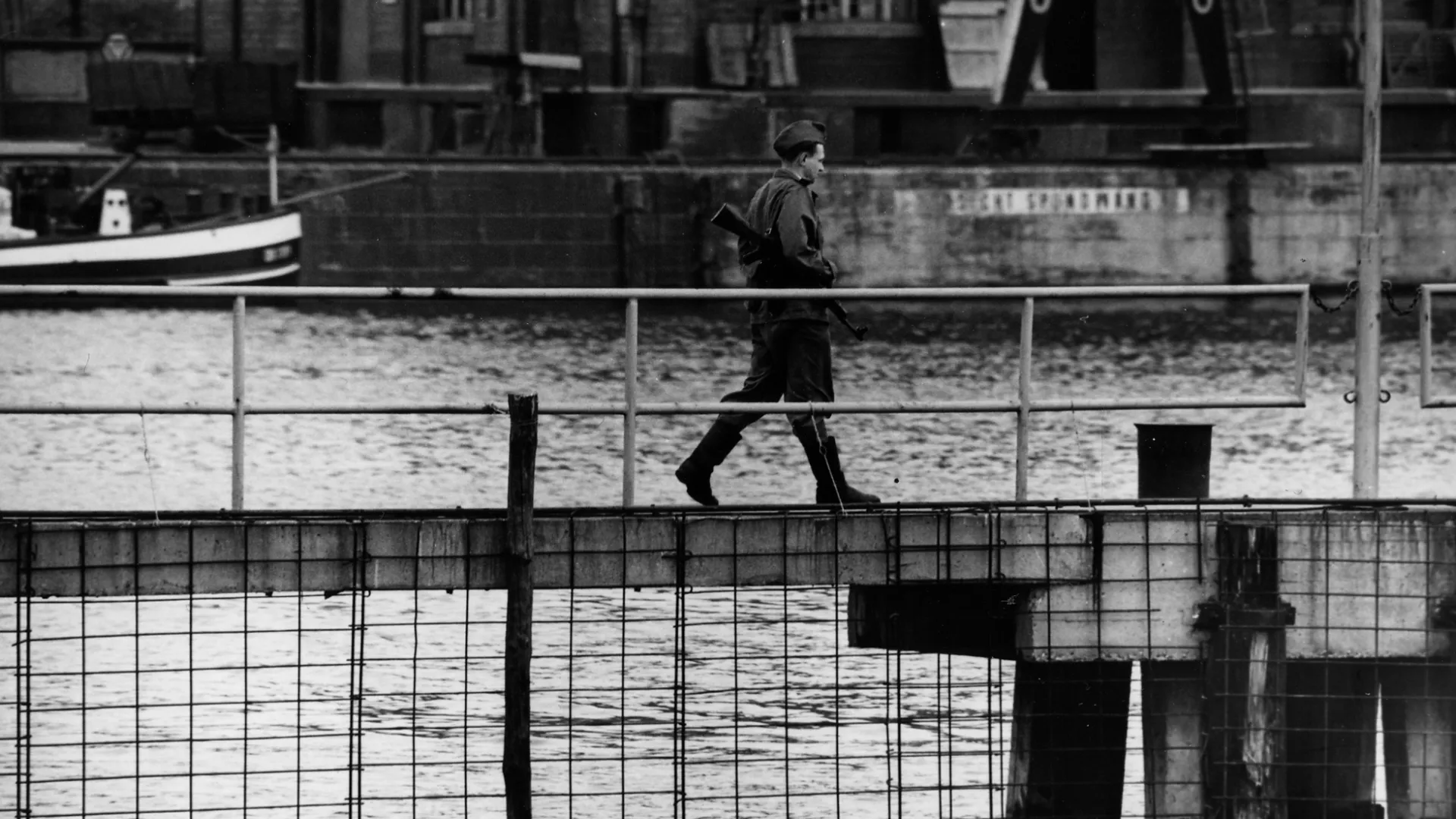
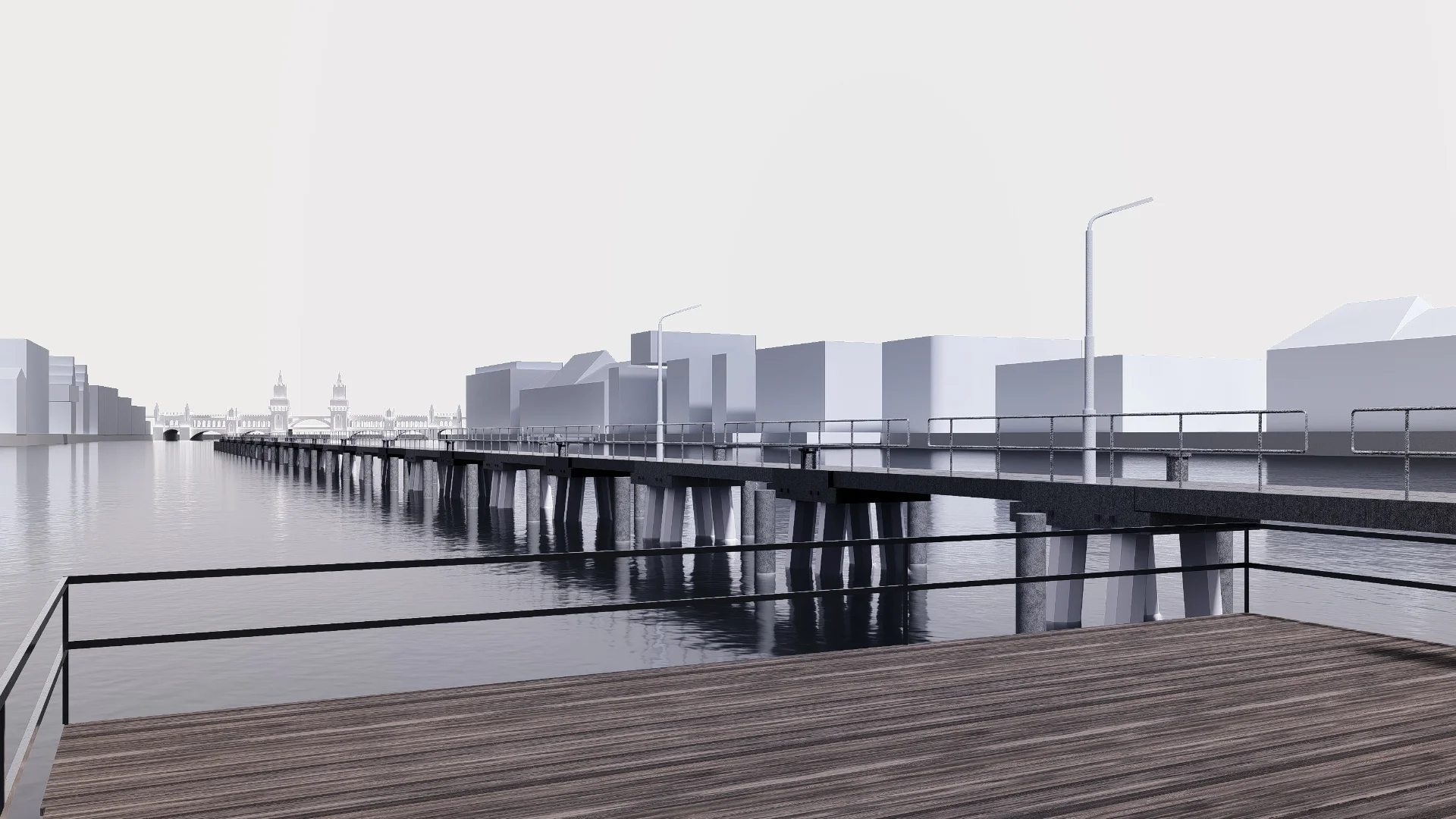
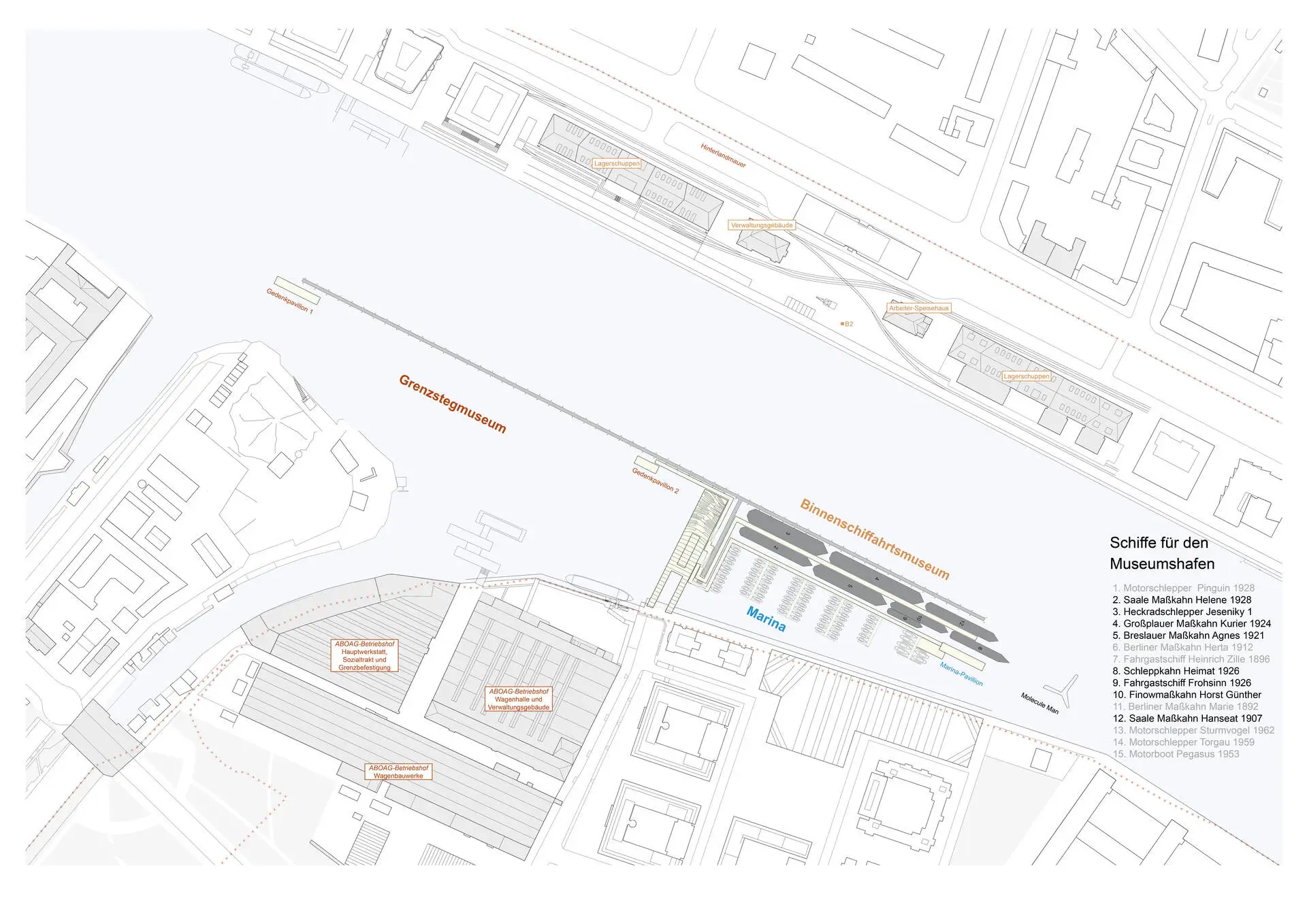
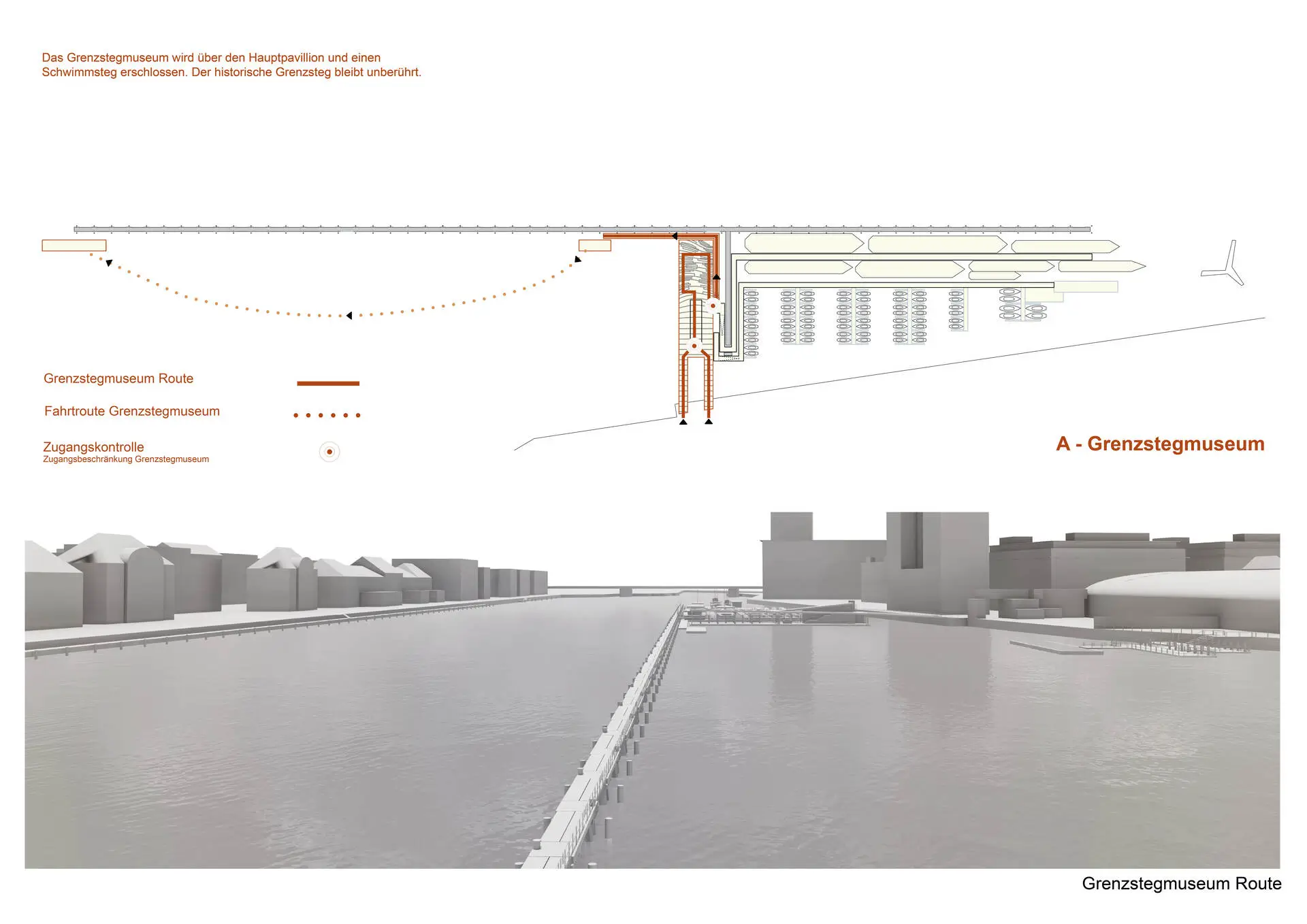
Das Museum und Veranstaltungsraum ist ein Geschichtspfad entlang des Grenzstegs, eine räumliche Erzählung, geformt aus den historischen Schichten des Ortes, wodurch der Steg selbst zum bedeutendsten Ausstellungsobjekt des Ensembles wird. Dafür wird eine schwimmende Pontonanlage entlang des Steges installiert, wodurch die Substanz des Baudenkmals beibehalten und dessen Bedeutung hervorgehoben wird.
Geplant ist ein Geschichtspfad: ein vielschichtiges historisches Erlebnis, bei dem die Besuchenden symbolisch die Ebenen der Geschichte, der Erinnerung und des Wandels durchlaufen, nicht nur als klassische Wissensvermittlung, sondern als sinnliches, interpretatives Erleben. Die Geschichte wird spürbar. Der Fluss wird erlebbar.
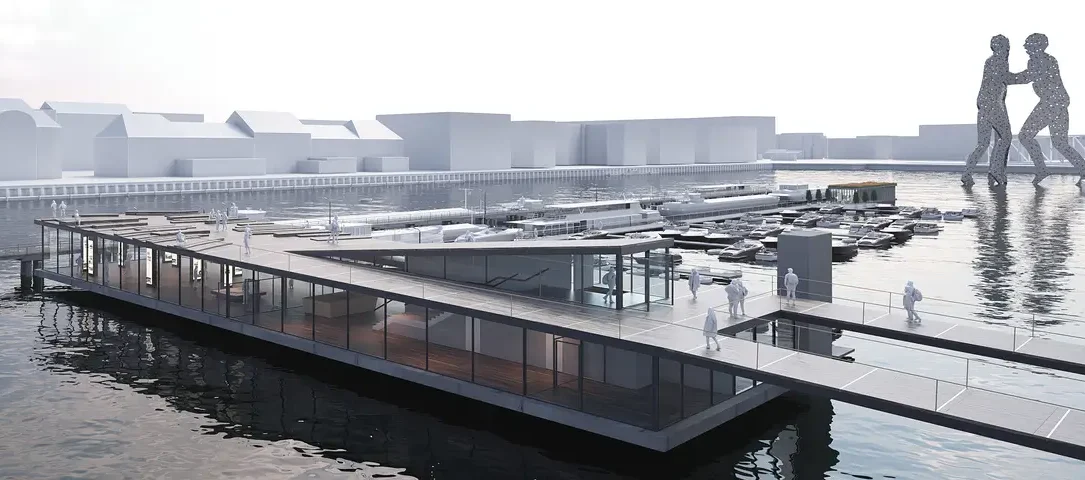
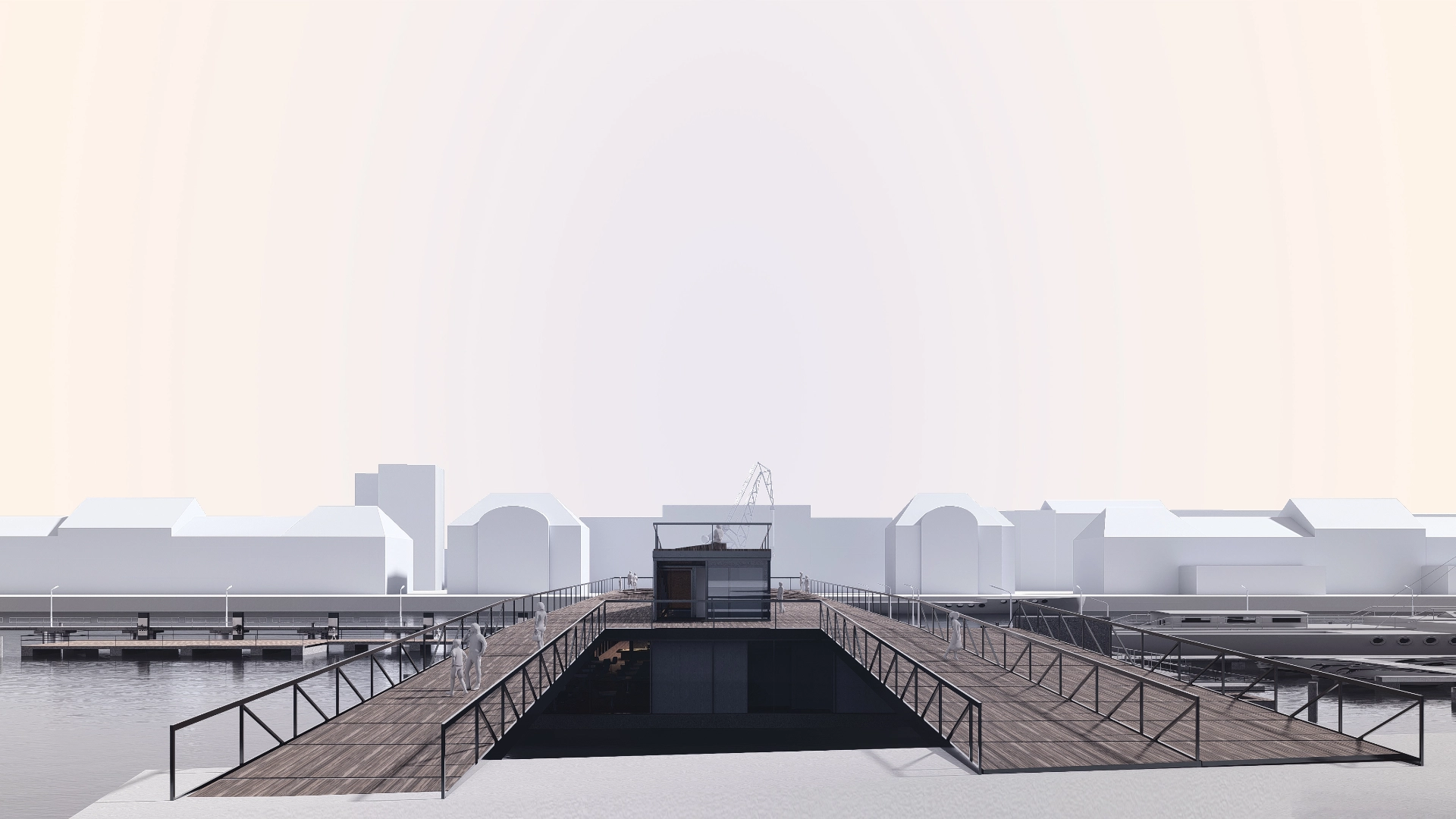
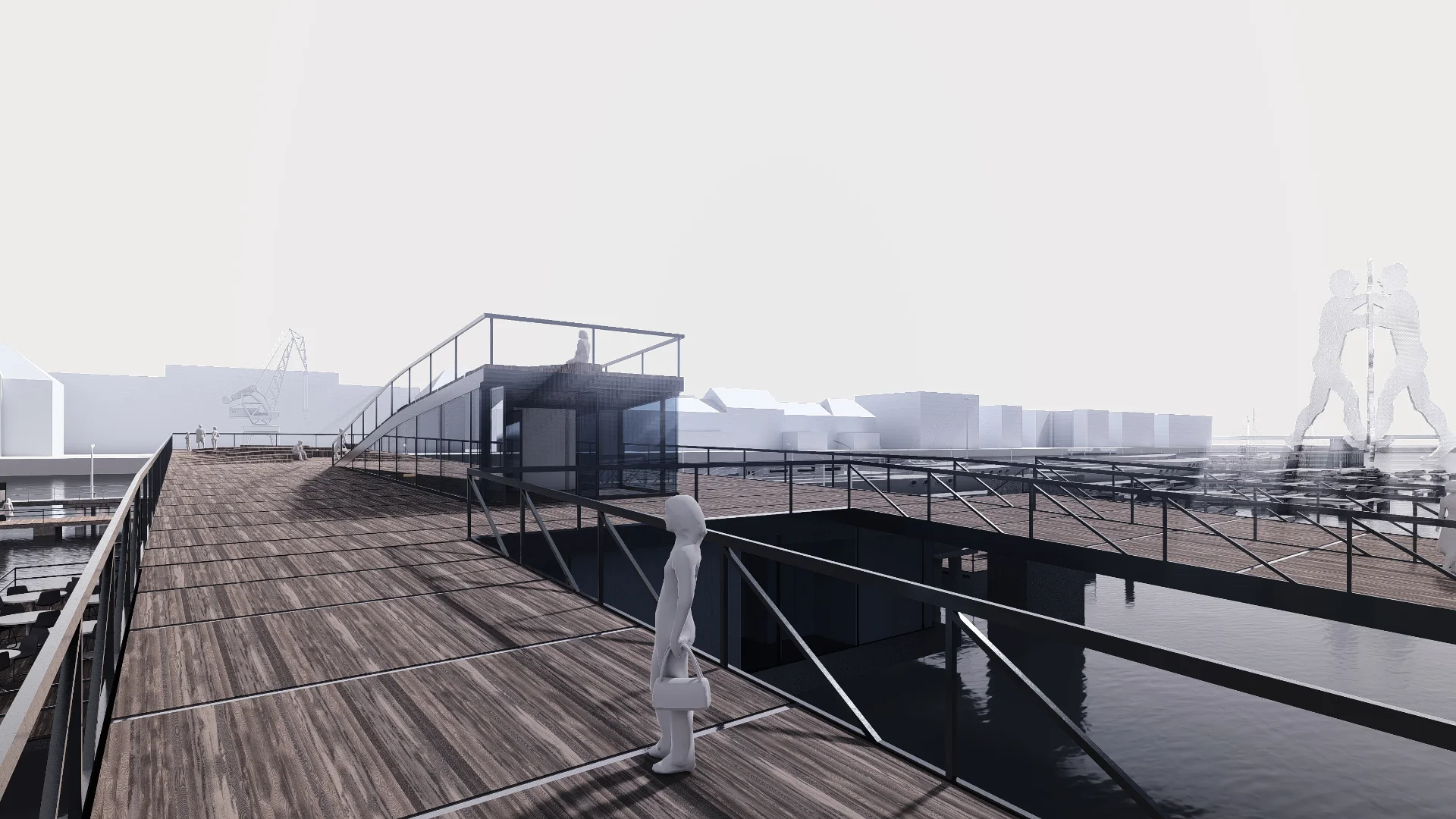
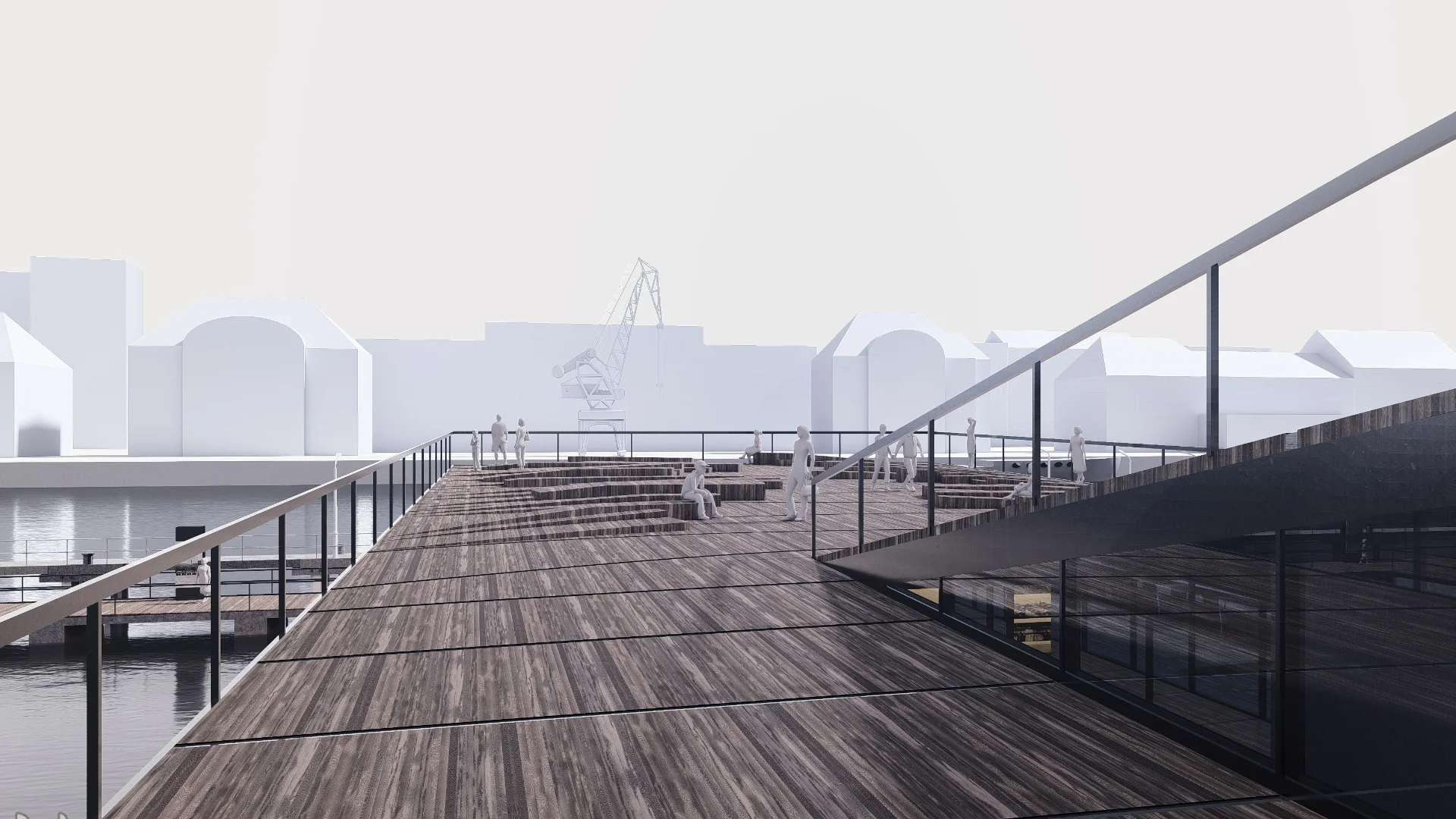
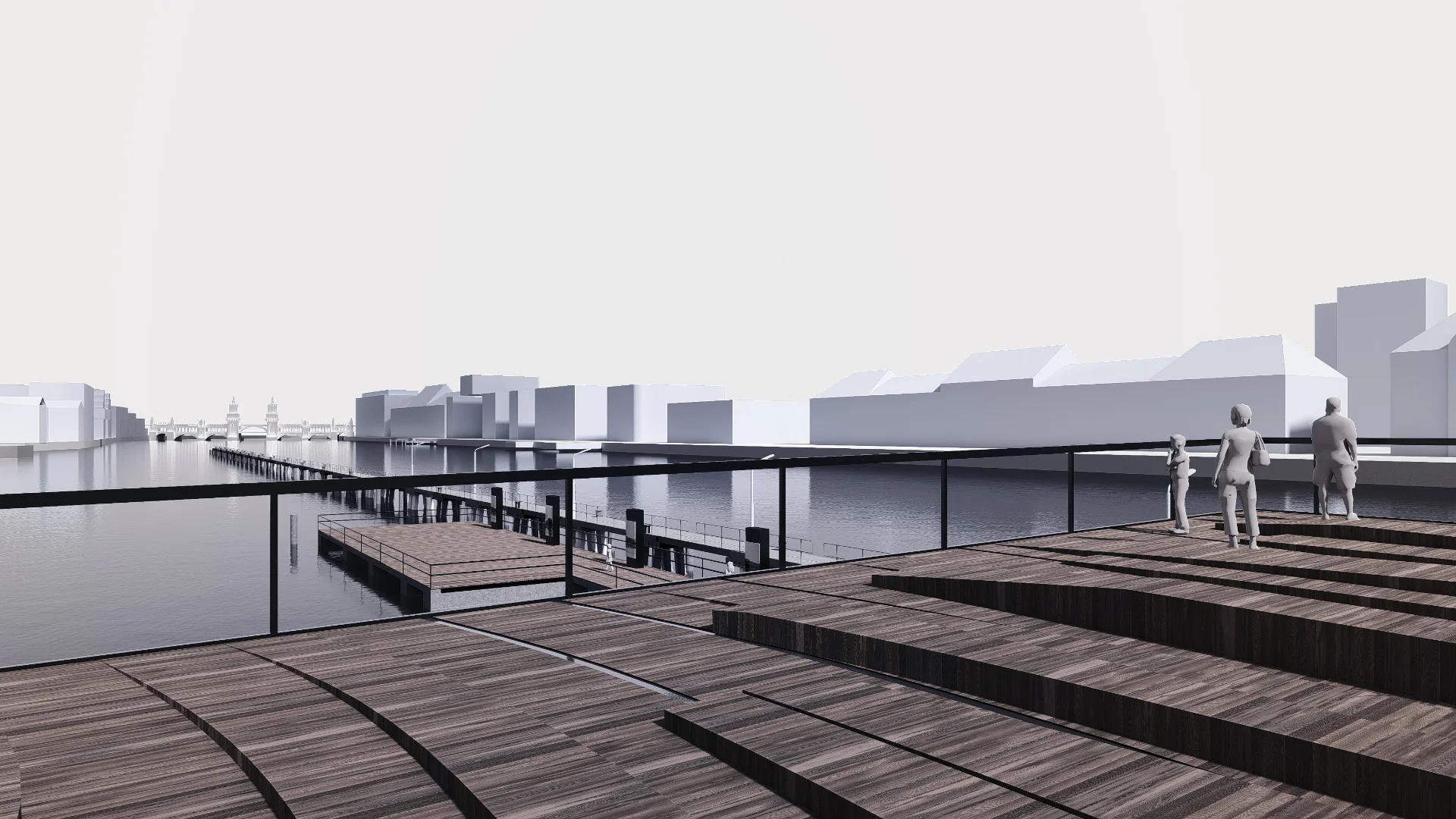
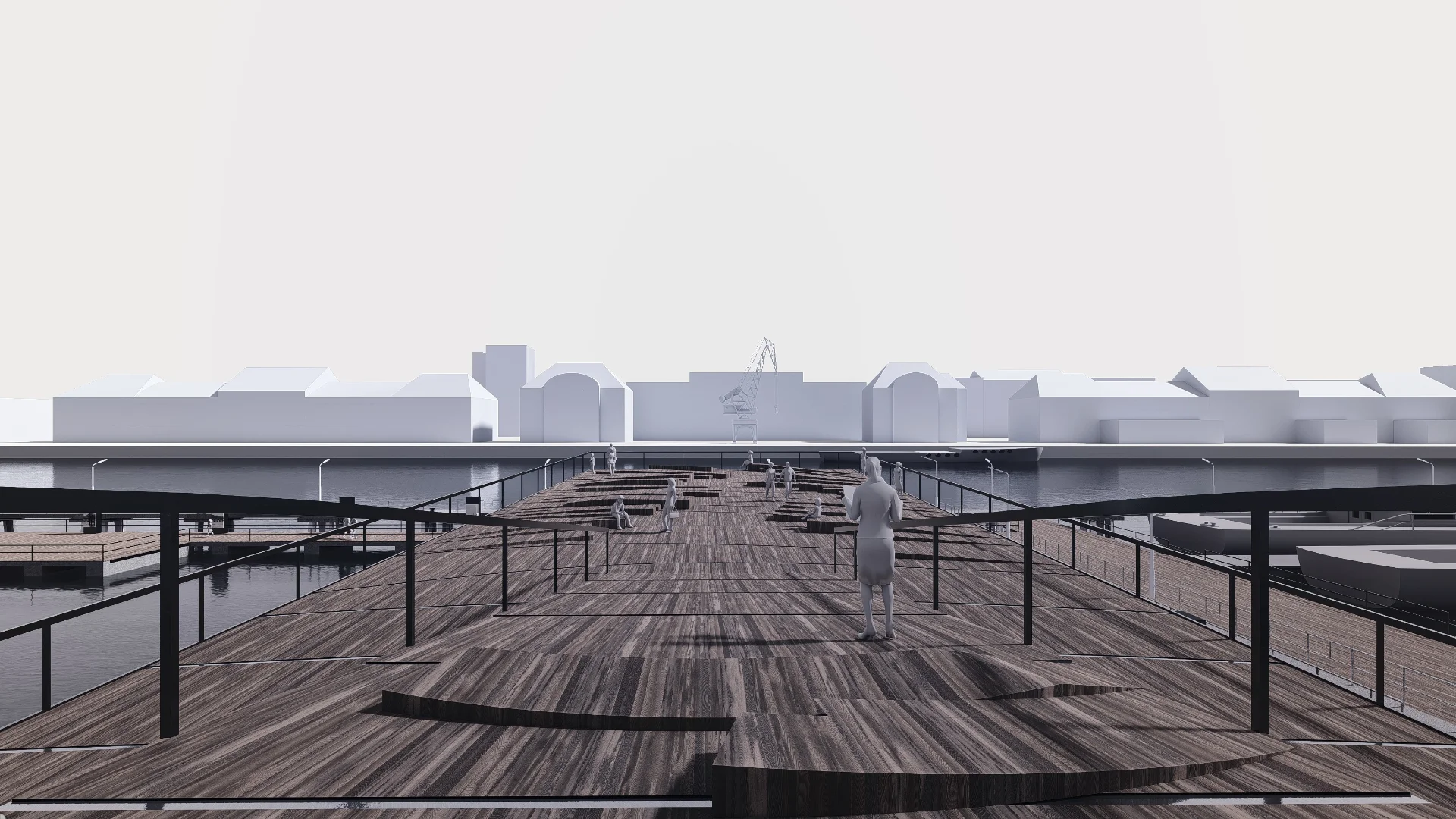
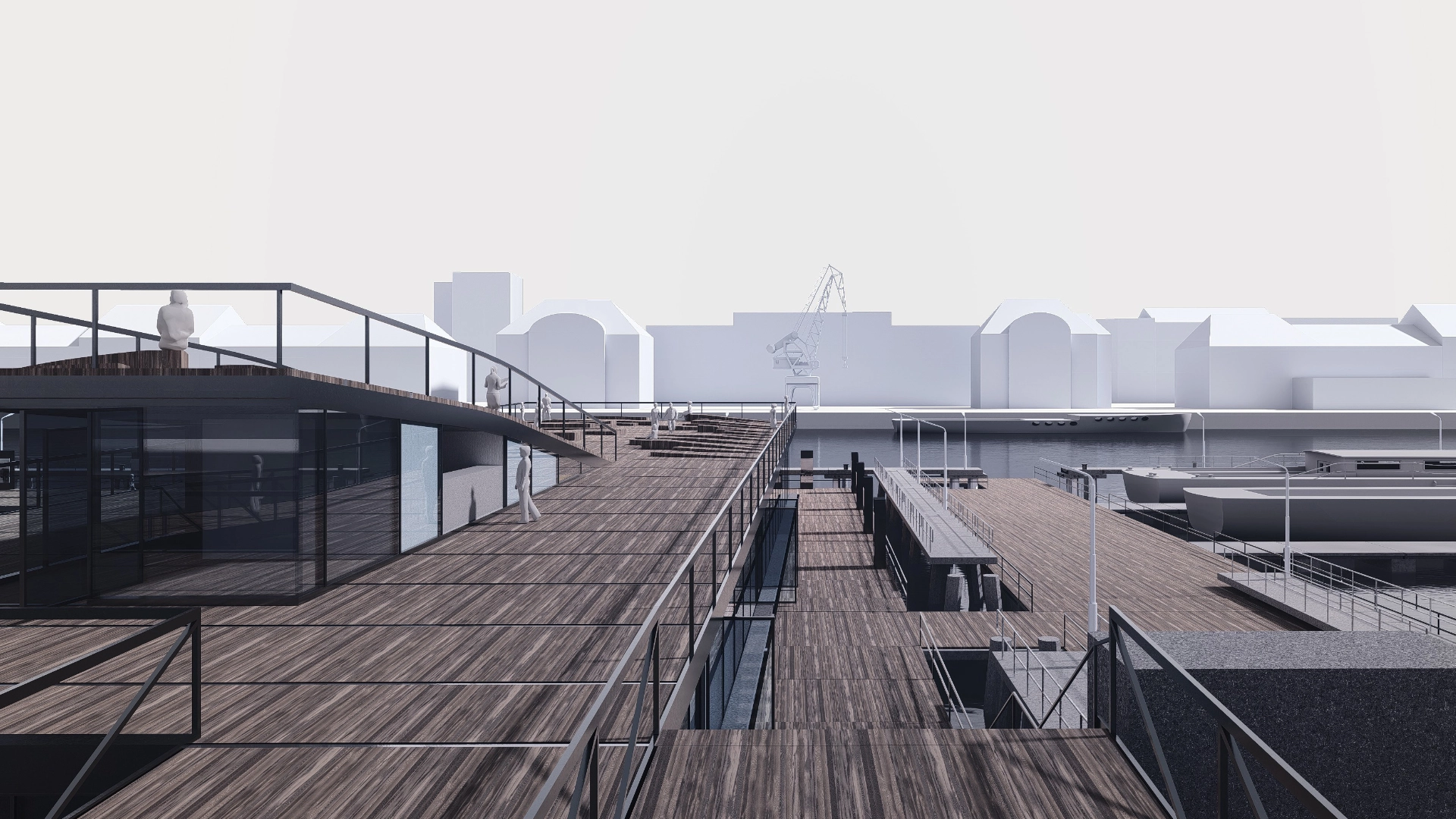
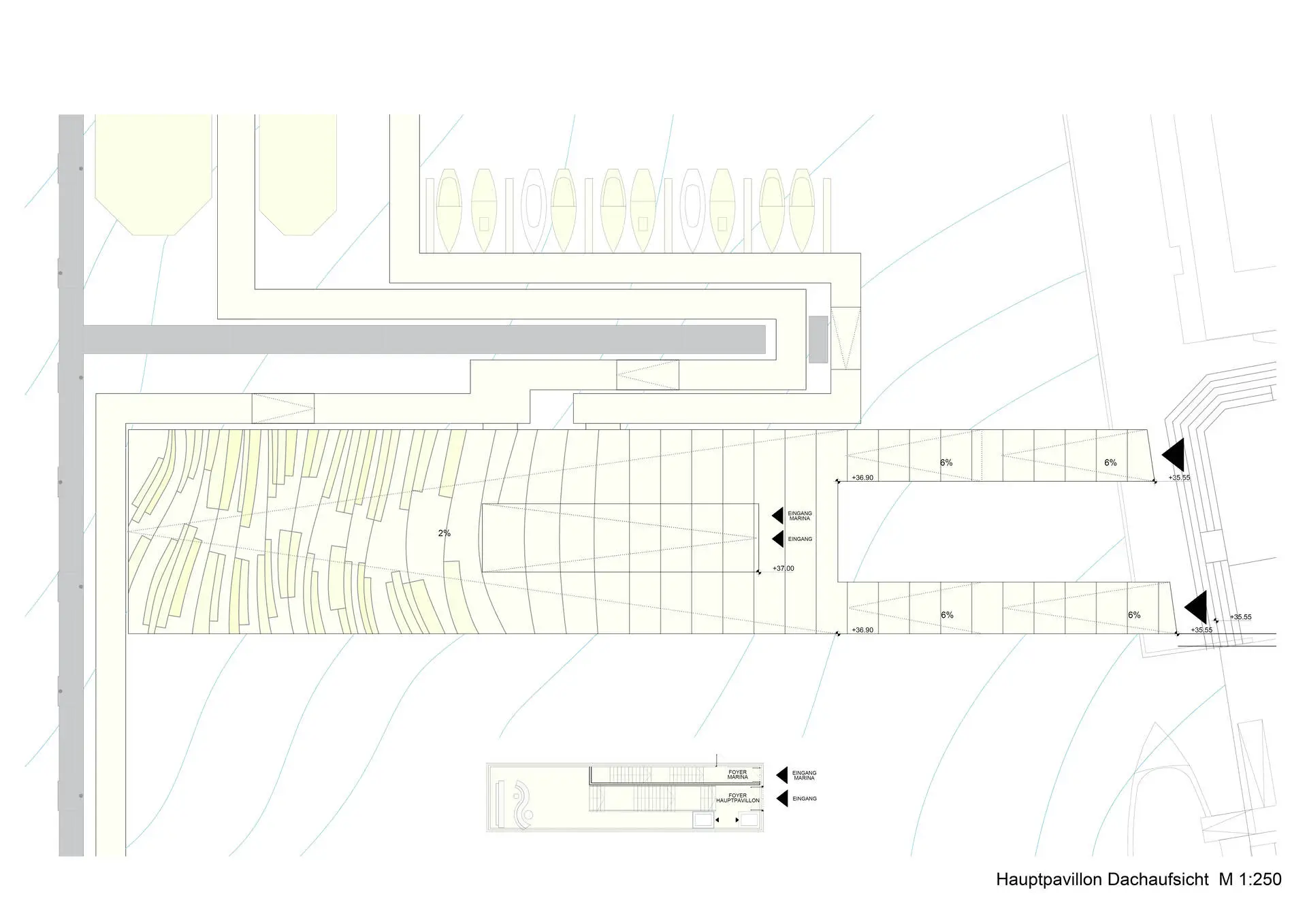
Am Ende der Eichenstraße wird das Dach des Hauptpavillons über eine sanfte Landschaft in Form von zwei Rampen erschlossen, die barrierefrei und für Boote mit einer Höhe von bis zu 3,50 m unterfahrbar sind. Diese Topografie bietet einen öffentlichen Platz mit Ausblicken über die Spree, den Osthafen und den Grenzsteg, mit malerischen Sonnenuntergängen hinter der Oberbaumbrücke und dem Fernsehturm, die von den geplanten Sitz- und Liegeflächen sowie den begrünten Elementen aus genossen werden können.
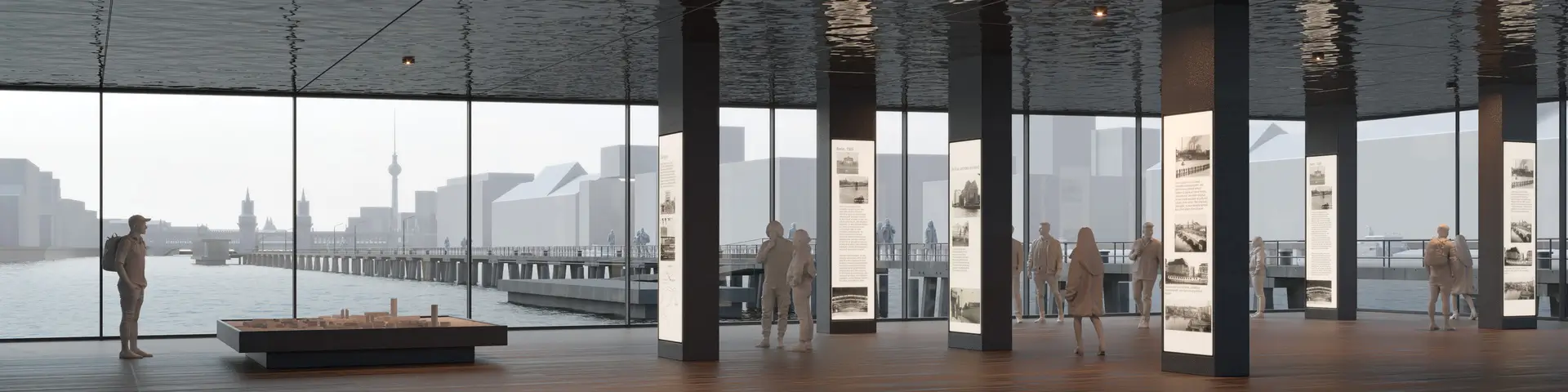
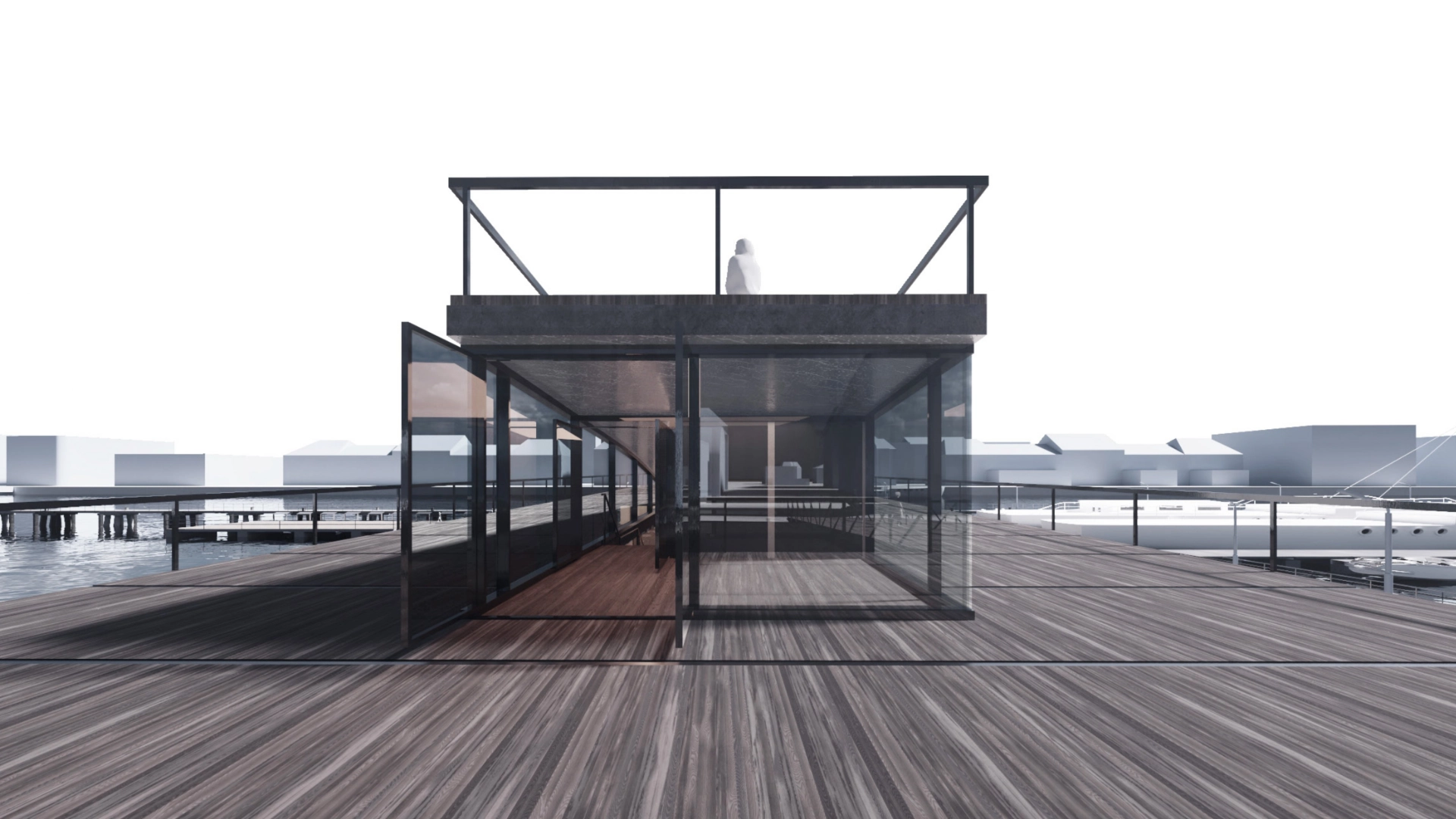
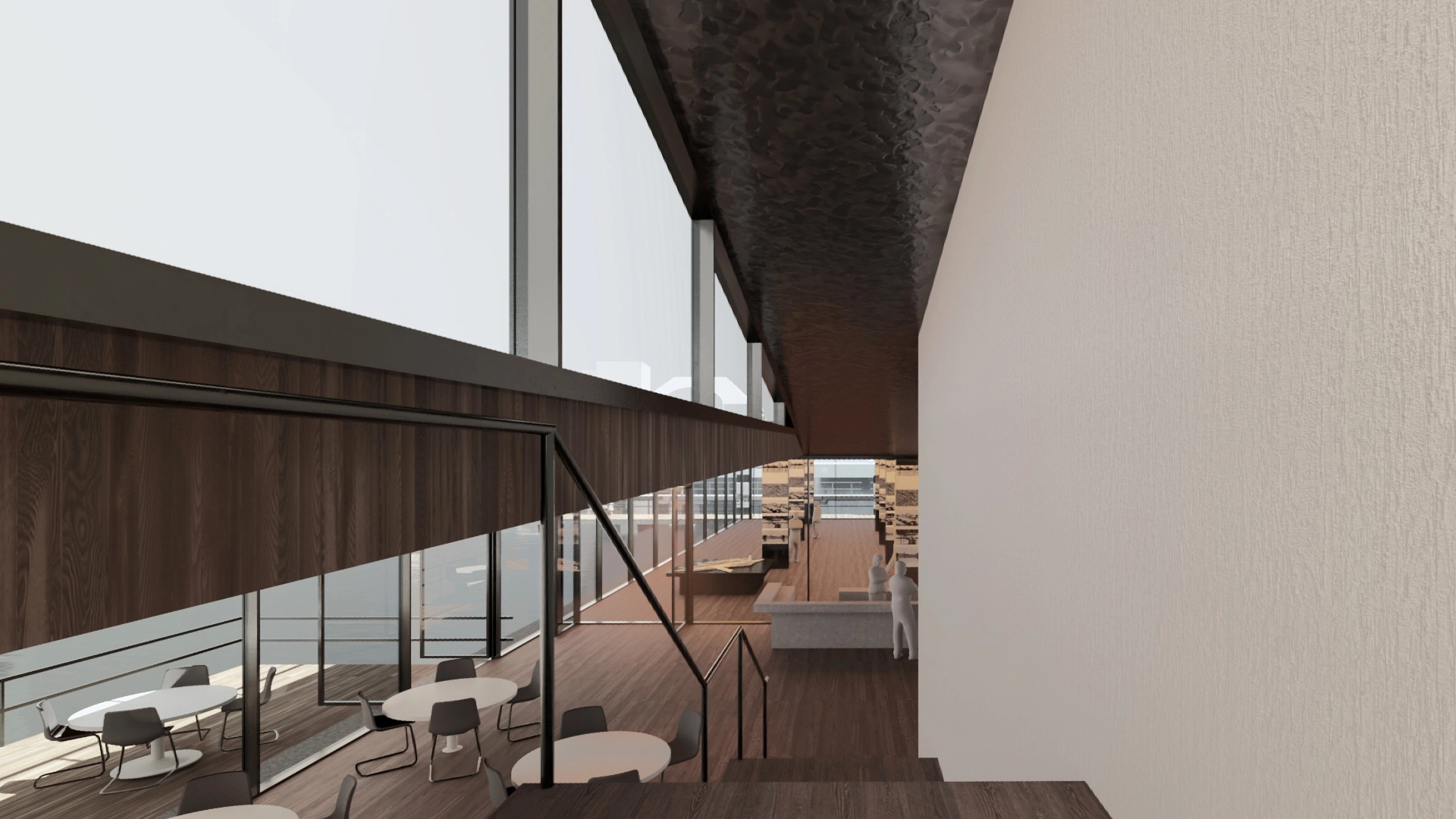
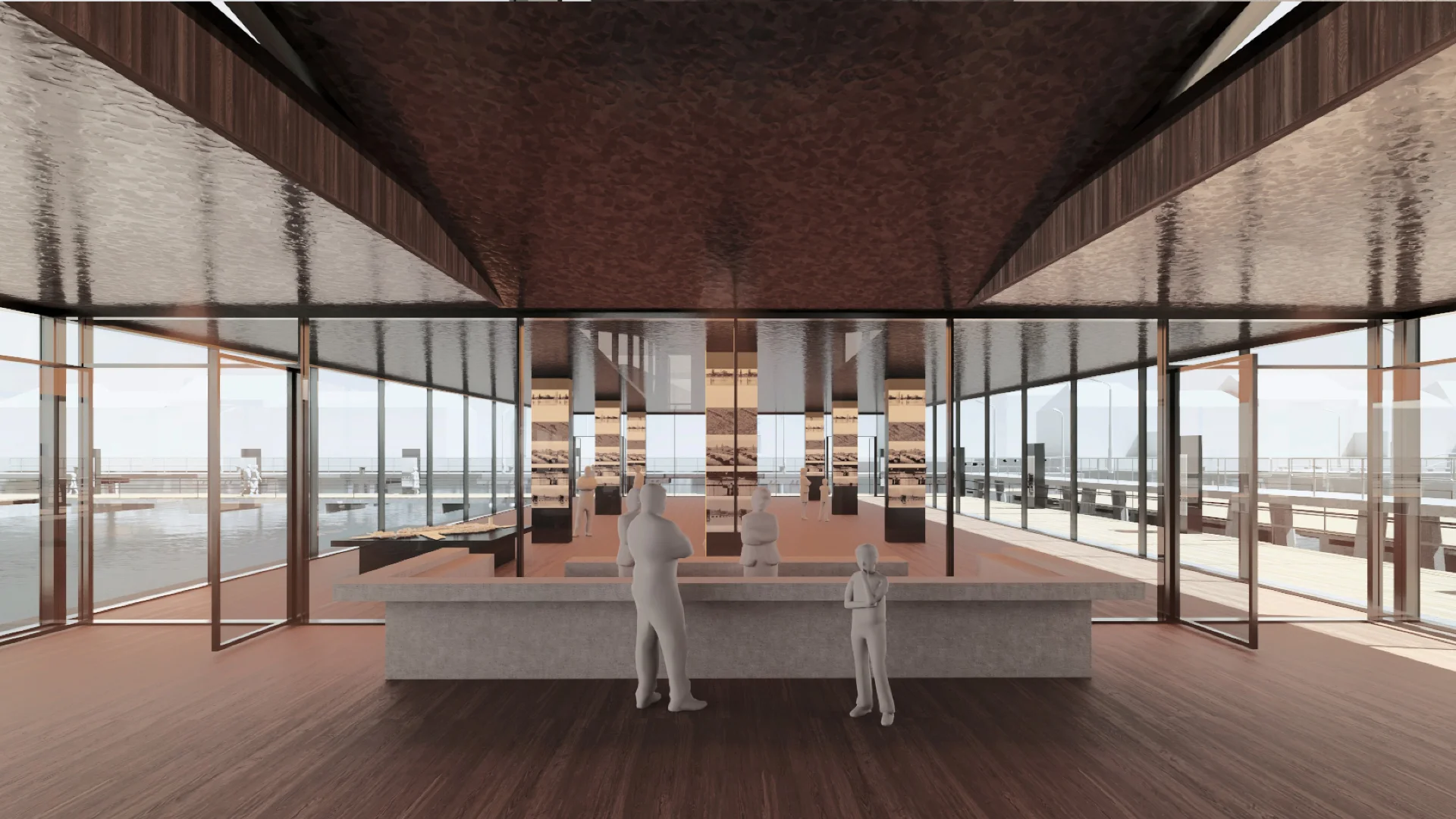
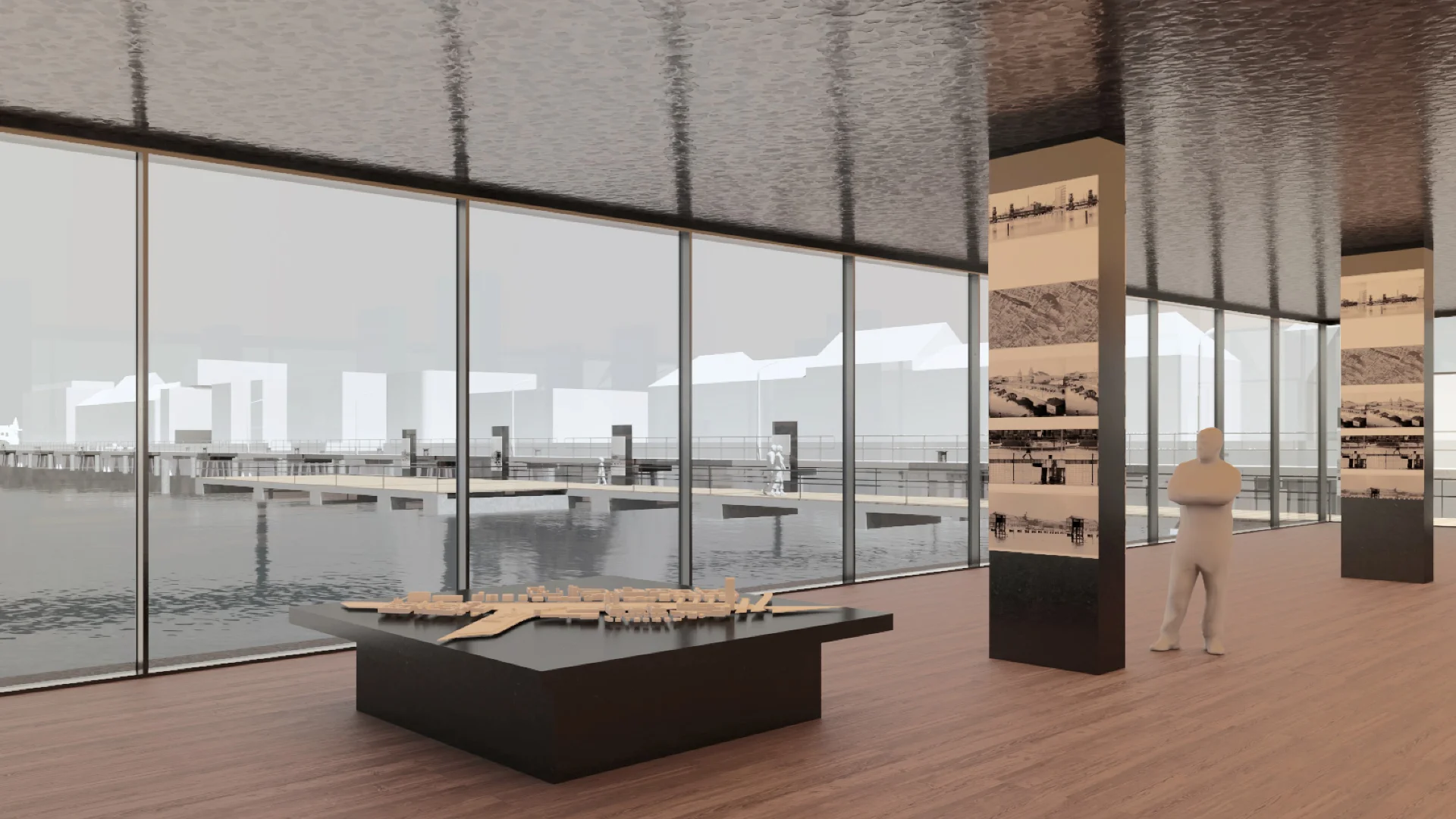
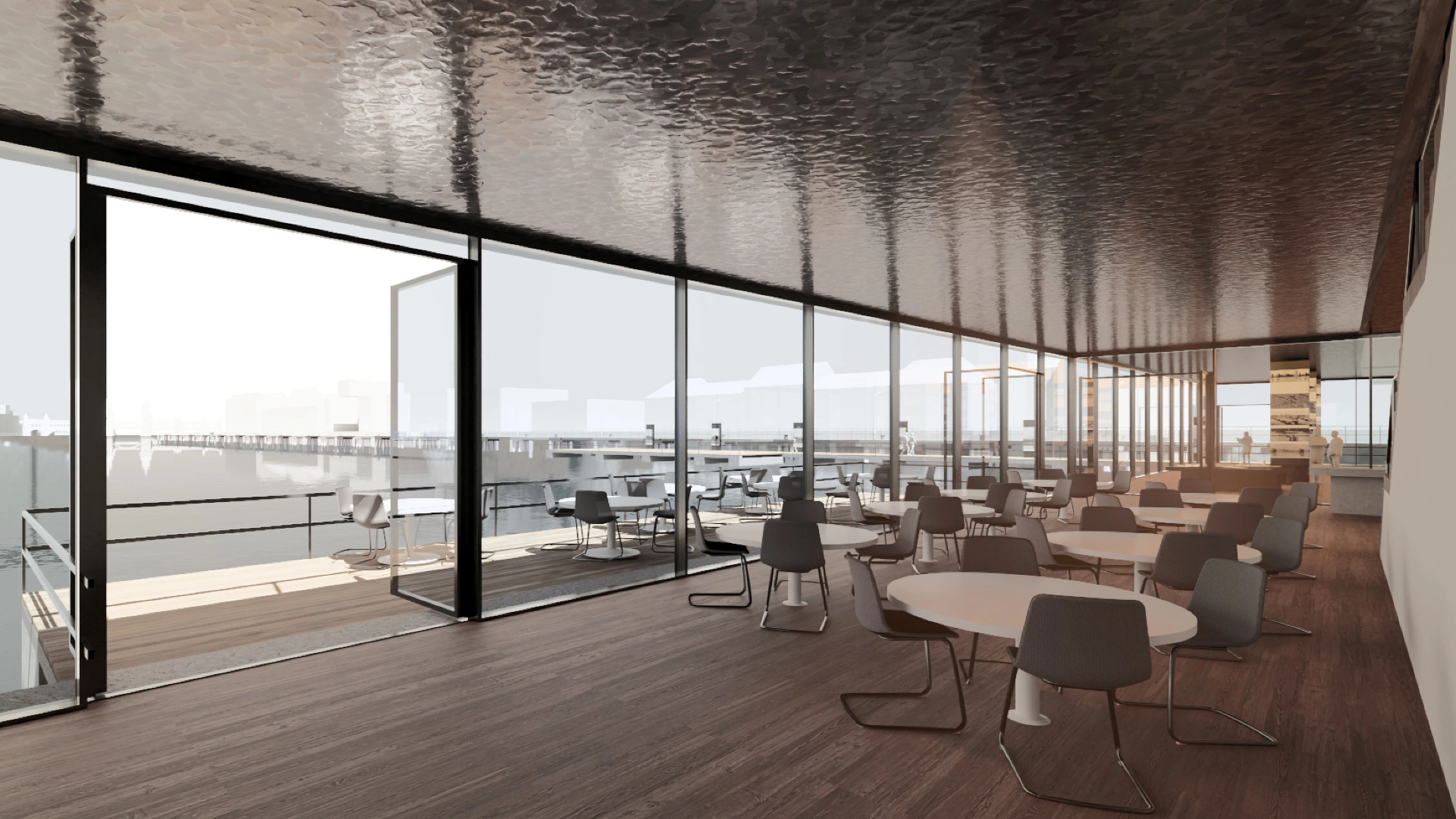
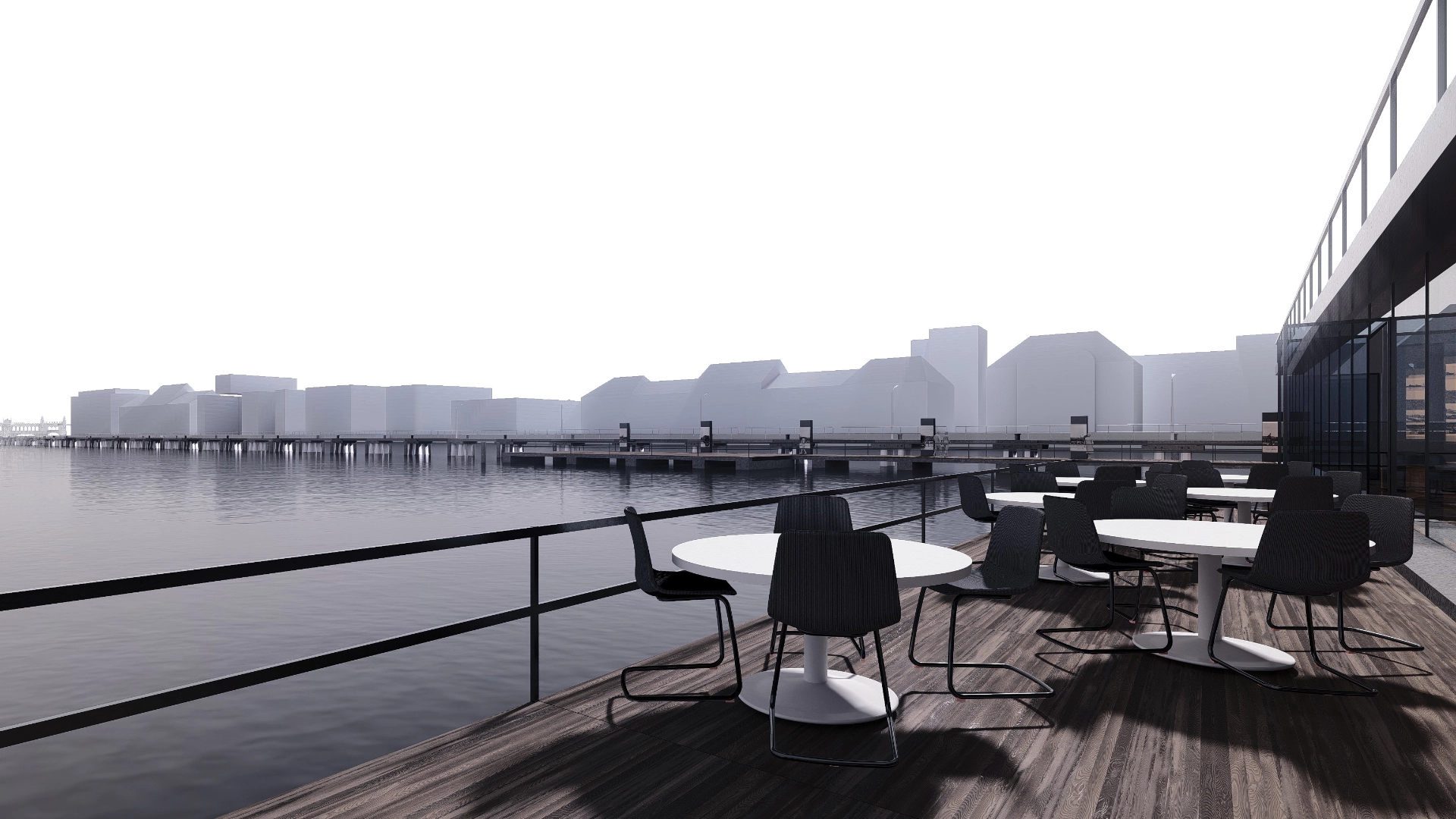
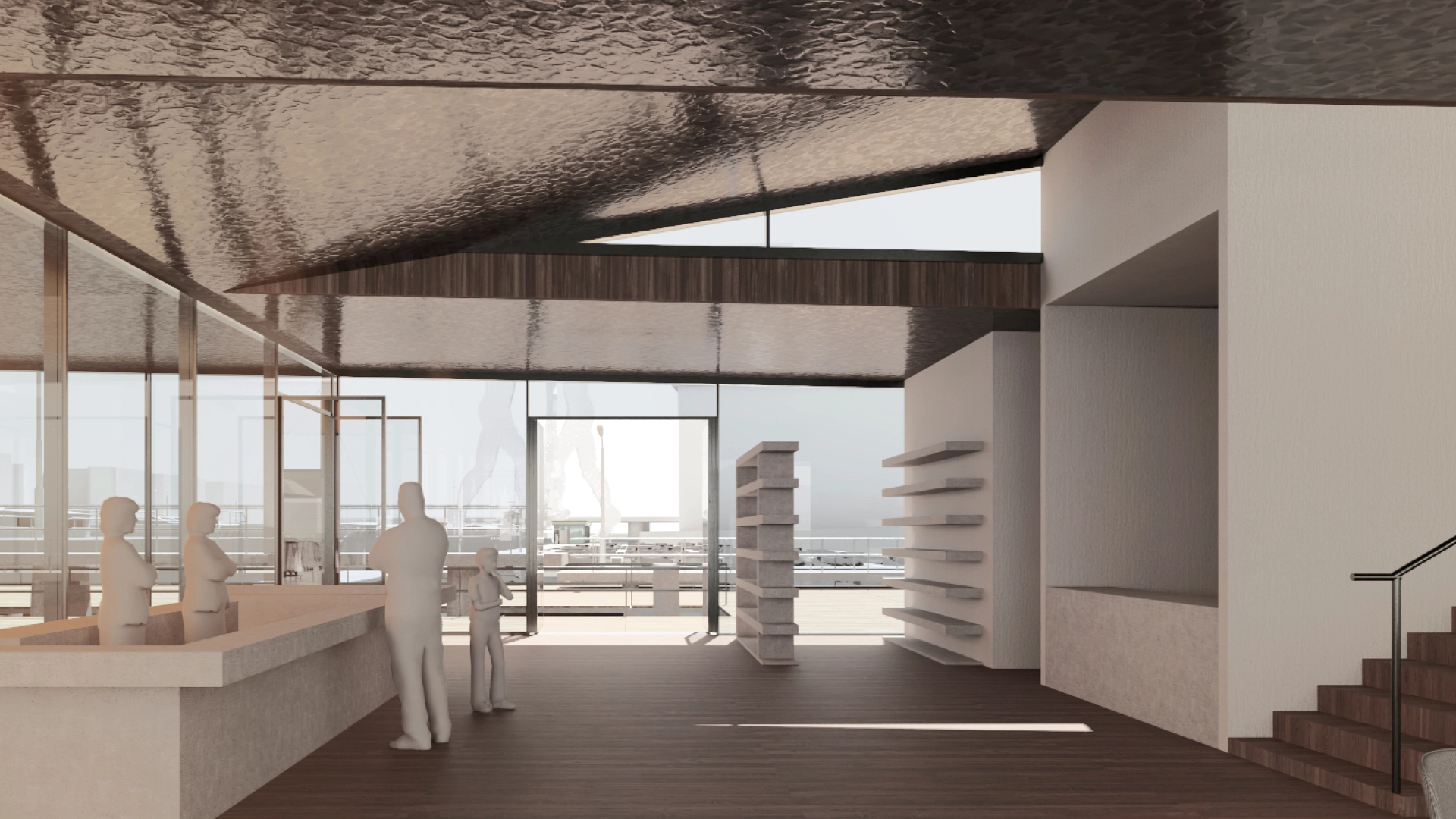
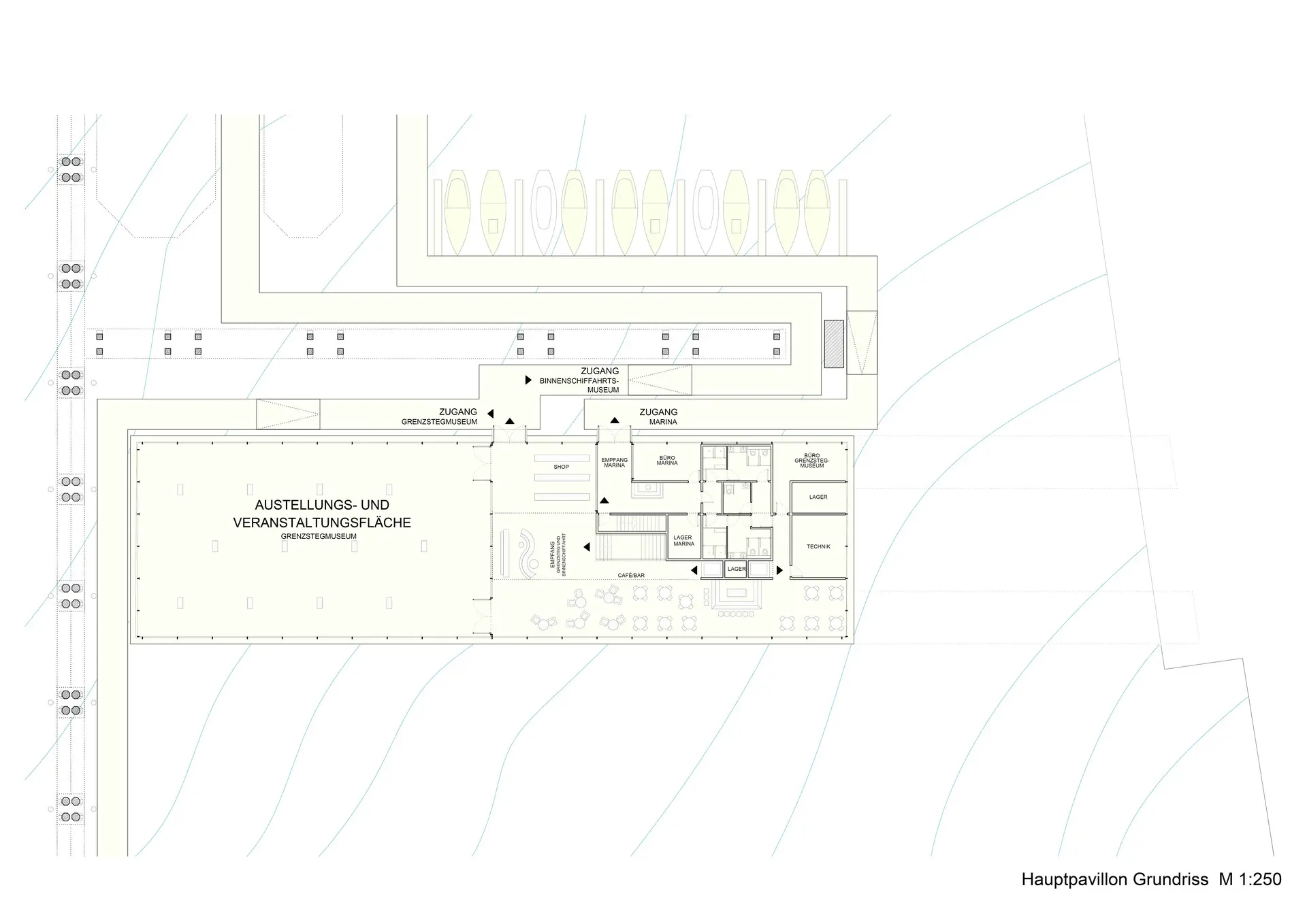
Von diesem Platz führt eine repräsentative Treppe mit weiten Podesten zum Pavillon auf Wasserhöhe. Diese inszenierte Abstufung ermöglicht ein Eintauchen in die Geschichte und schafft Distanz zur Stadt, um den kontemplativen Raum ungestört erleben zu können. In dieser Ebene befinden sich der Empfang mit Zugang zu den innen- und außenliegenden Ausstellungsflächen und der Cafeteria mit Außenterrasse auf Spreeniveau. Der Ausstellungsraum bietet ebenso Platz für alternative Nutzungsmöglichkeiten, insbesondere für Veranstaltungen. Die Nähe zum Wasser und die verspiegelte Decke verwandeln den Raum in ein Ausstellungsobjekt, in dem Licht und Reflektionen Teil der Inszenierung werden.
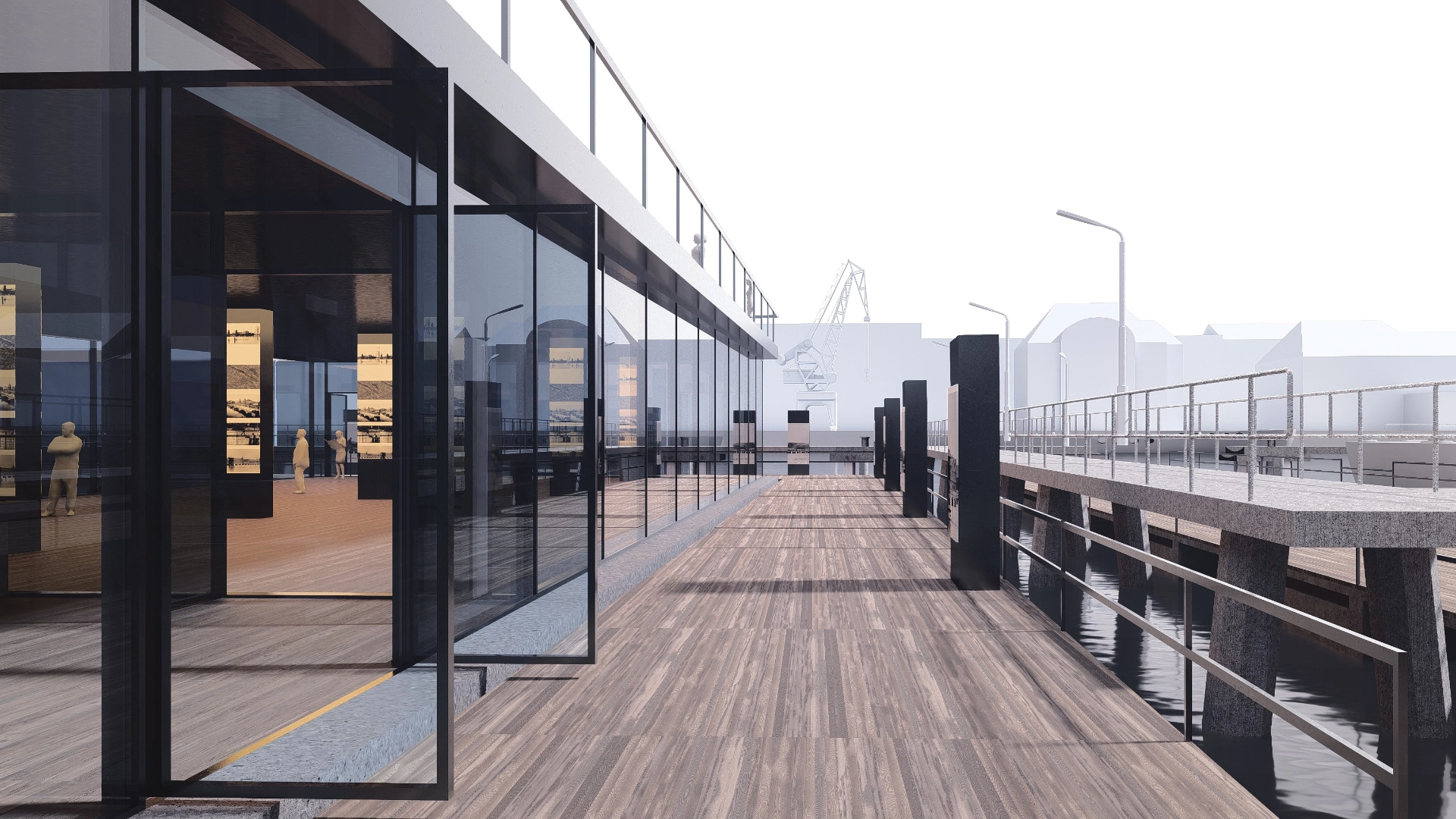
Die Ausstellung findet anhand stelenartigen Stützen statt, die im Ausstellungsraum verteilt sind und eine intime, sensorische Erfahrung ermöglichen, in der gefiltertes Licht, gedämpfte Wassergeräusche und gerahmte Ausblicke eine introspektive Erzählung bieten.
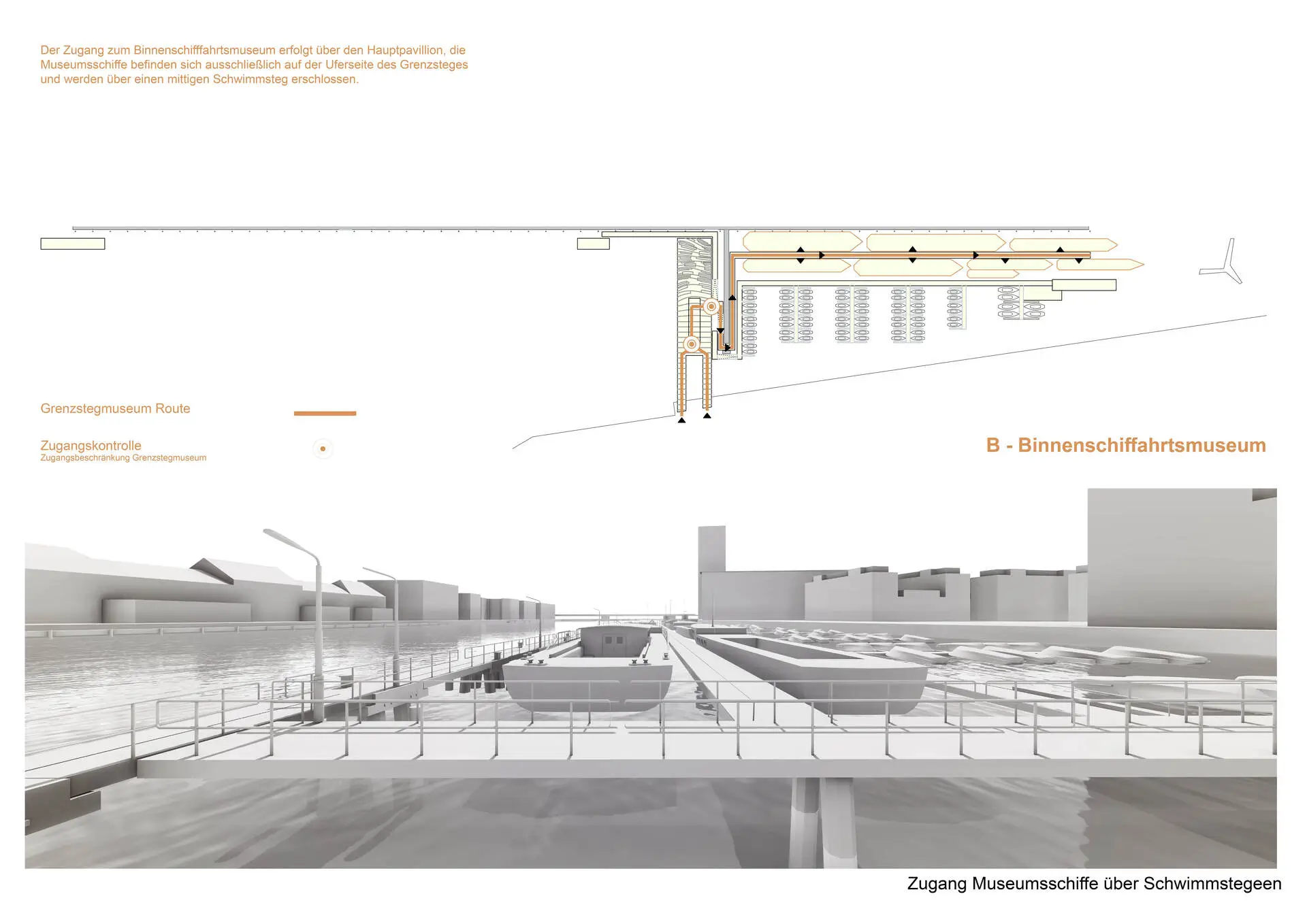
Der Hauptpavillon umfasst zudem Büroflächen, Garderobe, Sanitärräume und Technikflächen. Ein Aufzug gewährleistet die barrierefreie Erschließung aller Ebenen und ermöglicht die getrennte Erschließung des Grenzhafenmuseums auf der einen sowie des Binnenschifffahrtsmuseums und der Marina auf der anderen Seite.
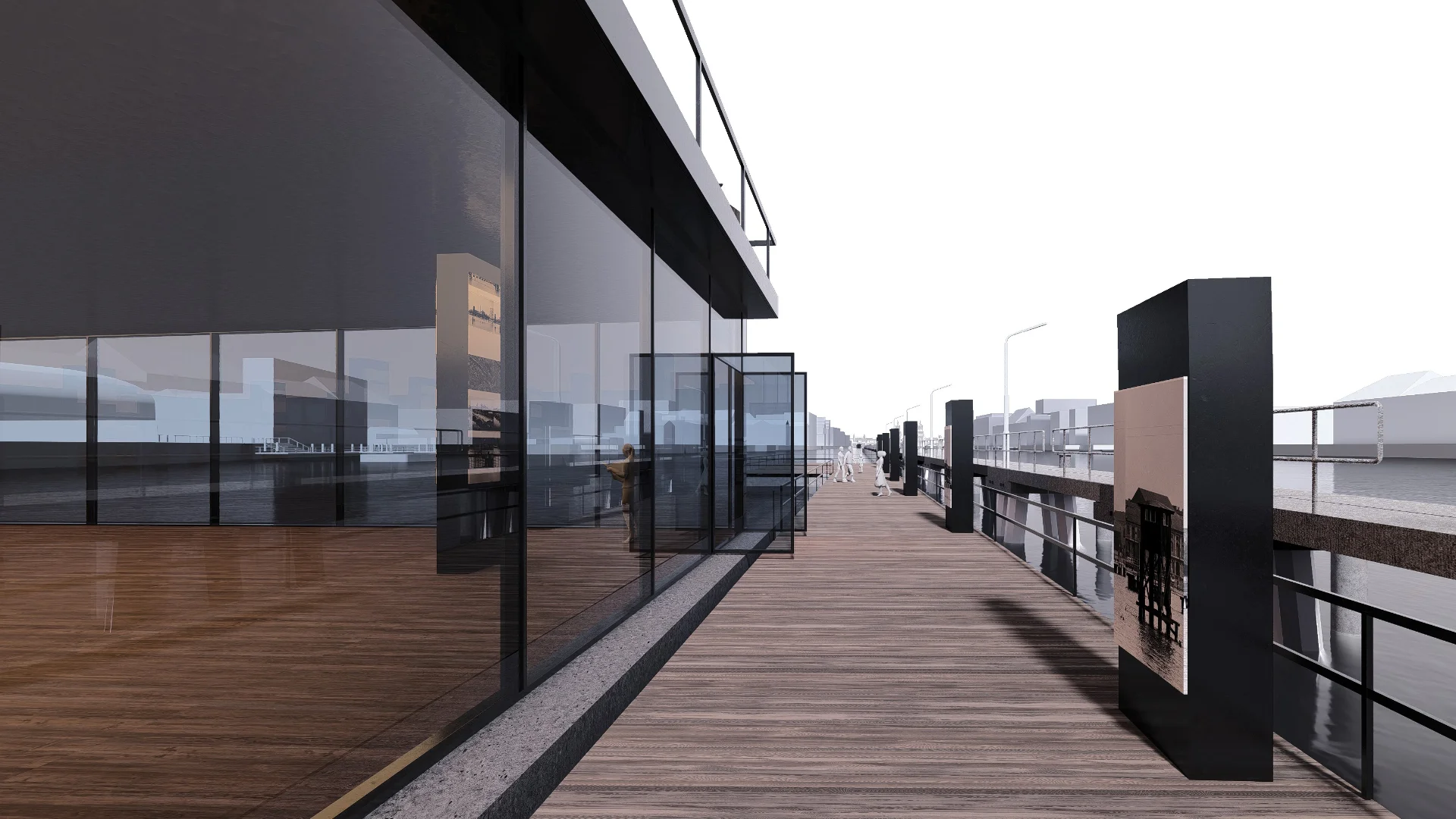
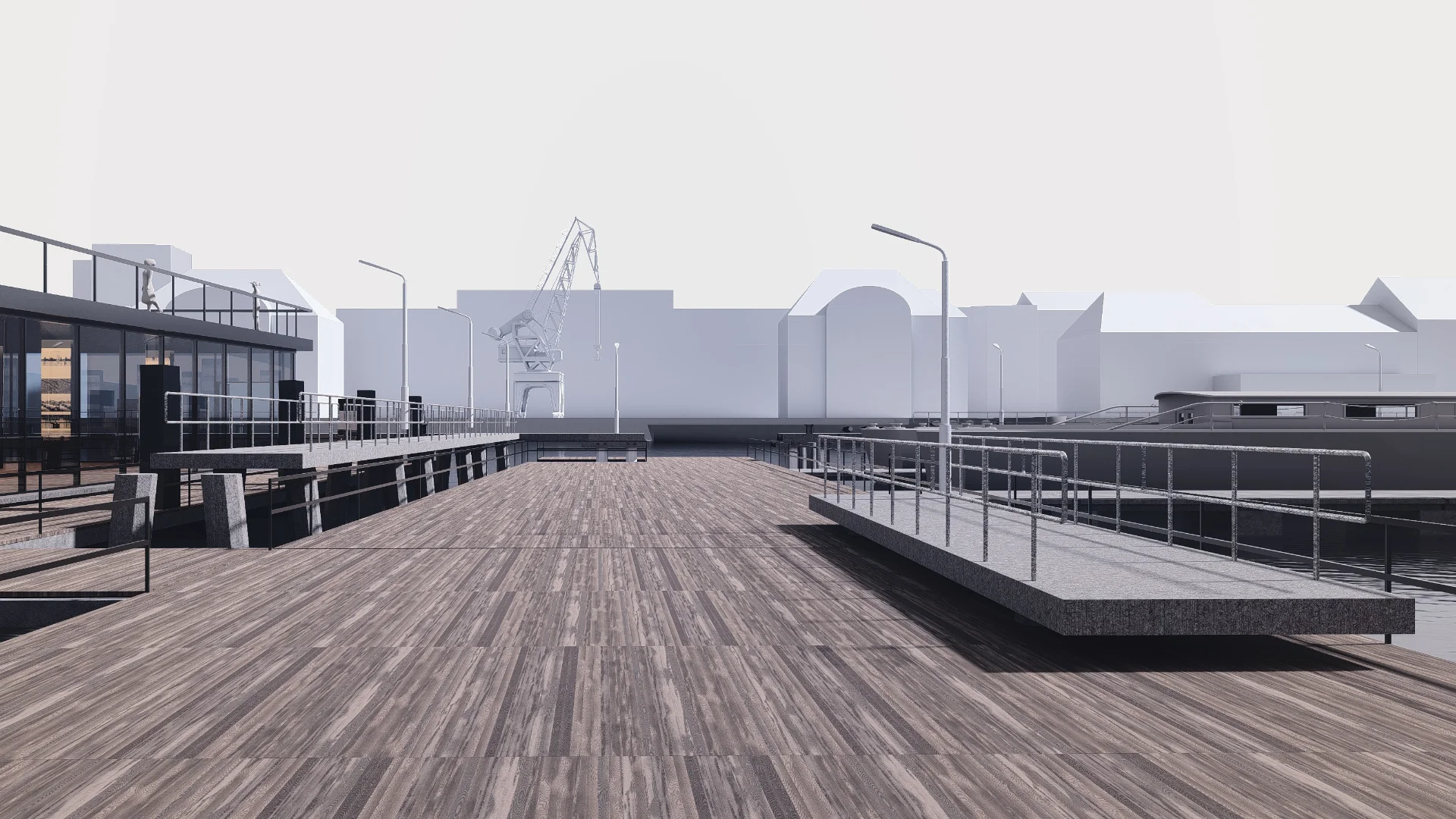
Vom Empfangsbereich führt der Geschichtspfad nach außen auf eine schwimmende Pontonanlage, die sich an die historische Steganlage schmiegt und mit Ausstellungselementen und Informationstafeln den historischen Kontext vermittelt. Der Pfad findet sein Ende bei einer schwimmenden Plattform, die eine unmittelbare Wahrnehmung der Umgebung und Reflexion über den historischen Kontext eines geteilten Berlins ermöglicht.
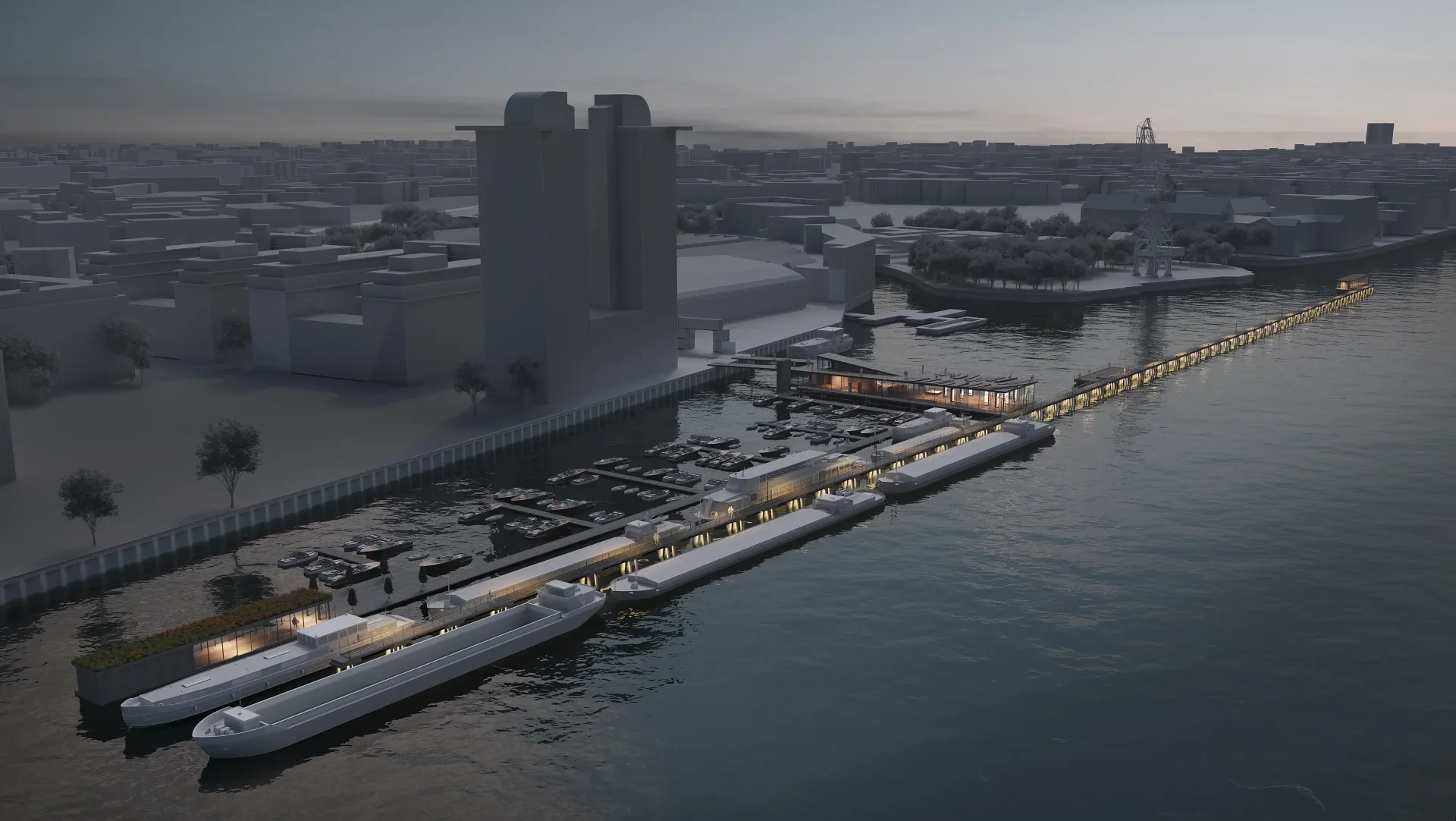
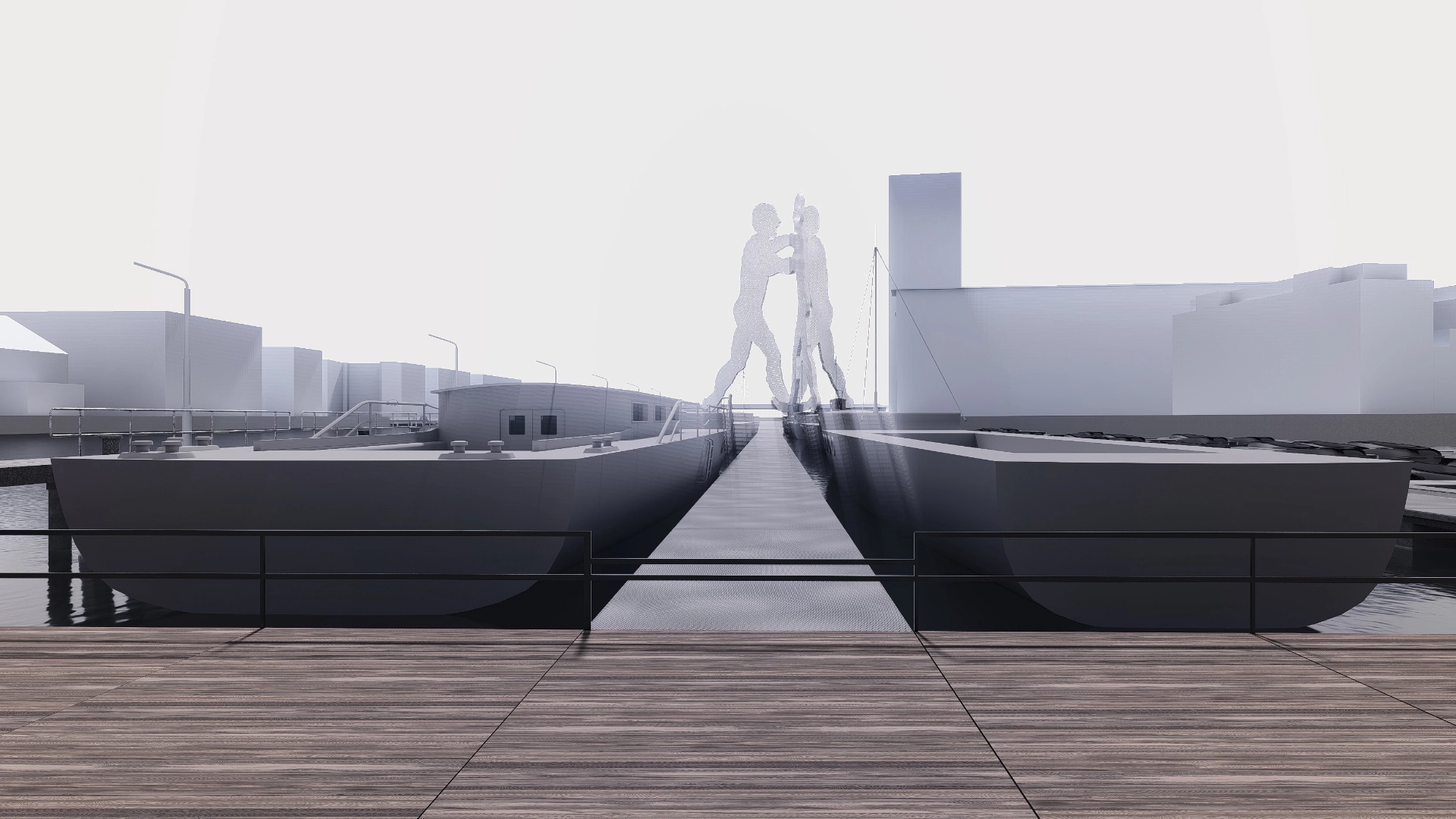
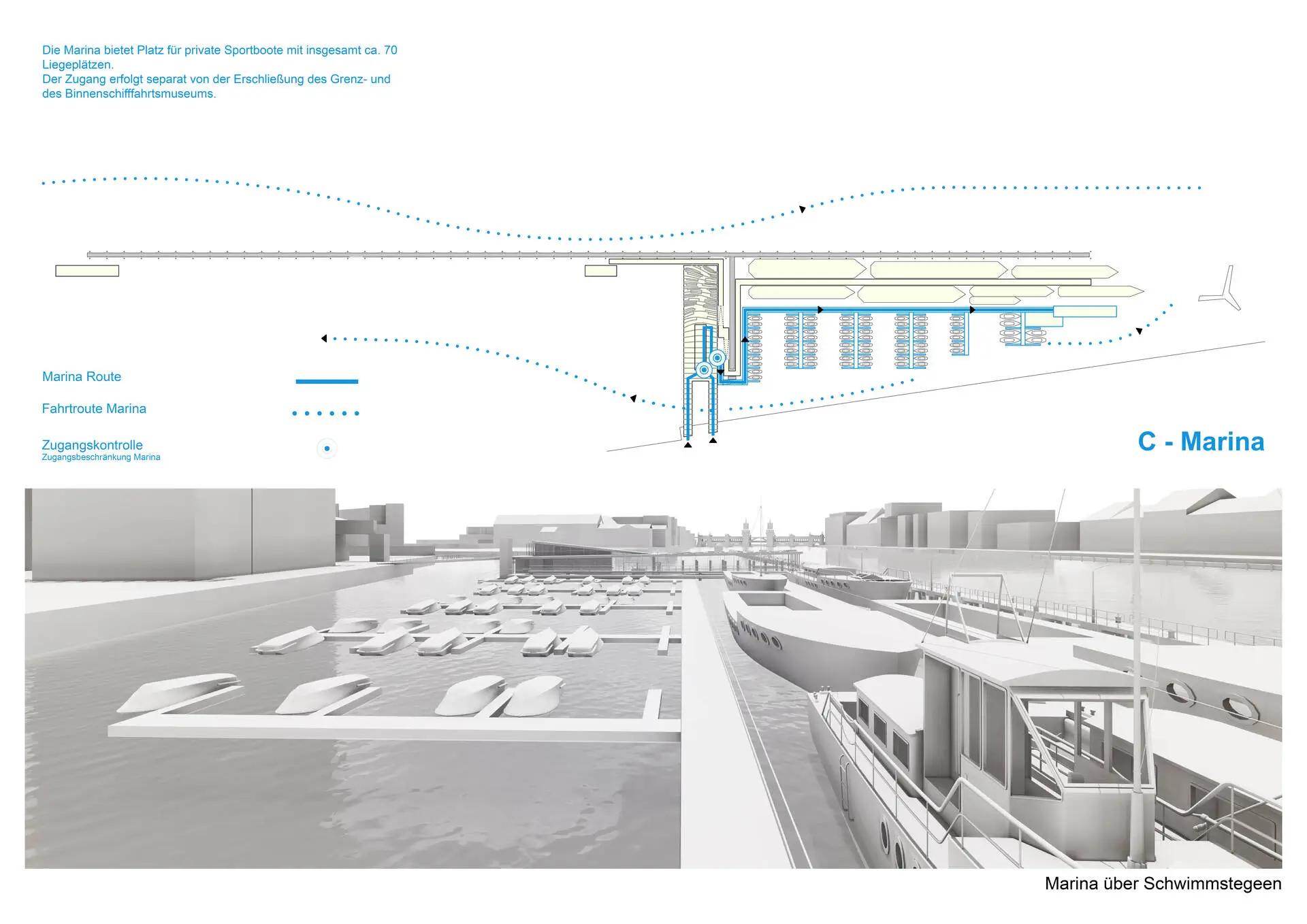
Auf der Westseite des Grenzstegs befindet sich das Binnenschifffahrtsmuseum mit acht Museumsschiffen, die in ihrem ursprünglichen Hafen-Kontext an einem langen Steg aufgereiht sind und als mobile Ausstellungsräume sowie für Gastronomie und Veranstaltungsräume dienen. Das Binnenschifffahrtsmuseum verfügt über einen unabhängigen Zugang von Land über eine Rampe an der Ostfassade des Hauptpavillons. Eine große schwimmende Plattform von 500 m² erschließt das Binnenschifffahrtsmuseum, die Marina und eine Anlegestelle für Fahrgastschiffe und dient gleichzeitig als Aufenthalts- und Ausstellungsraum. Von dort führt ein Ponton nach Osten, der den Zugang zu den Museumsschiffen und ihre technische Anbindung gewährleistet.
Die Marina bietet Anlegestellen für insgesamt 60 Boote, erschlossen über einen schwimmenden Hauptsteg mit Nebenstegen. Die gebauten Strukturen werden als Stahlkonstruktionen mit punktuellen Verankerungen im Flussbett ausgeführt. Die Pontons werden als thermobehandelte Holzstege ausgeführt.
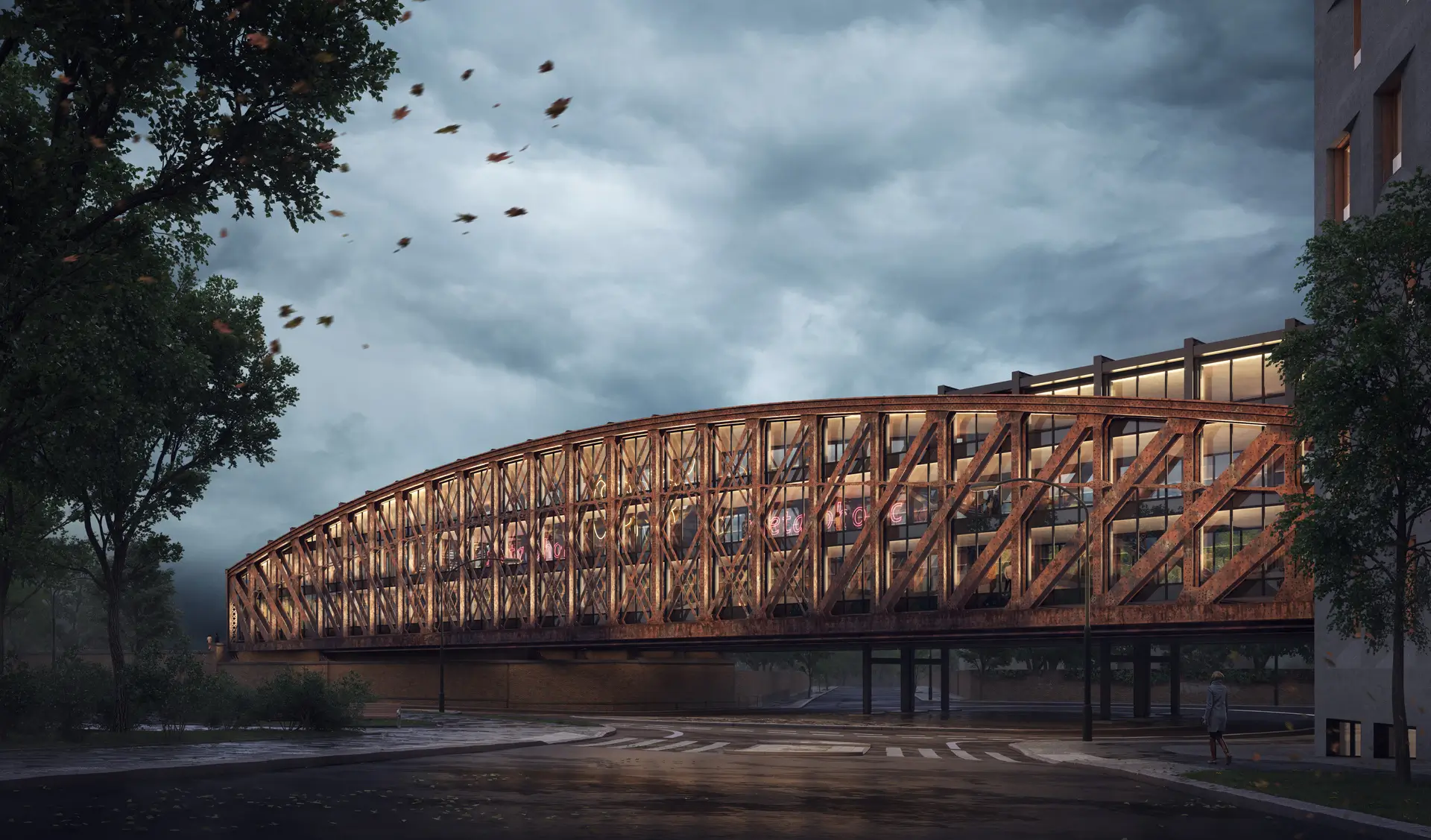
Nachts wirkt der Pavillon durch die großflächige transluzente Fassade und die an ihrer Unterseite beleuchtete Steganlage wie ein sanft leuchtender Körper, der sich in der Spree spiegelt. Die Nähe zum Wasser sorgt dafür, dass die Spree als natürliche Kühlung dient.
Ein weiterer Aspekt, der für einem Eingriff in ein naturnahes Umfeld, besonders wichtig erscheint, ist die Materialwahl: Diese erfolgt nach dem Kriterium der Langlebigkeit und einem geringen ökologischen Fußabdruck. Darüber hinaus ist der Baukörper durch die modulare Konstruktion leicht wieder demontierbar.
Es besteht für uns kein Zweifel daran, dass dieses Projekt, das sich derzeit noch in der Planungsphase befindet, nach seiner Fertigstellung als Ort der Begegnung für besuchende und Anwohnende zu einer neuen Ikone der Stadt wird.