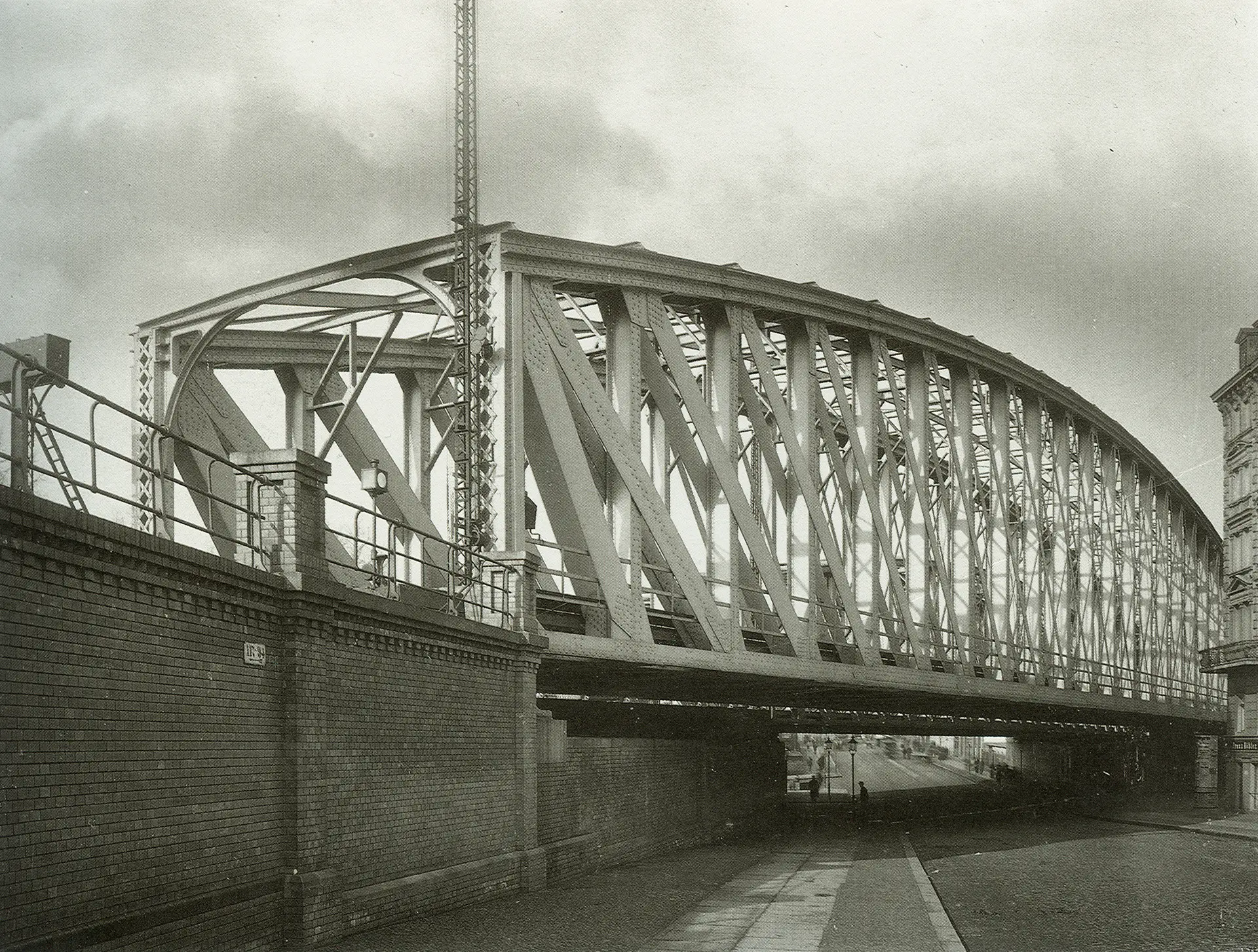
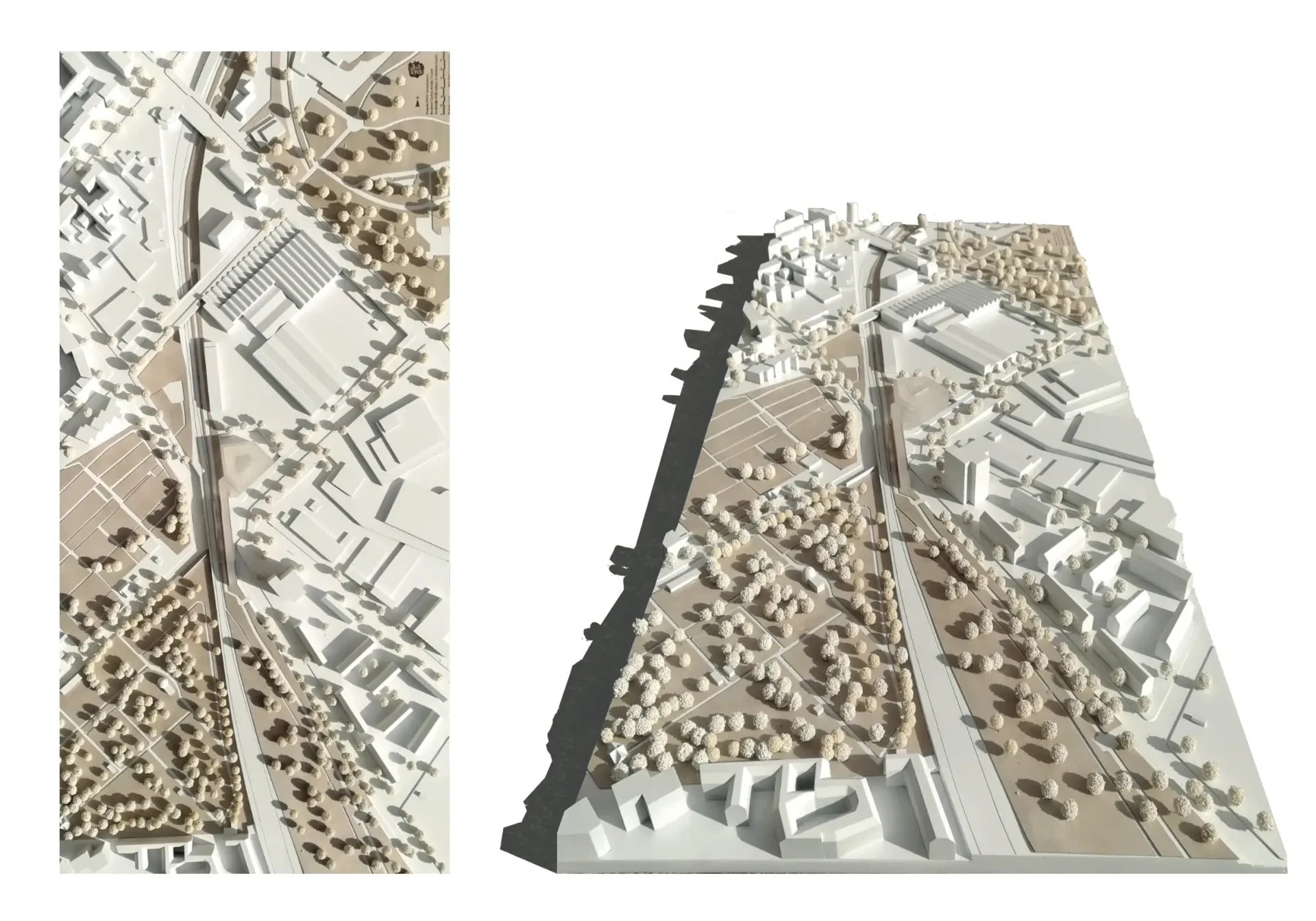
At this historic site, the inner-German border divided the city into two halves until 1989. For one of Germany’s oldest railway lines, the construction of the Berlin Wall, which ran directly over the tracks, marked the final end. After reunification in 1990, demolition was considered. That things turned out differently may have been due to the tug-of-war over responsibility between Deutsche Bahn, as the owner, and the City of Berlin, which placed the bridges under historic preservation in the same year. Neither side was able to agree on a common approach to the bridges until 2006. Today, while the former border strip is visible only as a historical reference, the site is shaped above all by the surrounding industrial area and the numerous cemeteries.
The indifferent allure of the graffiti-covered bridges in this perceived no man’s land is hard to resist. It also explains why they have repeatedly inspired filmmakers as a setting: for instance, in the hit series Babylon Berlin or the feature film Lola rennt.
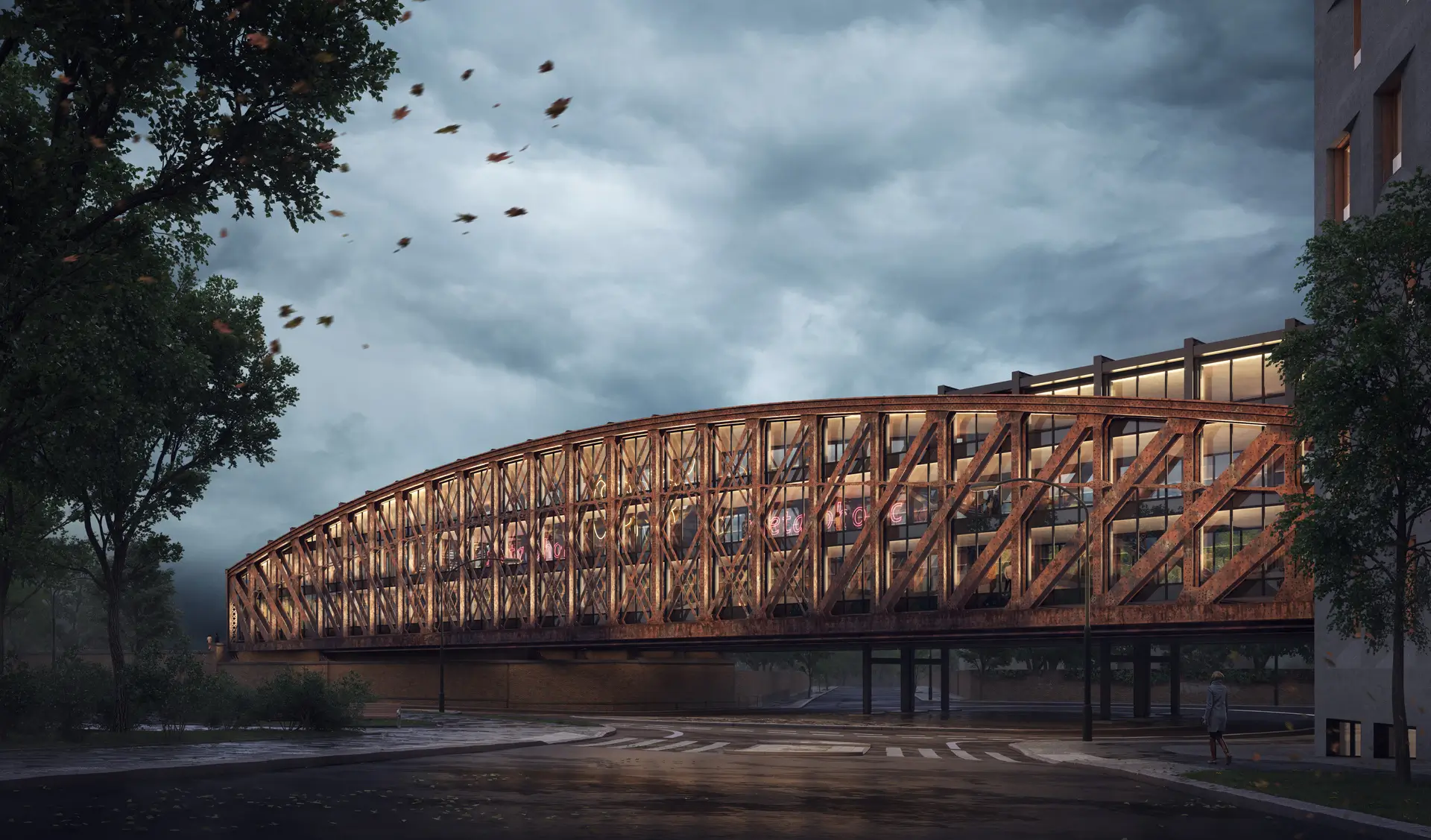
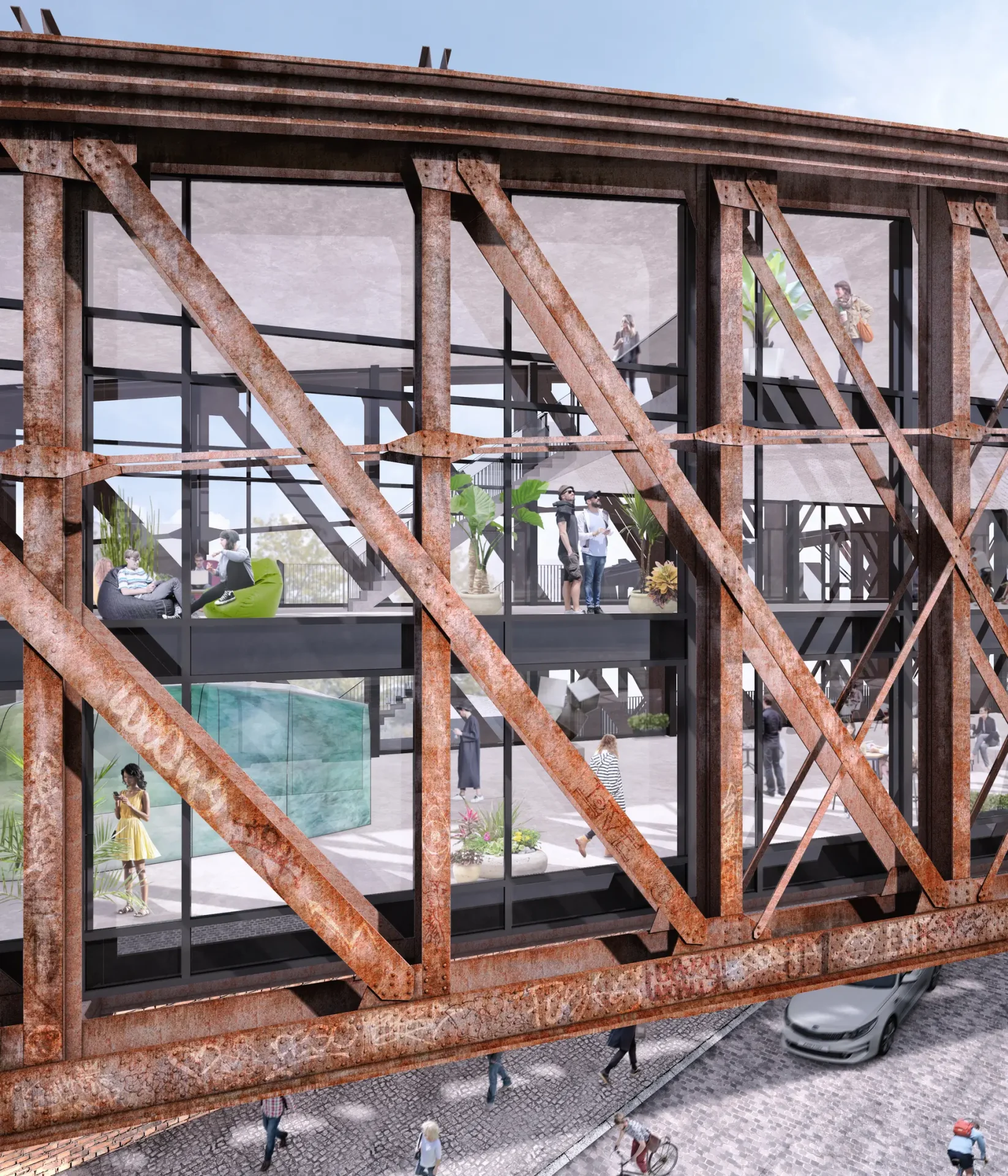
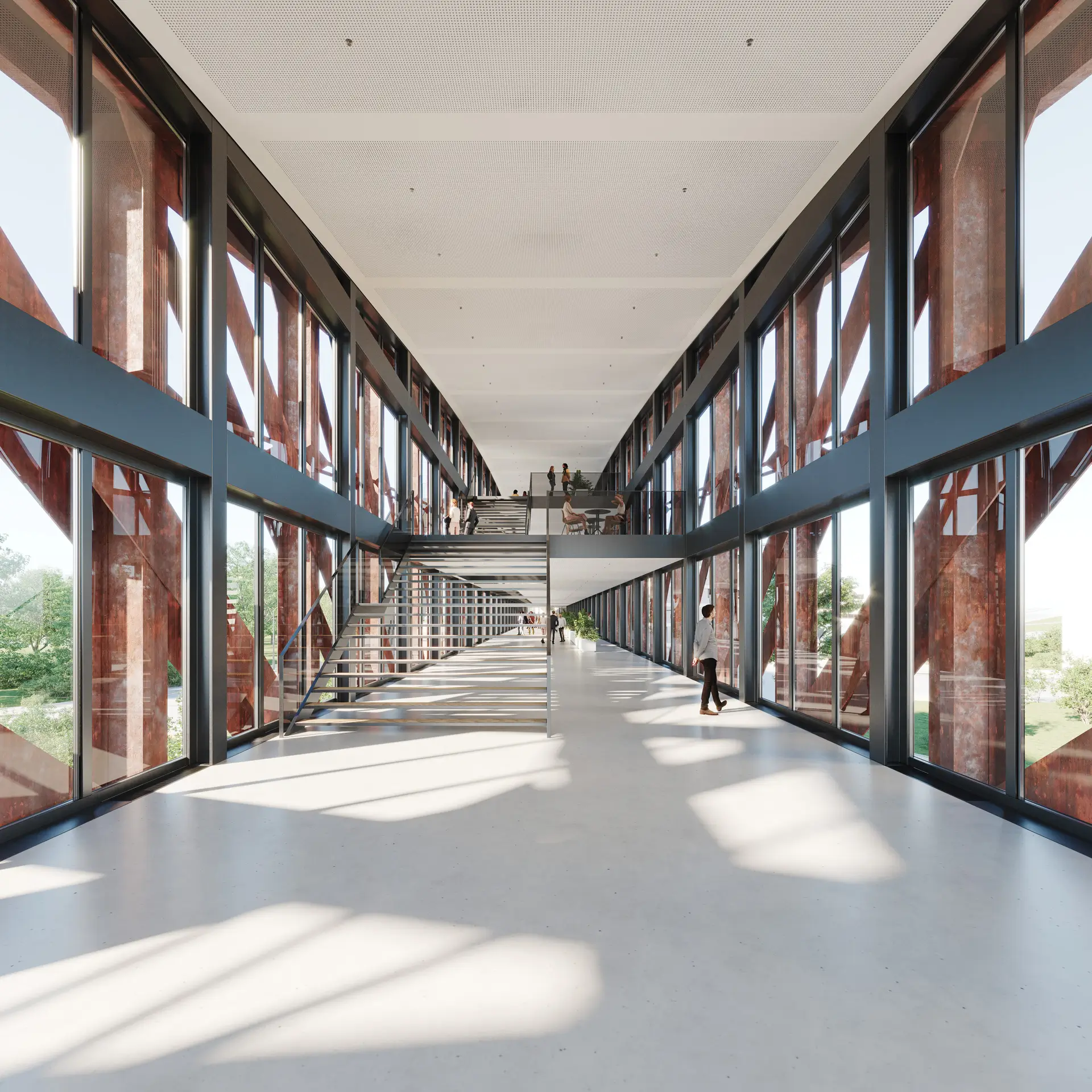
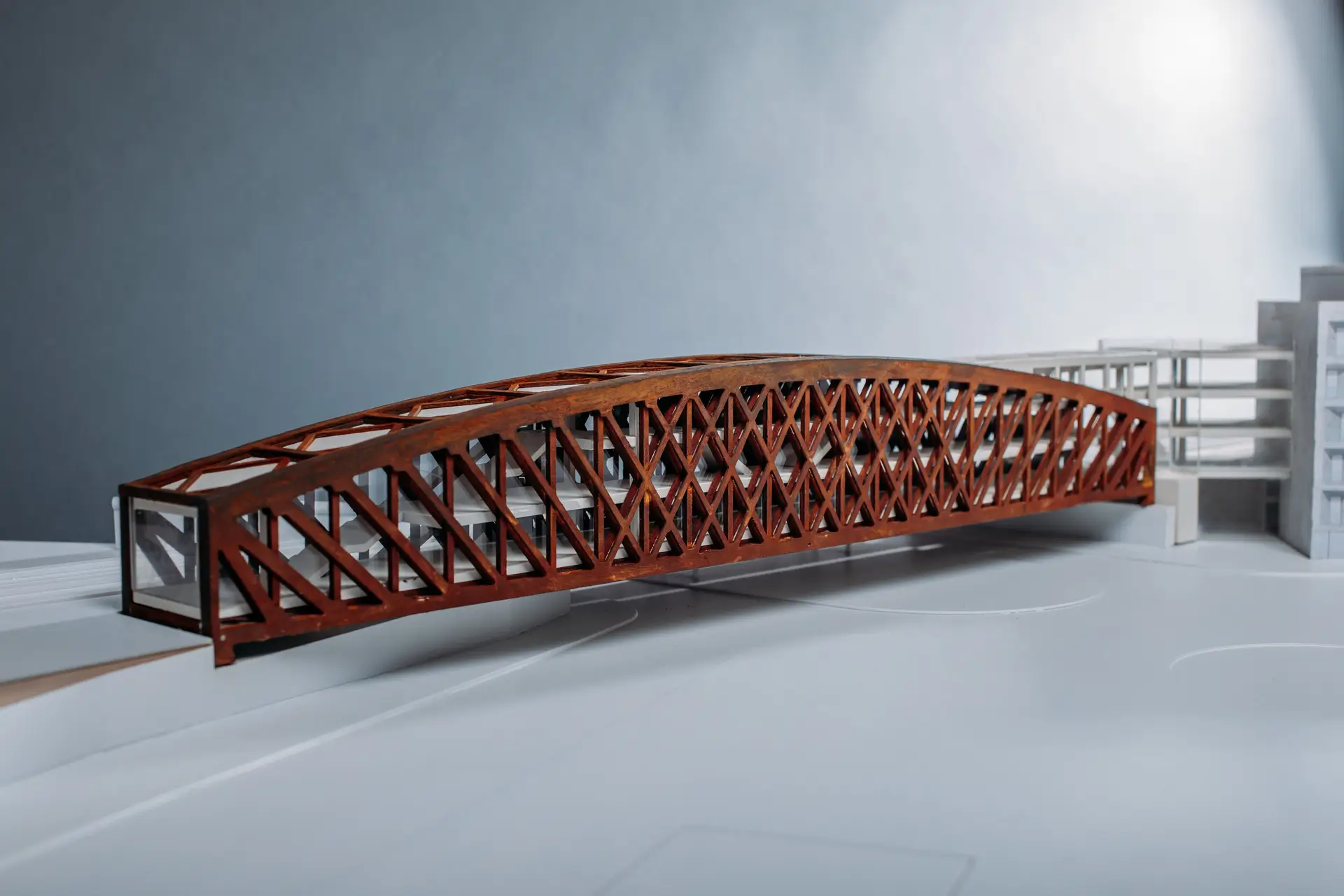
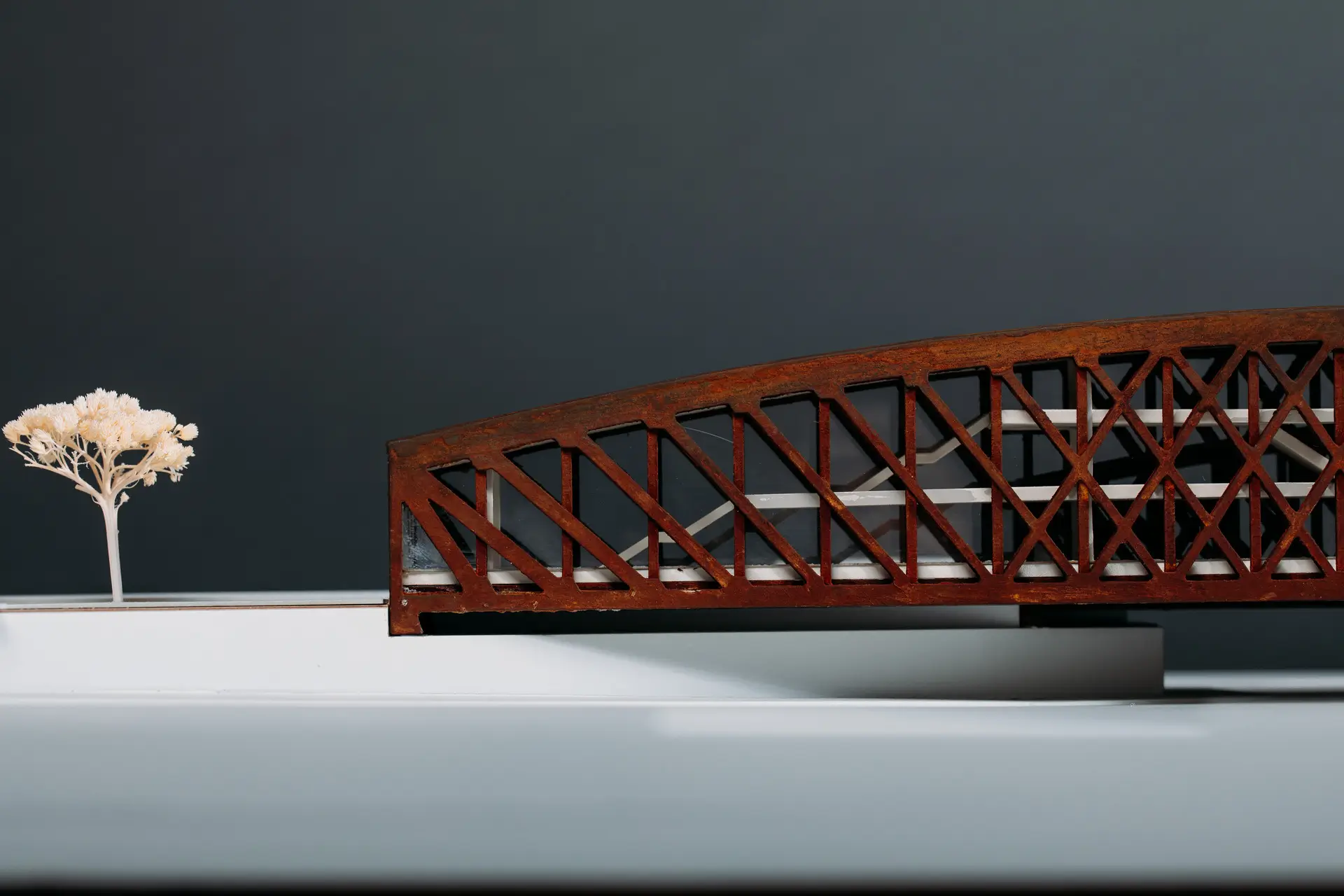
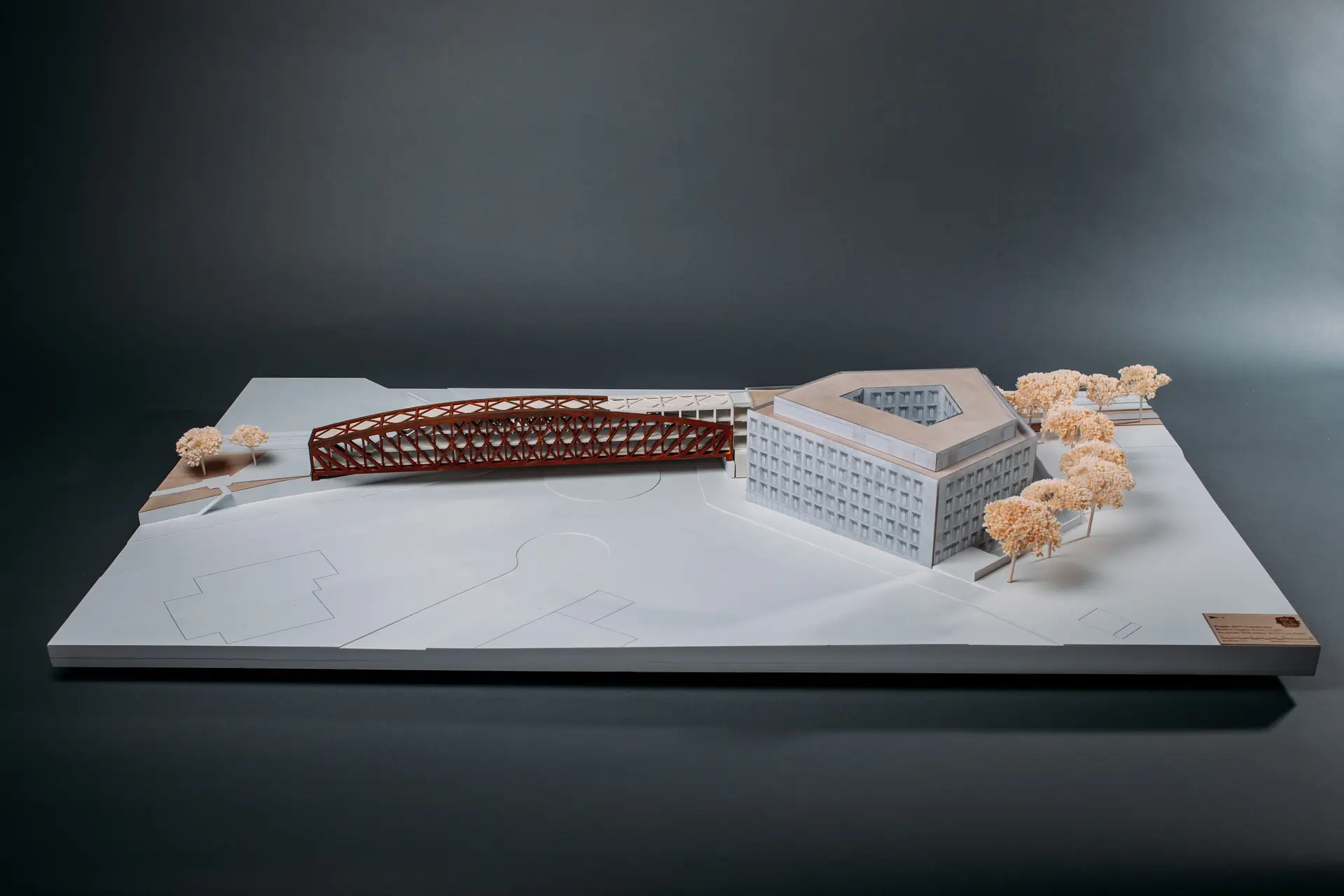
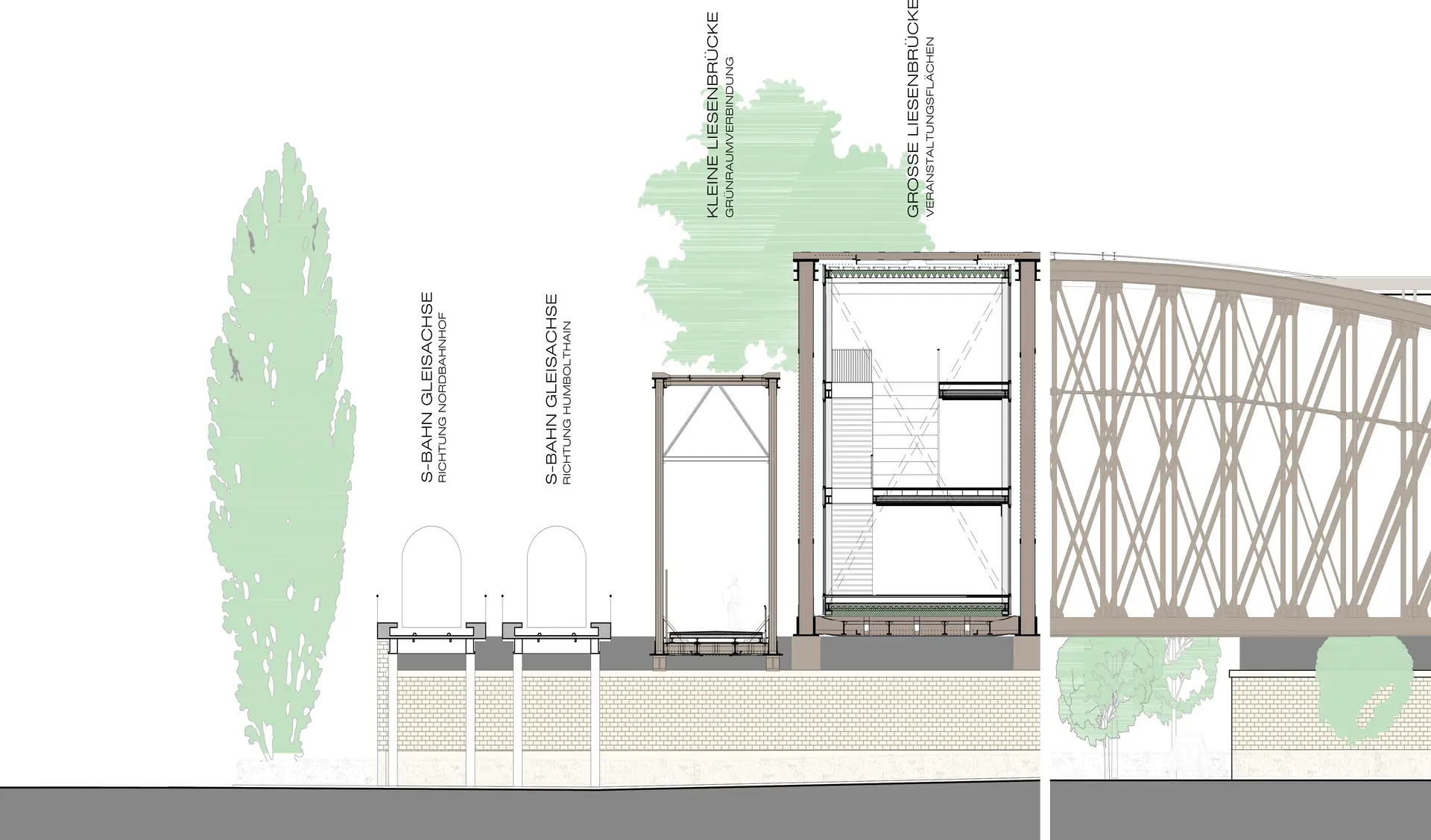
The larger of the two bridges is to be transformed into a three-story, barrier-free, and publicly accessible venue. The special feature: the new structures will be integrated into the steel framework of the existing arch bridges. The interior layout of the building will be kept airy, with flexible, open, and expansive spaces. The visible steel truss construction of the railway monument remains intact, becoming the signature feature of the new venue. At present, both cultural or gastronomic uses, as well as occupancy by one or more service providers, appear equally feasible.
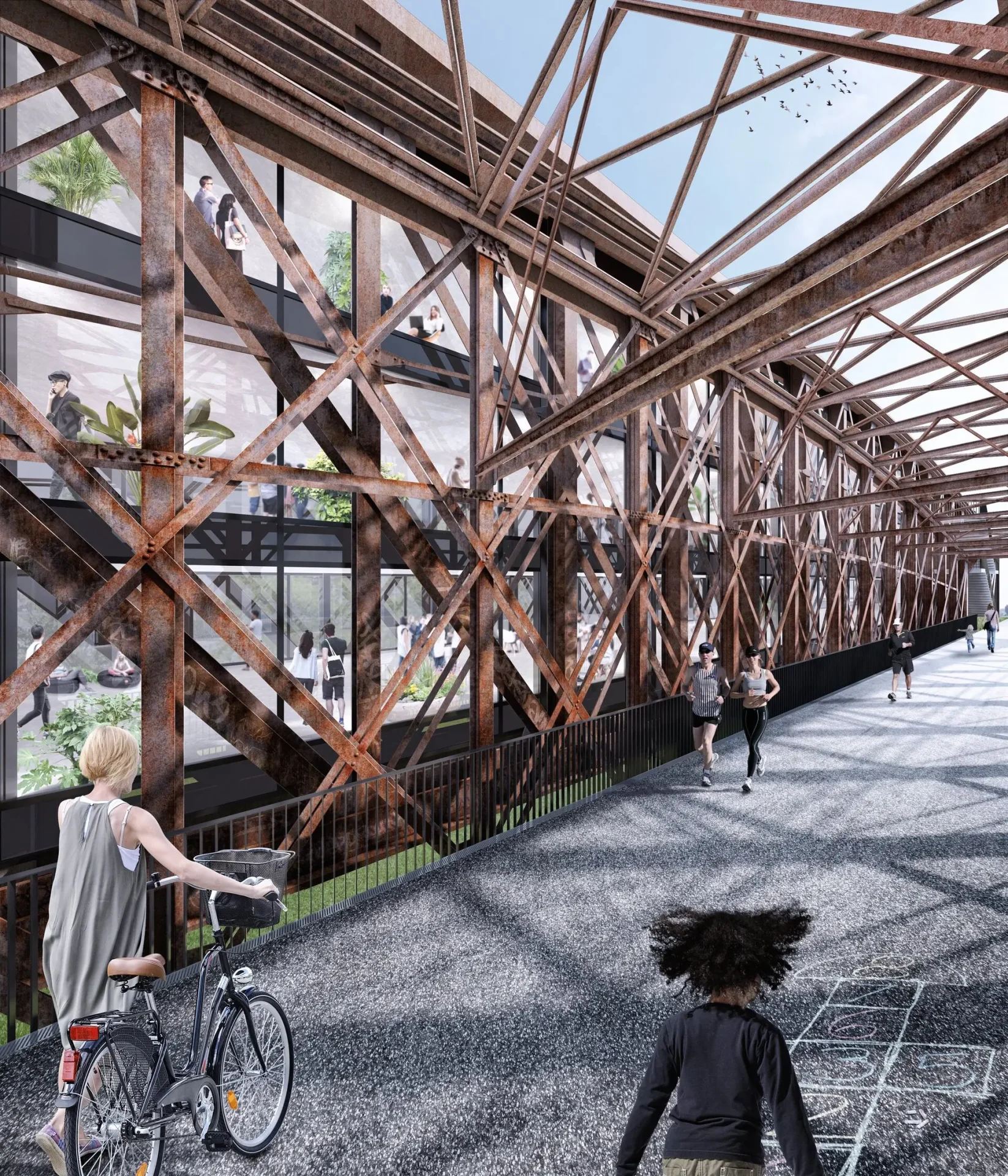
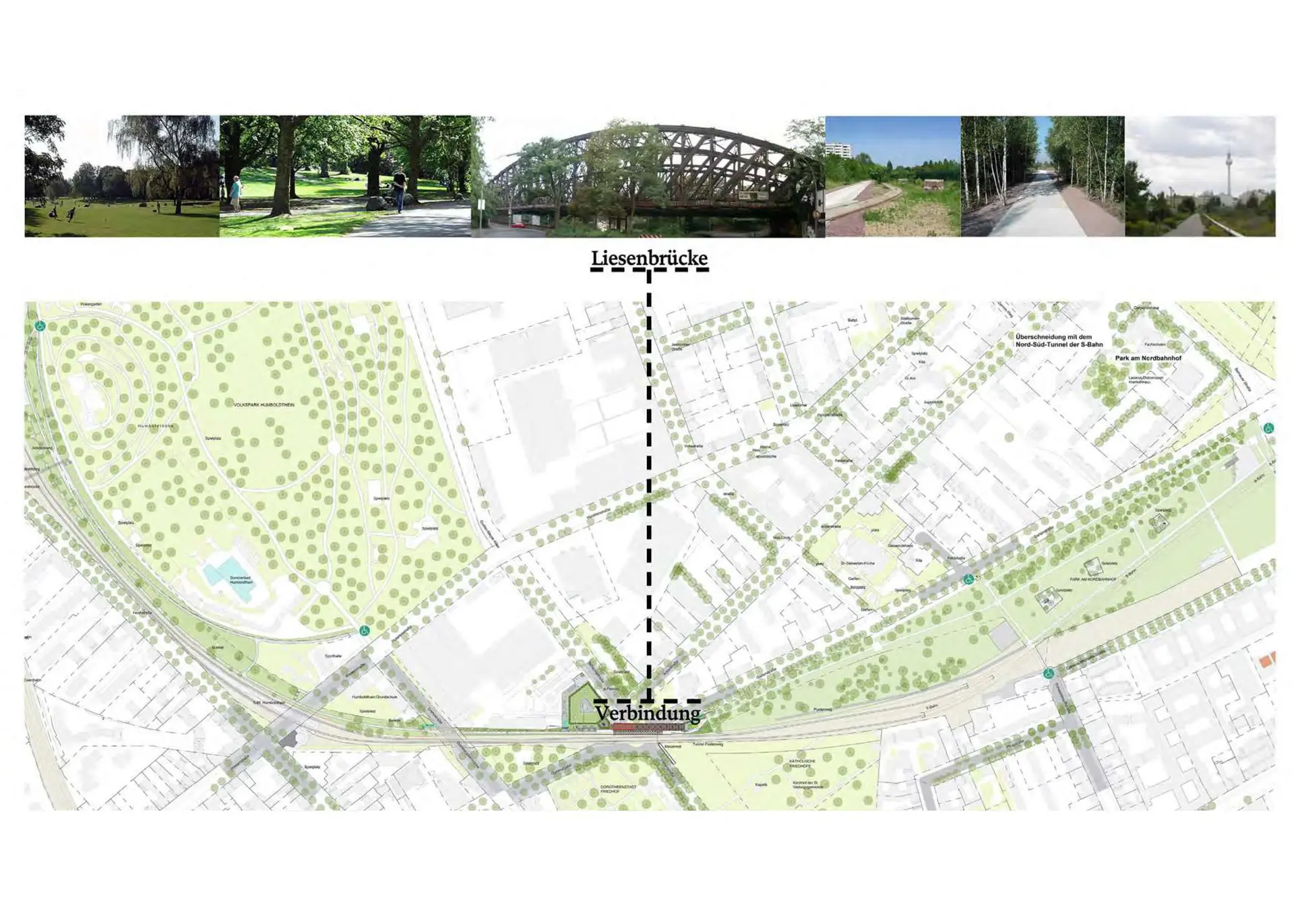
The smaller of the Liesenbrücken, by contrast, is to become an integral part of a new green corridor: in order to create a natural link between the local green and recreational areas of Humboldthain and the Park am Nordbahnhof, the smaller, undeveloped Liesenbrücke will, after comprehensive restoration work, be opened to the public as a pedestrian crossing.
The overall project also includes the construction of a supplementary building on the neighboring plot at Scheringstraße 2.
To grasp the urban-historical significance of the Liesenbrücken project, a walk through the area—still marked today by its rough charm—is worthwhile. From afar, the arched silhouettes of the two railway bridges can already be made out: one large, twelve meters high, nine meters wide, and one hundred meters long. And a smaller one beside it. Rusting and overgrown with wild greenery, these free-spanning steel giants, built between 1896 and 1897, stand as silent witnesses of Wilhelminian engineering. Over time, their load-bearing capacity was repeatedly reinforced to meet the demands of ever-heavier railway traffic: first in 1910, then again in 1926. After yet another strengthening in 1943, even the heaviest military equipment could be transported across their tracks. Originally, four bridges of the disused North-South railway line to the Baltic Sea stood here. As early as 1843, passengers and goods were carried between the capital on the Spree and Stettin. Today, the two surviving steel monuments span an unremarkable but heavily trafficked traffic roundabout, fed by Liesenstraße, Gartenstraße, and Scheringstraße. Running parallel to the two decommissioned railway bridges are two S-Bahn bridges from the 1950s: plain, with supporting columns.
BWH LIESENBRÜCKE
PLANNING
It began in 2006 with a walk along the Berlin Wall Trail. The two architects, Ana Salinas and Gilbert Wilk, there consciously noticed the Liesenbrücken for the first time. After further site visits to the two abandoned steel colossi and various location studies, it became clear: these bridges, slumbering in a kind of Sleeping Beauty state, possessed remarkable transformation potential—especially if they could be realized as a connecting axis between two public parks, with a multi-story building on the larger of the two.
The project idea of the two architects was as clever as it was convincing: the plan originally envisioned the integration of a boutique hotel into the larger bridge. Its historic steel structure was to remain visible on the exterior as the supporting framework. One thing was certain – this transformation object would not only be an architectural eye-catcher but, compared with other Berlin buildings, also possess a striking and unique design identity. The smaller overpass, by contrast, was already conceived at the time as a green link between Humboldthain and the Park am Nordbahnhof. By saving the acquisition costs of the bridge property—since it was transferred free of charge by Deutsche Bahn—and through the profitable operation of the hotel, the preservation of both bridges could be secured in the long term. The project was further favored by its proximity to the city center: only about one and a half kilometers as the crow flies from the tourist hotspot Mauerpark, just two kilometers from the Hauptbahnhof, and three kilometers from the Fernsehturm at Alexanderplatz. It also seemed obvious to integrate the Liesenbrücken into the memorial landscape of the Gedenkstätte Berliner Mauer, since in addition to their historic significance the Berlin Wall Trail runs directly beneath their foundations.
Once the decision was made to bring the dream of the Liesenbrücken to life, it became essential to sift through stacks of files, prepare presentations, and involve a wide range of specialists. Negotiations took place with authorities, Deutsche Bahn, and property owners: in 2007, the head of Berlin’s State Office for Historic Preservation had to be persuaded, as did the head of maintenance works at Deutsche Bahn, that a privately financed use could represent a pioneering way of dealing with an industrial monument. At that stage, it was far from certain that the two bridges would one day change ownership. In addition, approval had to be secured from the automotive supplier Pierburg for the purchase of an adjacent site at Scheringstraße 2, which was indispensable for ensuring smooth access to the future construction site.
But that was not all: calculations, as well as complex design and usage concepts, had to be revised repeatedly. Extensive feasibility studies on structural stability and fire protection were carried out in close coordination with the fire department and building authorities. It was also necessary to demonstrate compliance with planning regulations with the help of the Senate Department and to clarify liability issues. Finally, between 2007 and 2009, patient and ultimately successful efforts were made to secure preliminary building applications and official approvals.
As the construction project advanced between 2010 and 2016, the search for a suitable investor and operator became increasingly urgent. In this context, contact was made with various hotel consultants. The search, however, proved more difficult than expected, as potential investors were fascinated by the bridge project but simultaneously deterred by its complexity.
The architects faced a very different kind of challenge when they had to fend off an unfriendly takeover attempt by another interested party in the Liesenbrücken site.
In 2017, a breakthrough was finally achieved: with CapRate from Düsseldorf, a renowned cooperation partner was found. The original bridge project now gained an entirely new dimension: to ensure a more economically viable implementation of the overall scheme, it was agreed to enlarge both the site and the building volume. At the same time, the usage concept was redefined—from a small bridge hotel to a multifunctional complex. The motto became “large-scale space instead of individual cells.” Another significant revision was the reduction of the bridge levels from four to three.
Subsequently, the investor acquired both bridges from Deutsche Bahn. Their conversion and restoration had been coordinated with the State Office for Historic Preservation prior to purchase. With the later acquisition of the adjacent sites on both sides of the railway bridges, as well as the plot at Scheringstraße 2, the conditions were ultimately created to carry out the project as planned.
As a final crowning touch, in 2018 a top-class team of specialist planners was assembled for the overall project. In 2019, the British company The Collective joined the partnership as the future operator of the Liesenbrücken complex.
Thanks to vision, perseverance, and a creative sensitivity to the architectural and transport-historical significance of the site, the project can now be realized within reach. One may look forward to this innovative bridge between past and future, which at the same time will lay the foundation for revitalizing the wider area around Humboldthain.